What is inside the Vittoriano
The Vittoriano is a monument you walk through as much as look at, and it splits into a free part and a paid part.
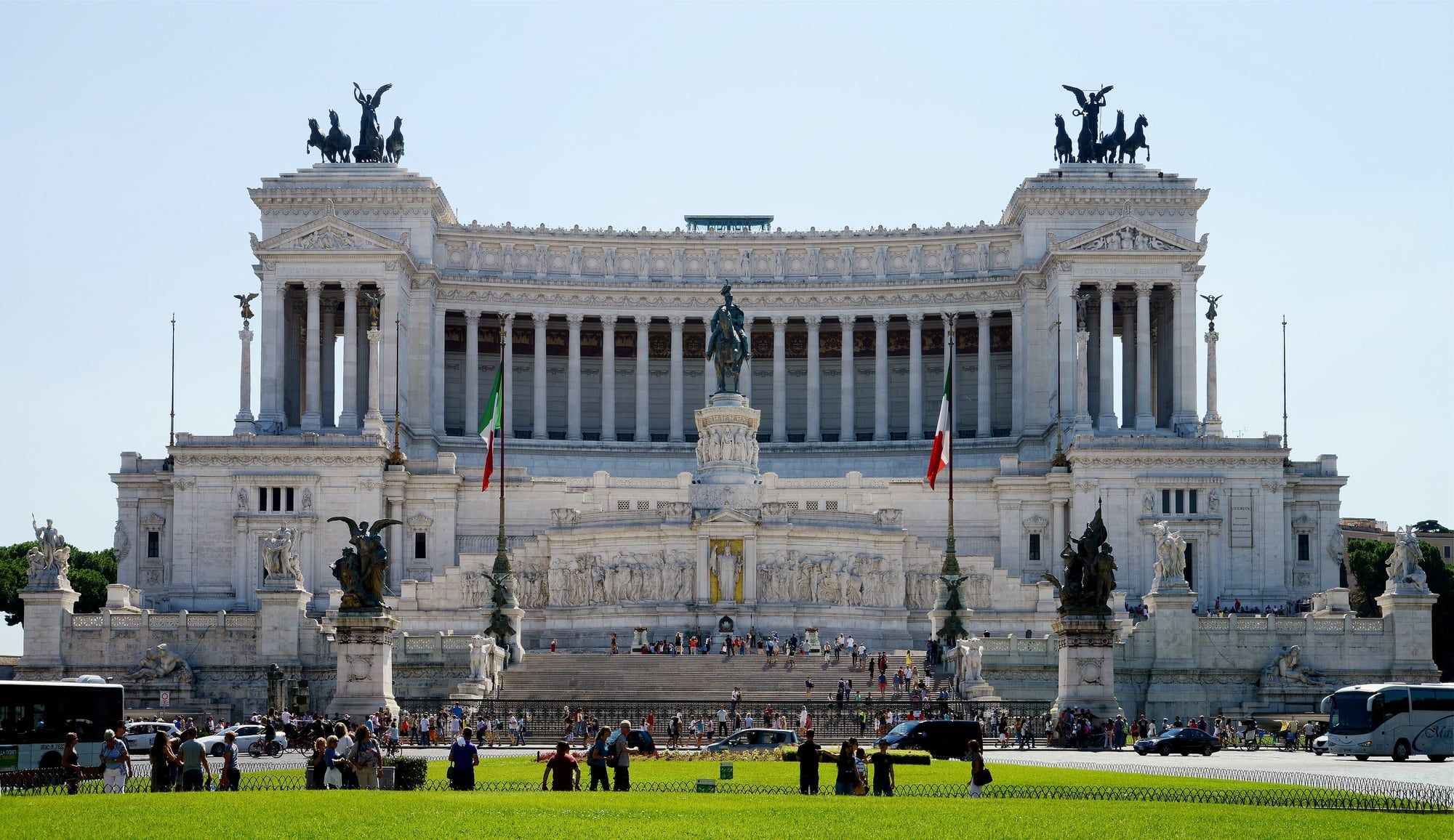
Free: the grand staircase from Piazza Venezia, the Altare della Patria halfway up with the Tomb of the Unknown Soldier and its two guards, the bronze equestrian statue of Vittorio Emanuele II above it, the colonnade and the two middle terraces with views over the Forum and the Capitoline. The Sacrario delle Bandiere, the museum of military flags entered from the Via dei Fori Imperiali side, is also free.
Paid, with the €18 VIVE ticket (at our last check): the glass lift from the colonnade terrace to the Terrazza delle Quadrighe on the roof, between the two bronze chariots; the Museo Centrale del Risorgimento inside the monument, which tells the story of Italian unification from 1796 to the First World War; and Palazzo Venezia across the square, with its state rooms and museum. The ticket is valid for seven days with one entry to each site, so the three do not have to be seen on the same day.
Three facts for the terrace. The monument was designed by Giuseppe Sacconi, begun in 1885 and inaugurated in 1911, with the Unknown Soldier interred in 1921 and the whole thing finished in 1935. The white stone is Botticino marble from Brescia, chosen by a northern king’s committee and still resented in Rome for clashing with the city’s travertine. The two quadrigas on the roof are each 15 metres high, with Victory driving four horses.
The view from the top
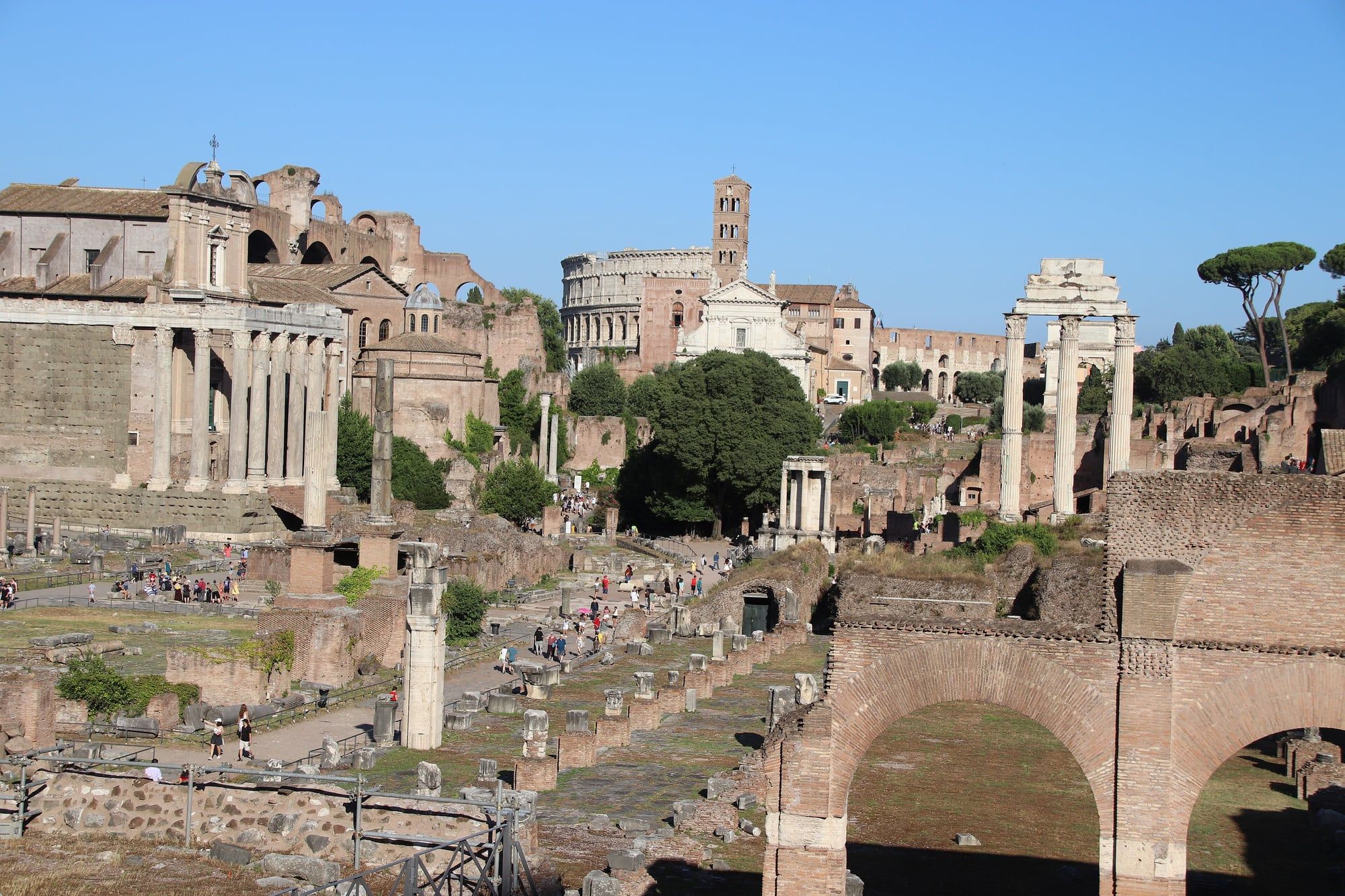
From the Terrazza delle Quadrighe you look south-east along Via dei Fori Imperiali to the Colosseum, with the Forum and Palatine to the right; west over the domes of the Gesù, Sant’Andrea della Valle and Sant’Agnese to St Peter’s; north up the Corso to Piazza del Popolo; and straight down onto Piazza Venezia and the Capitoline. It is the only central viewpoint that gives all four directions; the Castel Sant’Angelo terrace and the Pincio each give one side.
Timing is everything
Open daily 9:30–19:30, with the last lift about 45 minutes before closing. The stairs and the free terraces follow the same hours.
Best light: the last hour before closing, especially from October to March when sunset falls inside opening hours; the Forum is lit from the west and the domes stand out against the sky. In summer the sun is still high at 19:00, and the morning is cooler on the exposed roof.
Quietest times: first thing at 9:30, and weekday afternoons. The lift takes small groups and a short queue forms at the top of the colonnade stairs between 11:00 and 16:00 in high season. On free-museum Sundays the museums are busier but the lift is not free, so the queue barely changes.
Ceremony days: 4 November (Armed Forces Day), 2 June (Republic Day) and 25 April bring wreath-laying at the tomb and closures of the stairs for part of the day; check the official site.
Evening openings have been offered on some summer dates in past years; the VIVE site lists them. A lit-up Piazza Venezia from the roof after dark is worth planning around if the dates coincide with your trip.
The insider entry
There are three ways in, and picking the right one saves the main queue.
- Main staircase from Piazza Venezia: a bag check at the bottom and the direct route to the altar and the terraces. Busiest.
- Side entrance on Via di San Pietro in Carcere (the Forum side, by the Capitoline steps): reaches the terrace level with fewer stairs and a shorter bag check. This is also the entrance to the Museo del Risorgimento and the Sacrario delle Bandiere.
- Via del Plebiscito for Palazzo Venezia, a separate building with its own desk.
The lift is on the upper colonnade terrace, at the back, reached by a staircase from the terrace behind the altar; look for the “Ascensori panoramici” sign. Tickets are sold at the desk there and online. Skip-the-line products from Tiqets give a voucher to exchange at a partner office and priority at the lift; in practice the lift queue is short enough that this only matters at weekend midday.
Security rules on the monument are strict: no eating or sitting on the steps of the altar, no large bags, and the guards at the tomb will stop anyone who steps over the rope. Dress as you would for a war memorial.
How to save
- Everything on the outside is free, and the middle terraces give most of what people come for: the Forum view and the altar. Pay for the lift only if you want the western half of the panorama.
- EU citizens aged 18–25 and under-18s: reduced and free fares on the VIVE ticket; bring ID.
- First Sunday of the month: the museums are state-run and free, but the lift is charged.
- Roma Pass: not included, and the €18 ticket is not on any city pass at our last check.
- Three sites for one price: if you plan to visit Palazzo Venezia or care about the Risorgimento, the €18 ticket is good value across seven days. If you only want the lift, the ticket is still the only way up.
- Tiqets at €36 vs official at €18: the difference buys cancellation up to 24 hours ahead, an audio app and a 25-minute Ancient Rome multimedia video at a partner office near the Aracoeli. Most visitors should buy the official ticket.
How to get there
Piazza Venezia is the hub of central Rome’s bus network, which is the good news; the bad news is the Metro C construction site in the middle of it, which moves bus stops around.
- From Termini: bus 40 (express) or 64, 15 minutes; bus 170 or H also stop here.
- From the Colosseum: bus 87, or walk 12 minutes along Via dei Fori Imperiali; Metro B Colosseo is the nearest station.
- From the Vatican: bus 64 or 40 from Piazza San Pietro.
- From Trastevere: tram 8 to its terminus on Piazza Venezia.
- Other buses: 51, 62, 63, 70, 81, 83, 85, 160.
- Hop-on hop-off buses all stop on Piazza Venezia or Via del Teatro di Marcello; see the hop-on hop-off guide.
ATAC tickets are €1.50 for 100 minutes; the transport guide has the details and the current diversions.
What is nearby
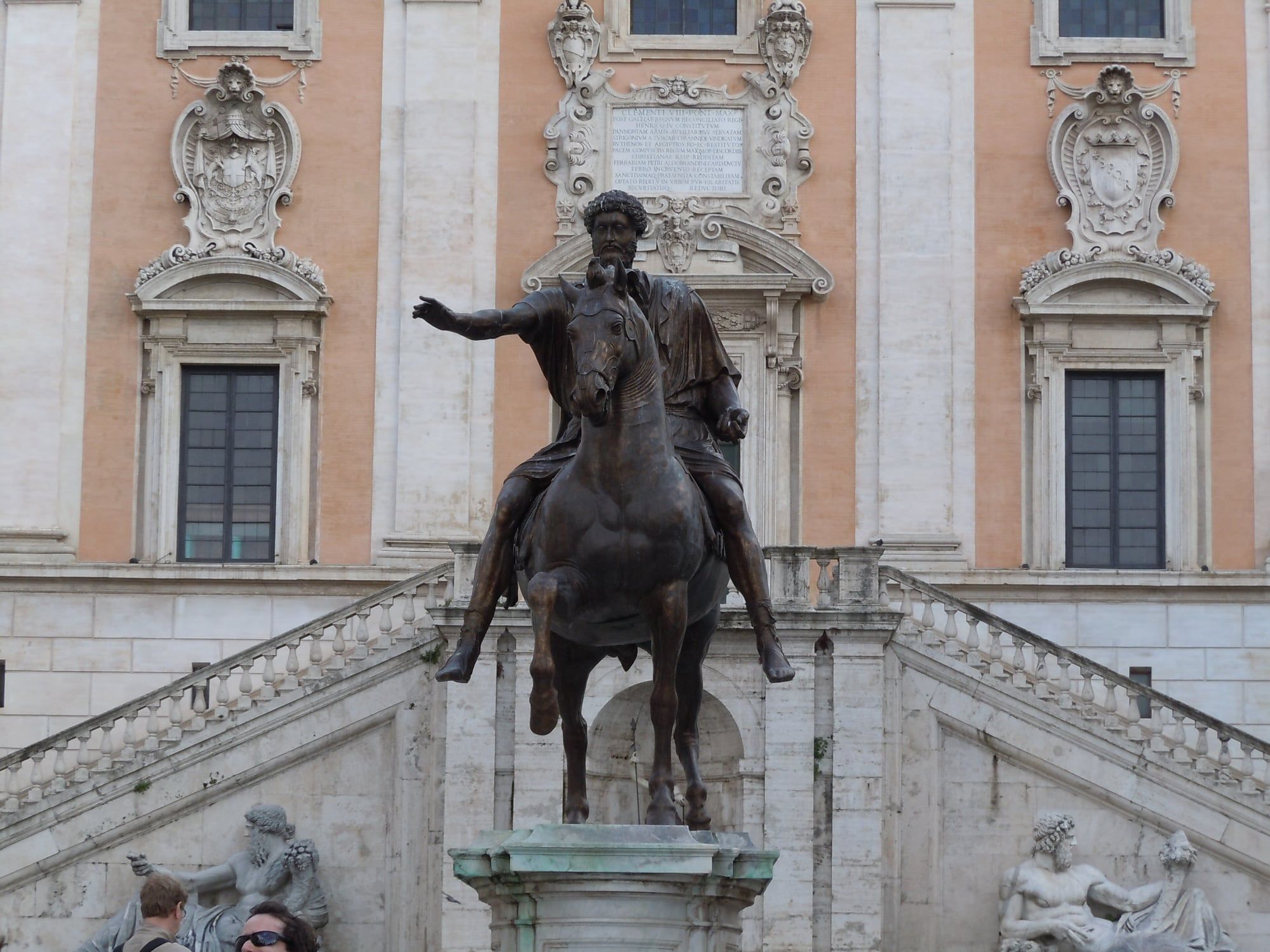
- Capitoline Museums (3 minutes up the Cordonata): the Capitoline Wolf, Marcus Aurelius and the Tabularium view; see the Capitoline Museums guide.
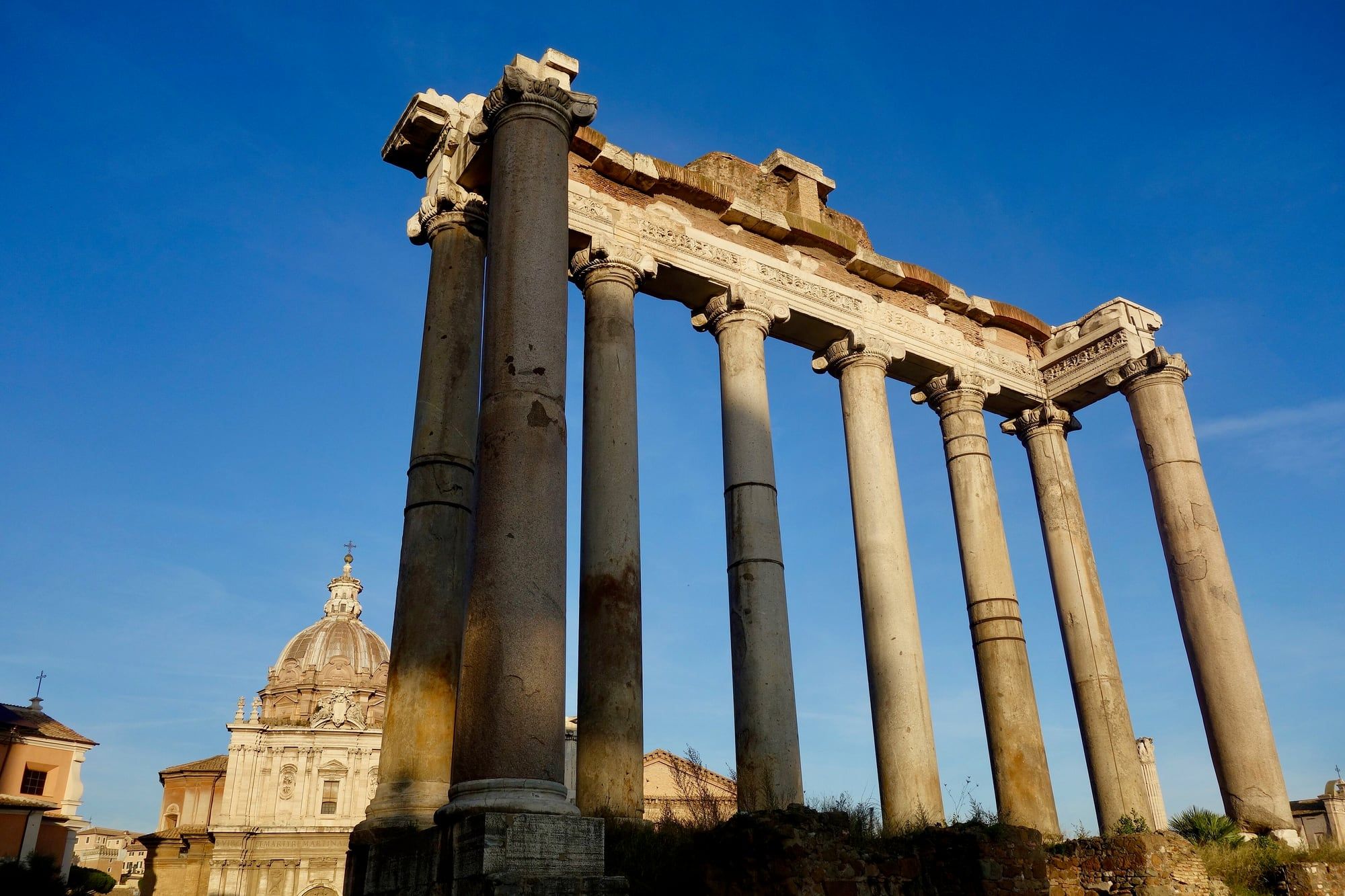
- Roman Forum (5 minutes): entrance on Via dei Fori Imperiali; plan with the Roman Forum and Palatine guide.
- Trajan’s Column and Market (3 minutes): the column is free to see from the street; the Museum of the Imperial Fora has a separate ticket.
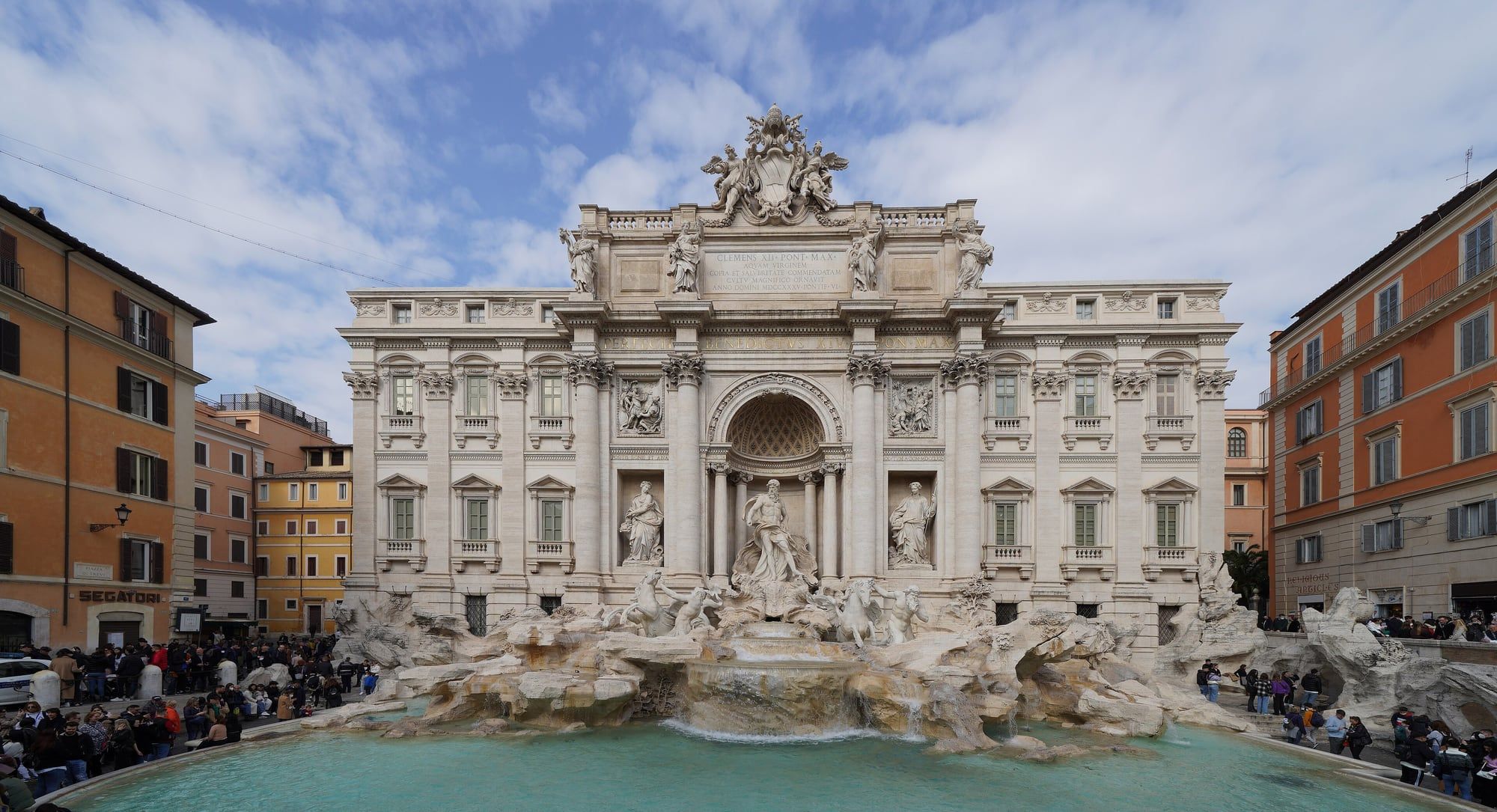
- Trevi Fountain (10 minutes): see the Trevi Fountain guide for the timing.
- Palazzo Doria Pamphilj (5 minutes up the Corso): the best private gallery in the city, with Velázquez’s Innocent X; details in the Palazzo Doria Pamphilj guide.
- Santa Maria in Aracoeli: the church at the top of the 124 steps beside the monument, free.
The unification story told inside the Risorgimento museum is summarised in the Rome history and facts page.
Booking checklist
- Decide whether you want the lift. If not, walk up free from Piazza Venezia or the Forum-side entrance and skip the ticket altogether.
- For the lift, buy the €18 VIVE ticket online or at the desk on the colonnade terrace; no advance booking needed except at weekend midday.
- Plan the lift for the last hour of opening in autumn and winter, or the first hour in summer.
- Bring ID for reduced fares; children need to be on the ticket.
- Keep the seven-day validity in mind: do the lift today, Palazzo Venezia another day when you pass on the Corso.
- Small bags only; no picnics on the steps; respect the tomb area.
- Check the official site for ceremony closures on 25 April, 2 June and 4 November, and for evening openings in summer.
The Vittoriano in Rome is the rare landmark where the free version is nearly as good as the paid one: climb the stairs, stand on the terrace above the Forum, and buy the lift ticket only for the view of the domes to the west.