How this list was built
Every fact below is one a licensed guide, a museum label or a statistics office would sign off. Legends are labelled as legends; figures historians still argue about (the Colosseum’s capacity, ancient Rome’s population) are given as ranges. To hear the facts about Rome in front of the stones, the Colosseum, Forum and Palatine tour on GetYourGuide covers the first eight in three hours.
Founding and the ancient city
1. Rome’s official birthday is 21 April 753 BC
The date comes from the scholar Varro in the 1st century BC, and the city still celebrates the Natale di Roma every 21 April. The Romulus and Remus story is a legend; the archaeology under the Palatine shows Iron Age huts from the 9th–8th century BC, so a settlement of about that age is real.
2. Ancient Rome reached about one million inhabitants
By the reign of Augustus (27 BC–14 AD) the city held between 800,000 and 1.2 million people, a figure no other European city reached until London in the early 1800s. Modern Rome has about 2.75 million, packed into a far larger area.
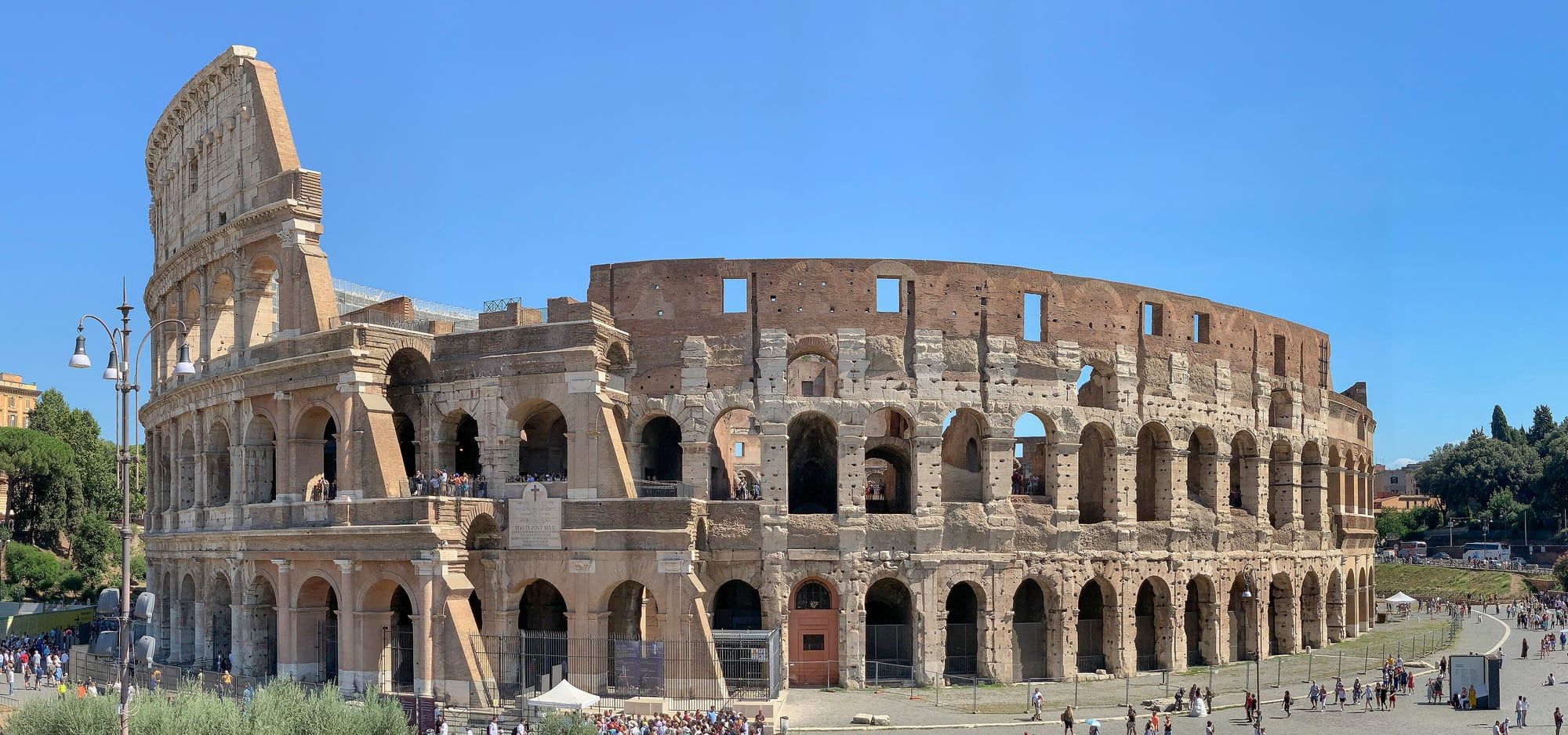
3. The Colosseum opened in 80 AD and is 1,946 years old
Vespasian started it in 72 AD on the drained lake of Nero’s palace; his son Titus inaugurated it in 80 AD with 100 days of games. Its real name is the Flavian Amphitheatre; “Colosseum” comes from the 30-metre bronze Colossus of Nero that stood beside it. Capacity estimates run from 50,000 to 80,000 spectators. How to visit, tickets and entrances: Colosseum tickets.
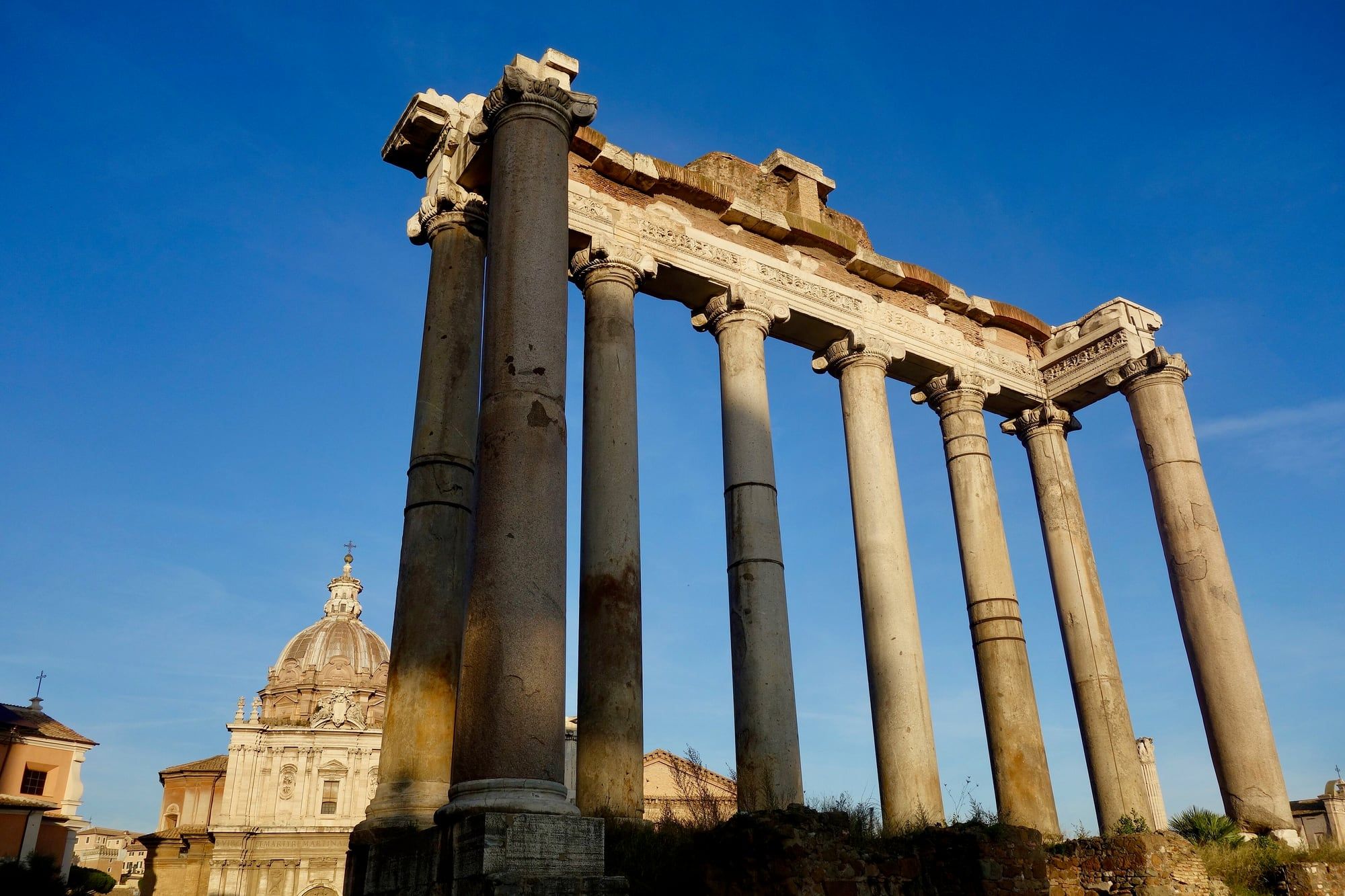
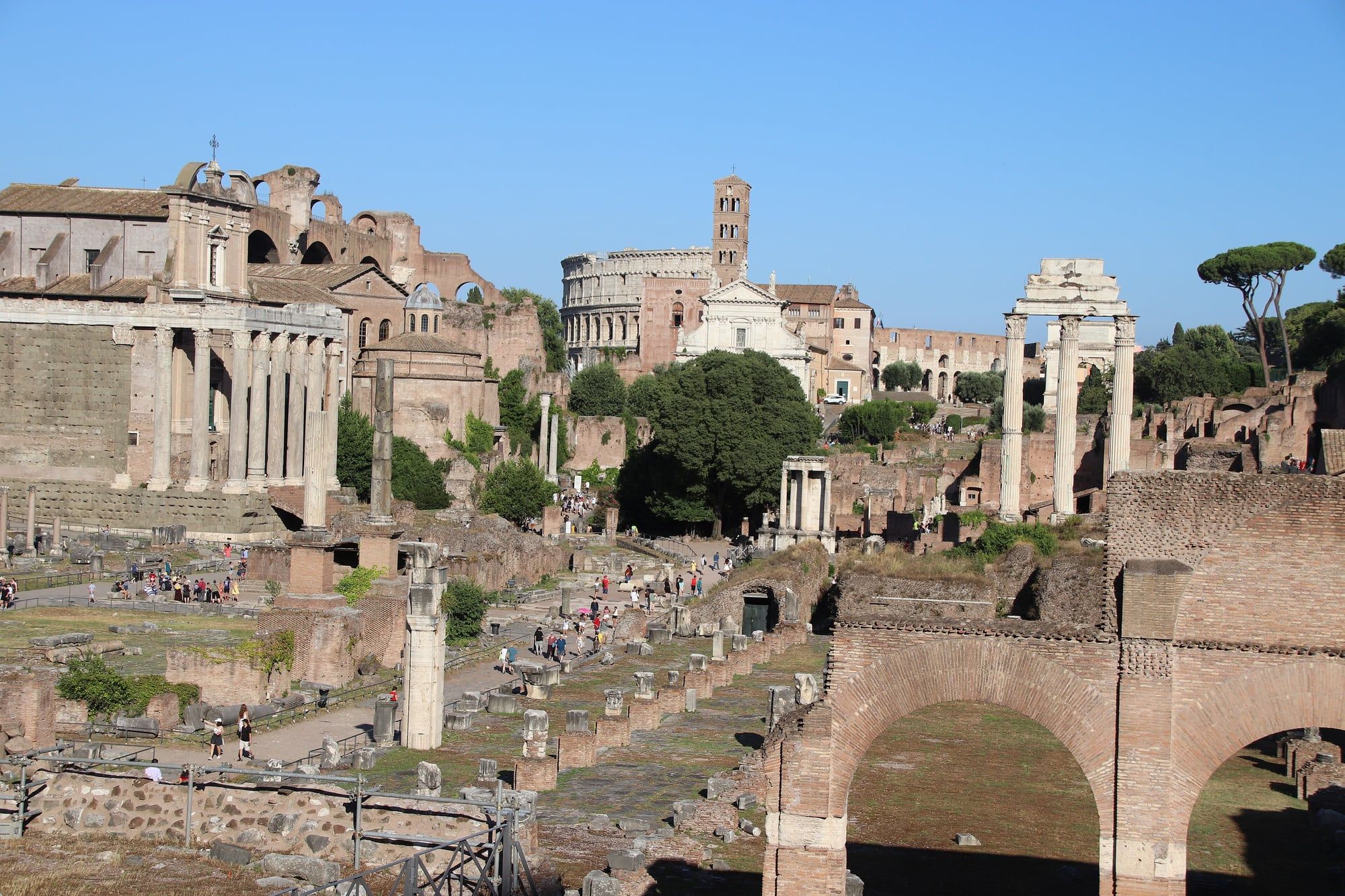
4. The Roman Forum was a swamp until the Cloaca Maxima drained it
The valley between the Palatine and Capitoline was marshland until the 6th century BC, when the Etruscan kings built the Cloaca Maxima sewer. That drain still carries water into the Tiber today; its outlet is visible below the Ponte Palatino. The Forum then served as market, court and parliament for a thousand years. See Roman Forum and Palatine.
5. Rome had eleven aqueducts and one still works
The first, the Aqua Appia, opened in 312 BC; by the 3rd century AD eleven lines carried an estimated one million cubic metres of water a day. The Aqua Virgo, finished by Agrippa in 19 BC, was repaired by the popes and still feeds the Trevi Fountain and the fountains of Piazza Navona and Piazza di Spagna. Its arches are visible at Via del Nazareno. The best surviving aqueduct arches are in the Parco degli Acquedotti on the Appian Way.
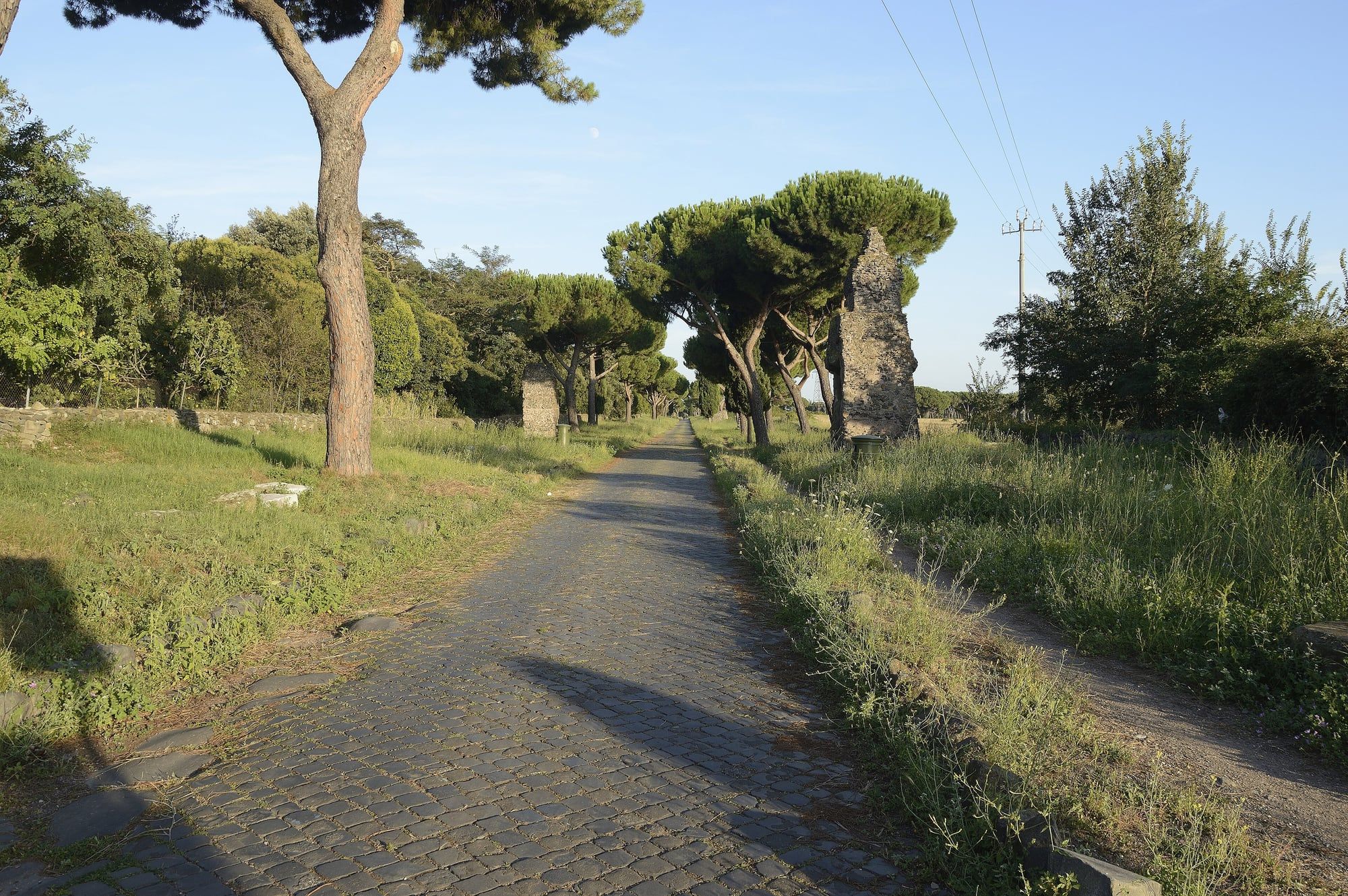
6. The Appian Way was Europe’s first motorway
Also from 312 BC, the Via Appia ran 540 km from Rome to Brindisi and was called regina viarum, queen of roads. The first stretch, with its original basalt paving stones, is inside the Parco dell’Appia Antica and closed to cars on Sundays.
7. SPQR is still Rome’s official signature
Senatus Populusque Romanus, “the Senate and People of Rome”, was the formal name of the Roman state. The modern city adopted it, and you will find SPQR on manhole covers, bins, buses and the badge of the municipal police.
8. The Circus Maximus held more people than any stadium today
Ancient sources give 150,000 seats, and some estimates go to 250,000. The largest stadium in the world today, in North Korea, holds 114,000. The 600-metre racetrack is now a free public park; see Circus Maximus.
9. Julius Caesar was not killed in the Forum
He was stabbed on 15 March 44 BC in the Curia of Pompey, part of Pompey’s theatre complex at what is now Largo di Torre Argentina, about 700 metres from the Forum. The Senate was meeting there because the Curia in the Forum was being rebuilt. Caesar also gave the world the Julian calendar (46 BC), and July is named after him.
10. All roads really did lead to Rome, from one golden milestone
Augustus set up the Milliarium Aureum in the Forum in 20 BC, a gilded column listing distances to the main cities of the empire. All the great roads were measured from it. At its peak under Trajan in 117 AD, the road network the milestone described served an empire of roughly five million square kilometres.
Monuments and records
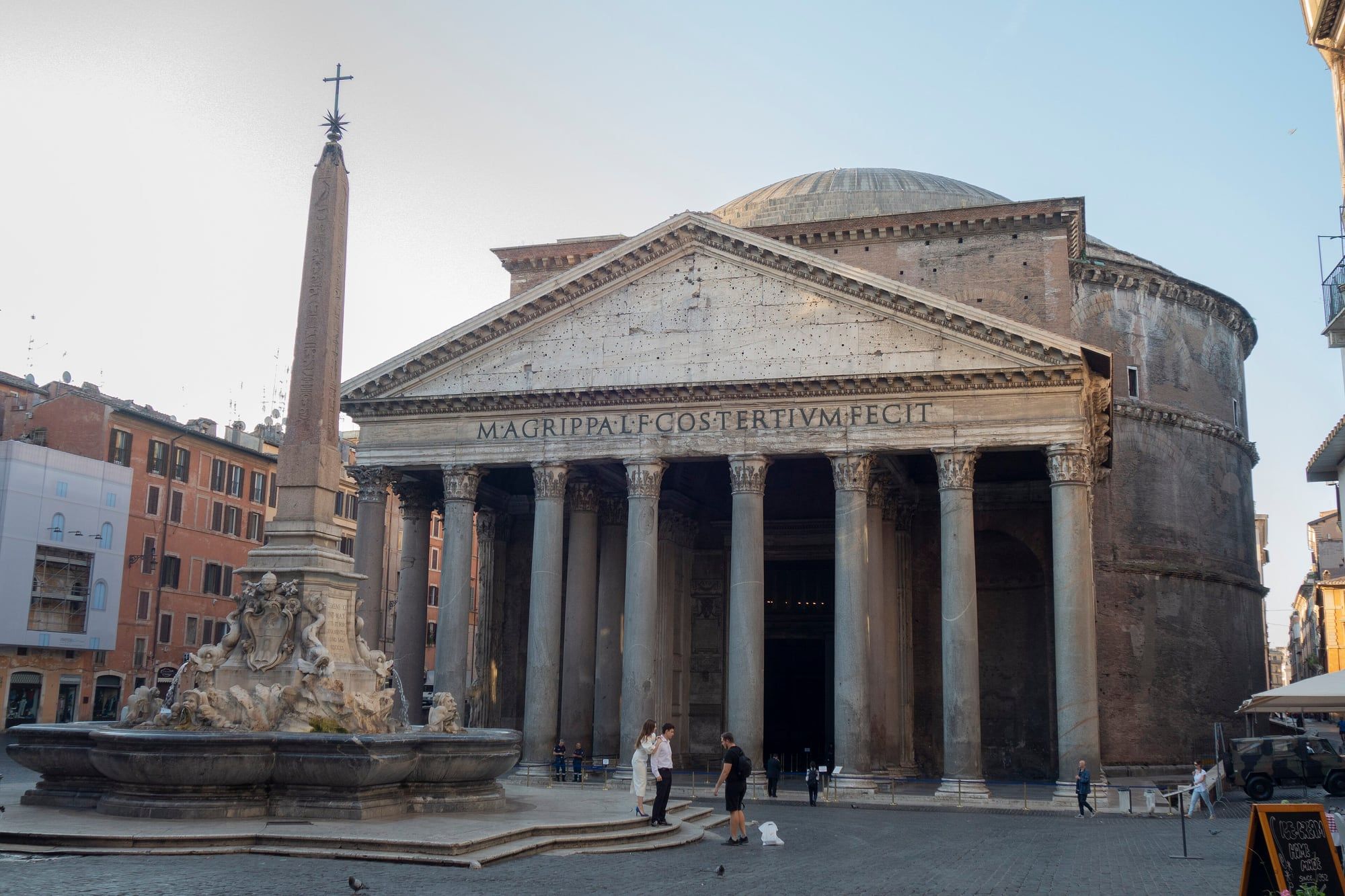
11. The Pantheon’s dome is still the largest unreinforced concrete dome on Earth
Rebuilt by Hadrian around 125 AD, the dome spans 43.3 metres and is exactly as high as it is wide, so a sphere would fit inside. The concrete gets lighter towards the top, with pumice in the upper rings, and the 9-metre oculus is open to the rain. Entry costs €5 at our last check; details in the Pantheon guide.
12. Vatican City is the smallest country in the world
0.44 square kilometres, about 800 residents, and independent since the Lateran Treaty of 1929. You can walk around its walls in about 40 minutes. St Peter’s Basilica is the biggest church in the world by interior area, about 15,000 m². Most citizens are clergy, Swiss Guards and diplomats; citizenship is tied to the job.
13. The Sistine Chapel ceiling took four years, standing up
Michelangelo painted it between 1508 and 1512, on scaffolding of his own design, standing and leaning back rather than lying down as the myth says. The Last Judgment on the altar wall came 25 years later. The chapel has the same dimensions as the Temple of Solomon described in the Bible: about 40 by 13 metres. Tickets and rules: Sistine Chapel.
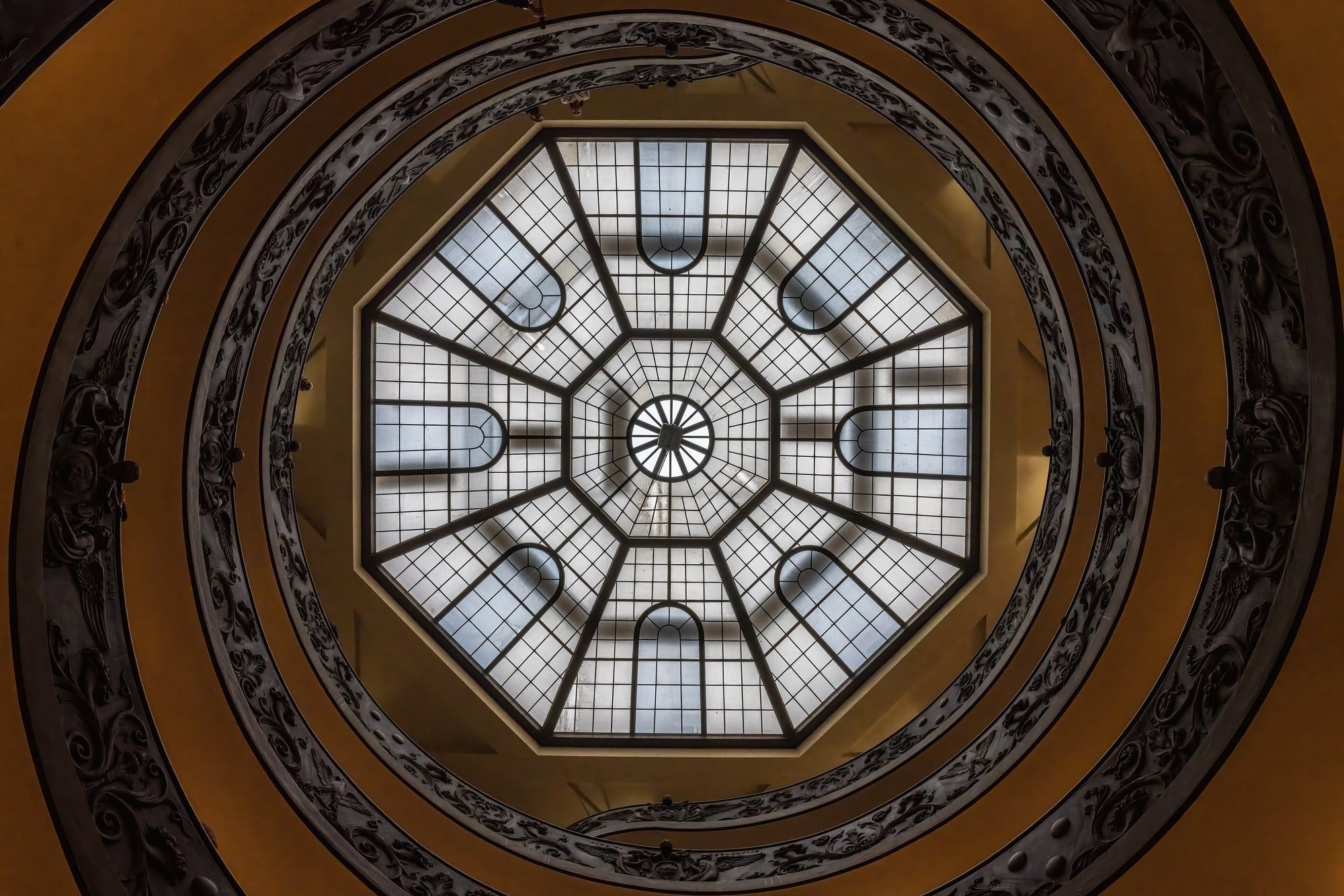
14. The Vatican Museums hold about 7 km of galleries
Around 70,000 works are in the collection, roughly 20,000 on display, along nearly seven kilometres of corridors. Some six million people visit each year, which is why the museums are the one site in Rome where a reserved slot is close to mandatory. See Vatican Museums tickets.
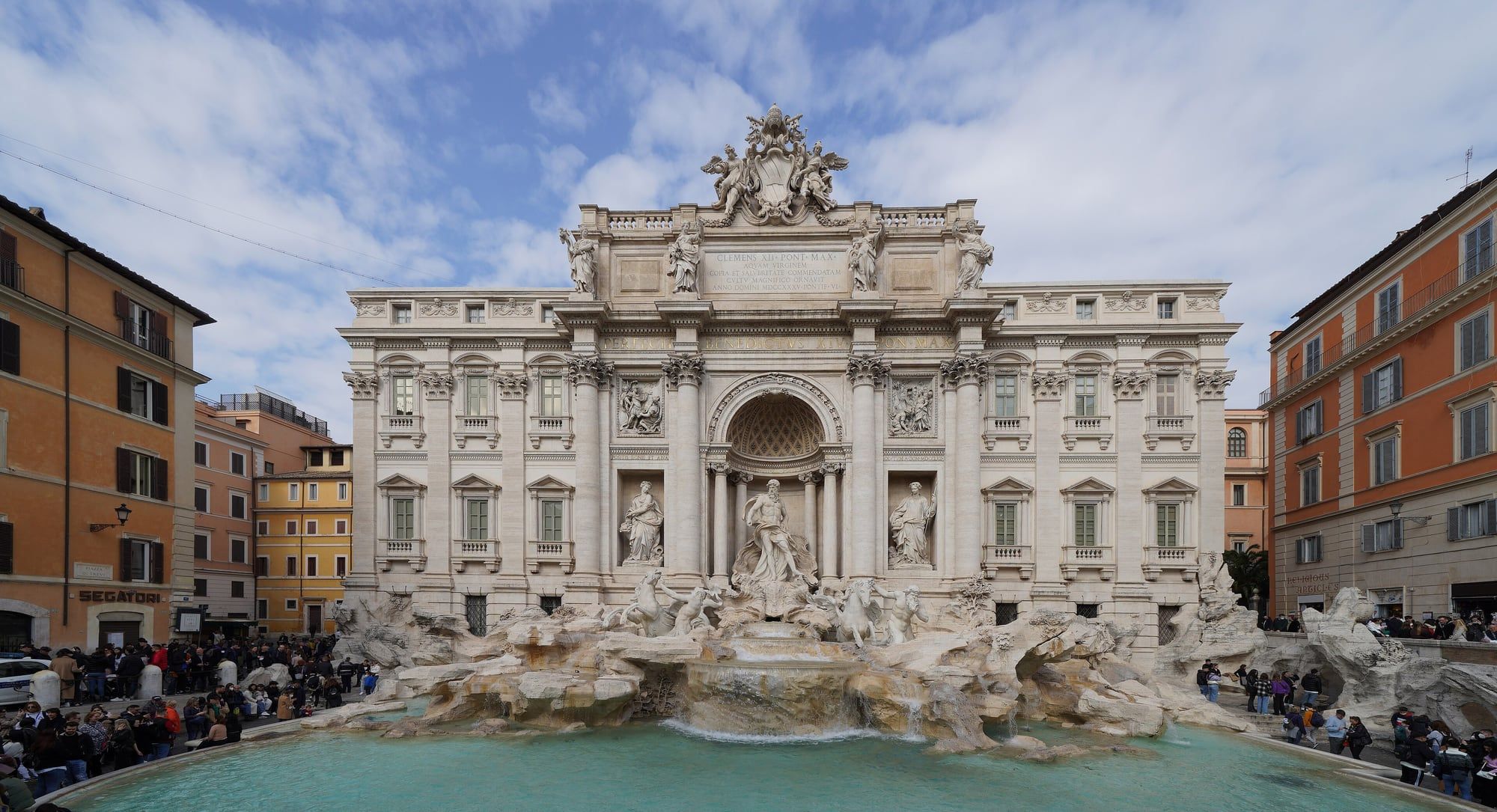
15. About €1.5 million a year lands in the Trevi Fountain
The coins are swept out several times a week and given to the charity Caritas. The fountain was finished in 1762 by Nicola Salvi and Giuseppe Pannini, and its water arrives through the Aqua Virgo aqueduct mentioned in fact 5. Whether one coin means a return to Rome is folklore, not fact. Visiting tips: Trevi Fountain.
16. Rome has a pyramid
The Pyramid of Cestius, 36 metres high, was built around 12 BC as the tomb of a magistrate at a time when Egypt was the fashionable new province. It is next to Piramide metro station and the Non-Catholic Cemetery where Keats and Shelley are buried.
17. The Capitoline Museums are the oldest public museum in the world
Pope Sixtus IV donated the bronze She-wolf and other statues to the people of Rome in 1471, and the collection has been open to the public since 1734, older than the British Museum (1759) or the Louvre (1793). See Capitoline Museums.
18. The Spanish Steps are French, and there are 135 of them
The staircase was paid for by a French diplomat’s bequest and built in 1723–1725 to connect the French church of Trinità dei Monti with the square below, which took its name from the Spanish embassy. Sitting on the steps has been banned since 2019. See Spanish Steps.
19. Piazza Navona is a stadium
Its long oval follows the track of the Stadium of Domitian (86 AD), where athletics contests were held for about 30,000 spectators. The stadium’s stone seats are still there, five metres below street level, and can be visited under the north end of the square. See Piazza Navona.
20. The Aurelian Walls are 19 km long and mostly still standing
Built in only five years (271–275 AD) when barbarian raids reached northern Italy, the walls ring the historic centre with 18 gates. Roughly two-thirds survive, and the flat taxi fare from Fiumicino airport (€55) applies to any destination inside them, so the ancient boundary still shapes your travel budget. See transport in Rome.
The city today
21. Rome has more than 900 churches
The commonly cited count is over 900 within the city, more than any other city in the world, including the four papal basilicas and around 60 with works by Caravaggio, Bernini or Michelangelo. Most are free to enter, which is the backbone of any free day in Rome.
22. There are roughly 2,500 free drinking fountains
The cast-iron “nasoni” (big noses) were introduced in 1874 and run continuously with drinkable water from the same springs that supplied the ancient aqueducts. Block the spout with a finger and water arcs out of the small hole on top for drinking.
23. The metro has only three lines because of archaeology
Every excavation hits ruins, which is why Rome’s metro network is one of the shortest of any European capital. Line C, under construction since 2007, took almost two decades to reach the centre; its Colosseo–Fori Imperiali station is due to open. Line A, B and C basics are in the transport guide.
24. Rome has been the capital of Italy only since 1871
Italy unified in 1861 with Turin as its capital, moved to Florence in 1865, and took Rome from the Pope in 1870. The Vittoriano monument on Piazza Venezia was built to celebrate the unification, and the Tomb of the Unknown Soldier was added in 1921. See Vittoriano.
25. Roman concrete heals itself
A 2023 study by MIT and Harvard found that lumps of lime in Roman concrete react with water to fill cracks as they form, which helps explain why the Pantheon dome and ancient harbour walls have outlasted modern concrete. The mix used volcanic ash from the Bay of Naples. Rome’s ancient port town is now an archaeological park; see Ostia Antica.
Common “facts” that are not facts
- Vomitoriums were rooms for vomiting. They were the exit passages of amphitheatres, named for how they spewed crowds out; the Colosseum could empty in minutes through them.
- Nero fiddled while Rome burned. The fiddle did not exist in 64 AD, and Tacitus says Nero was in Antium when the fire started.
- Romans salted the fields of Carthage. No ancient source says so; the story appears in the 19th century.
- Michelangelo painted the Sistine ceiling lying on his back. He stood on scaffolding, as his own sketches and a poem complaining about his neck confirm.
- The Colosseum was where Christians were martyred. There is no ancient evidence for it specifically in the Colosseum; the association dates from the 17th century.
What to book
Facts stick better in front of the stones. Three ways to see the ones above with someone who can answer follow-up questions:
- Colosseum, Roman Forum and Palatine with a licensed guide, about three hours, covers facts 1–4 and 7–10 in one walk. Rated 4.8 from tens of thousands of reviews on GetYourGuide; check dates and prices or read the Colosseum guide first.
- Vatican Museums, Sistine Chapel and St Peter’s for facts 12–14; see Vatican Museums tickets.
- Ancient Rome by night puts the Forum and the Colosseum in floodlight with fewer people; formats are on the night tours page.
For the order to see it all in, use the 1-, 2- and 3-day itineraries. And if you want more facts about Rome after this list, the best source is the city itself: read the inscriptions, and count the SPQR manhole covers.