What changed at the Trevi Fountain in 2025 and
Two things happened in quick succession. In late 2024 the fountain was drained for cleaning and Roma Capitale used the closure to install a temporary walkway and count how many people the basin area could hold. When the water came back, the city kept the barriers: access to the lower level (the “catino”, the paved area around the pool) became a single controlled entrance with stewards and a cap on numbers.
From 2 February 2026 that access has a price. Non-residents pay €2 to enter the basin area during regulated hours, paid at one of ten SmartPOS terminals by the entrance, online through the city’s Trevi ticket site, or at Sistema Musei ticket offices and tourist infopoints. Residents of the Metropolitan City of Rome with ID, children under 5 and people with disabilities plus one companion enter free. The money is earmarked for the stewards and the cleaning.
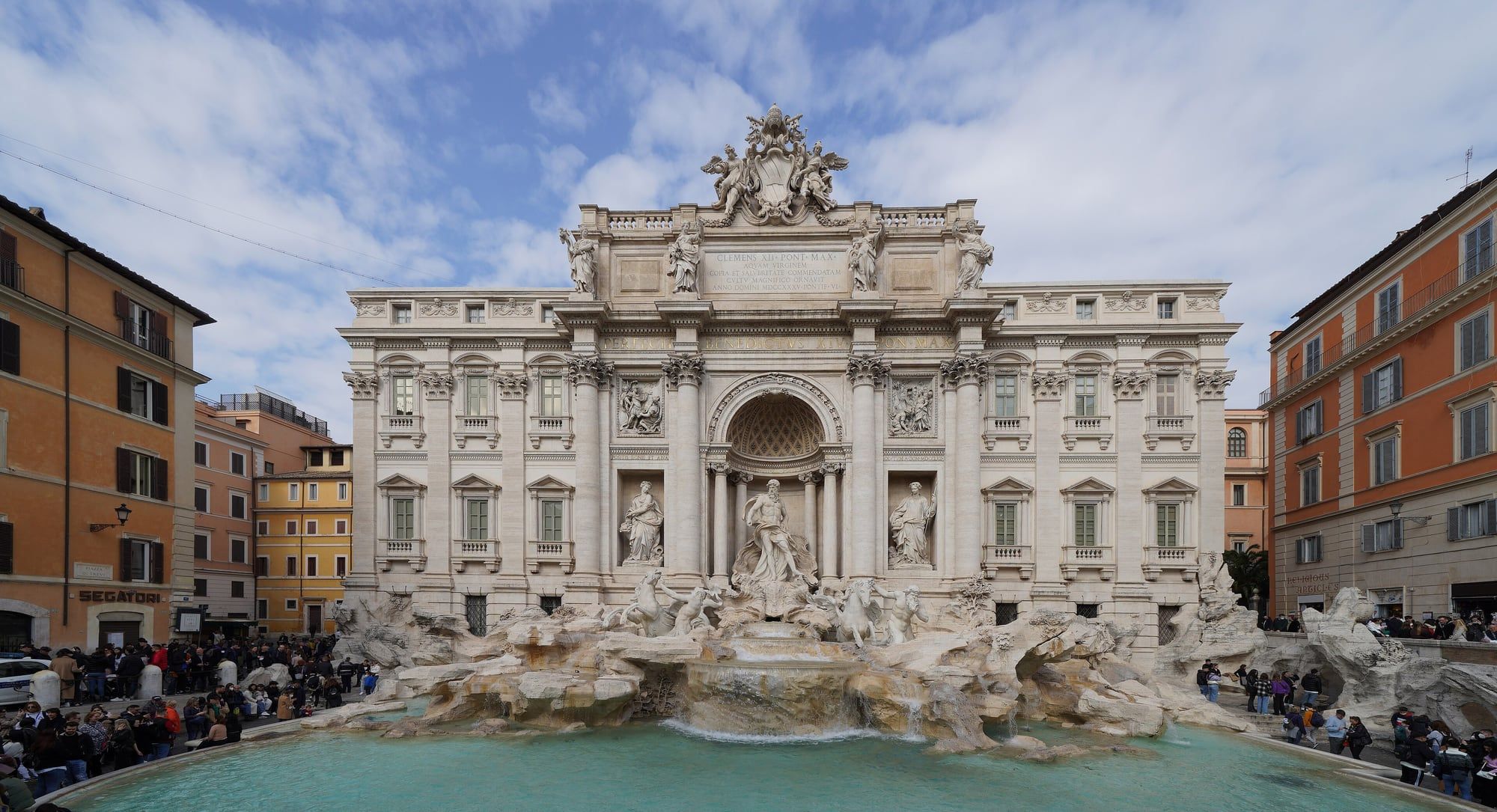
What has not changed: the fountain is fully visible from Piazza di Trevi, from the steps on either side and from Via della Stamperia, at no cost and at any hour. The €2 buys the spot by the water for the coin toss and the close-up photo, nothing more. Details such as time limits inside the basin and the exact Monday and Friday opening times (currently 11:30, after the morning clean) are still being adjusted, so treat the schedule as “roughly 9:00–22:00” and check the signs on the day.
What you are looking at
The Trevi Fountain (Fontana di Trevi) is the end point of the Aqua Virgo, an aqueduct completed by Agrippa in 19 BC that still delivers spring water from 20 km east of Rome. The Baroque façade you see today was designed by Nicola Salvi, started in 1732 and finished in 1762 after Salvi’s death, built onto the back of Palazzo Poli.
Three things worth spotting once you are close enough:
- Oceanus in the central niche, riding a shell chariot pulled by two sea horses, one calm and one wild, meant to show the two moods of the sea.
- The two reliefs above the side statues: on the left Agrippa approving the aqueduct plan, on the right the young girl (the “virgo”) who supposedly showed Roman soldiers the spring.
- The large stone vase on the right-hand parapet, the “Asso di Coppe”. The story goes that Salvi put it there to block the view of a barber who kept criticising his work.
The fountain is about 26 metres high and 49 metres wide, and around €1.5 million in coins is fished out of it every year and given to the Catholic charity Caritas. That is the practical reason the ritual is tolerated while wading in is not.
Timing is everything
Piazza di Trevi is small, hemmed in by three streets, and receives more visitors than the space can hold from late morning to evening. Timing decides whether you get a photo or a view of someone else’s phone.
- 6:00–8:00 – the only truly quiet window. Street cleaners, a few photographers, and the water noise you never hear at midday. The basin barriers are open and free before 9:00.
- 8:00–10:00 – filling up, still workable; the €2 queue is short after 9:00.
- 11:00–20:00 – peak. Expect 20–40 minutes in the basin queue in high season and a solid wall of people on the piazza.
- 21:00–23:00 – the fountain is floodlit and beautiful, but this is the second peak, especially in summer when everyone leaves dinner at the same time.
- After 23:00 – the crowd thins fast, the fee period ends at 22:00, and the basin is open again without charge. The best evening visit is a late one.
For photos, morning light hits the façade directly; in the evening the floodlights give a warmer, more even result. In winter (November–February) the square is manageable even at midday, except during the Christmas holidays.
The coin ritual, done properly
Stand with your back to the fountain and throw the coin with your right hand over your left shoulder. Tradition says one coin brings you back to Rome, two bring romance, three a wedding. The stewards let you stop for the toss, but they keep the line moving, so have the coin ready before you reach the water.
Rules enforced by the municipal police (Polizia Locale) inside the basin area, at our last check:
- No sitting on the rim or the steps of the basin.
- No eating or drinking; gelato is turned back at the entrance.
- No dipping hands or feet, and no climbing the rocks. Fines start around €250 and go higher for damage or bathing.
- No large bags blocking the walkway; rucksacks go on your front.
What is free and what is paid
| Experience | Cost | Worth it? |
|---|---|---|
| Viewing from the piazza and side steps | Free, 24 hours | Always |
| Basin area (close-up, coin toss) | €2 non-residents, 9:00–22:00; free at other times | Yes for the photo, especially early or late |
| Vicus Caprarius underground | €4 official self-guided; guided tours from €35 on Tiqets | Yes if you have 45 minutes and like archaeology |
| Guided walking tour of the centre | from €20 on GetYourGuide | Yes on a first visit, ideally an evening one |
The Trevi underground: Vicus Caprarius, the Water City
Turn into Vicolo del Puttarello, 60 metres from the fountain, and a doorway leads nine metres down to Vicus Caprarius, “la Città dell’Acqua”. Excavated between 1999 and 2001 during work on a cinema, it is a block of 1st-century Roman apartments (an insula) that became a wealthy house in the 4th century, with a large cistern still fed by the Aqua Virgo. You hear and see the same water that reaches the fountain above.
Highlights are the marble-clad rooms, the water tank with its filtered flow, coins and pottery found during the dig, and a marble head of Alexander “Helios”. The visit takes 30–40 minutes.
- Official visit: €4 adult, €2.50 for Roma Pass holders, students and EU citizens 18–25, €1 for ages 14–17, free under 14. Open Tuesday to Sunday 11:00–17:00, closed Monday; weekend slots must be booked (phone or WhatsApp). Guided tour on request €8. At our last check, on-the-day walk-ins on weekdays are usually fine outside July and August.
- Guided tour via Tiqets: the 40-minute Trevi underground tour costs from €35 on Tiqets (checked , rated 4.3 from about 200 reviews, with a live guide in six languages, headsets and free cancellation up to 24 hours before. A 45-minute variant with a skip-the-line ticket is from €44, rated 4.5. Pick the Tiqets tour if you want context and a fixed time slot without phoning the site; pick the €4 official ticket if you are happy to read the panels yourself.
The site is wheelchair-accessible on the guided tour option (the operator lists lift access), which is unusual for Roman underground sites.
How to get there
- Metro: line A to Barberini, then 7 minutes downhill along Via del Tritone and Via della Stamperia. Spagna (line A) is about 10 minutes.
- Bus: lines 62, 63, 83, 85, 160 and 492 stop on Via del Tritone or Via del Corso, both 5 minutes away.
- On foot: 8 minutes from the Pantheon, 10 from the Spanish Steps, 15 from Piazza Venezia, 20 from Piazza Navona. The fountain sits between Via del Corso and Via del Tritone, and every route into the square is a narrow lane, so expect to walk the last 200 metres in a slow crowd during the day.
- Taxi: there is no rank in the square. Ask for Largo del Tritone or Piazza San Silvestro.
What is nearby
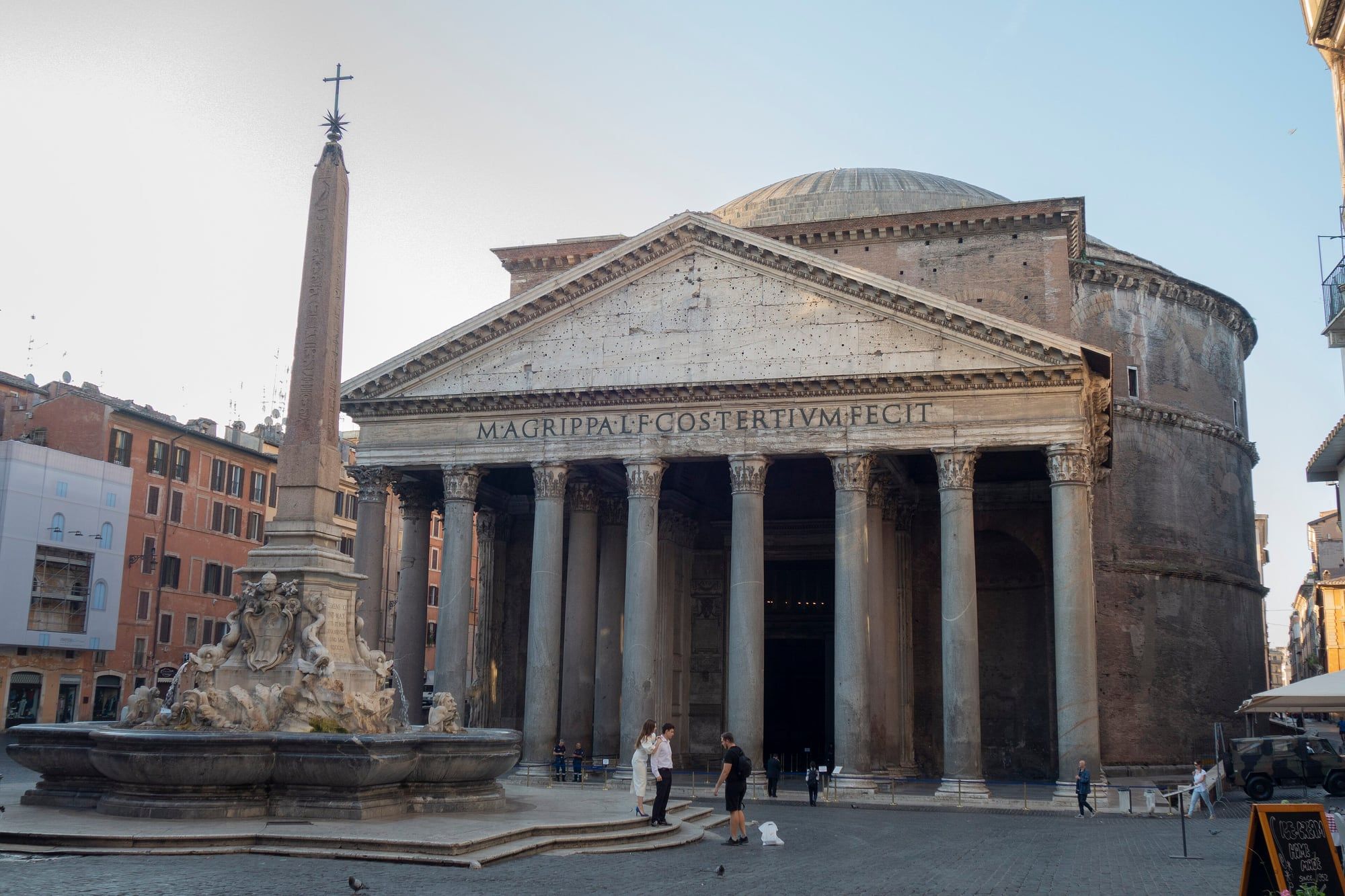
- Pantheon – 8 minutes west; €5 entry, book a timed slot in high season.
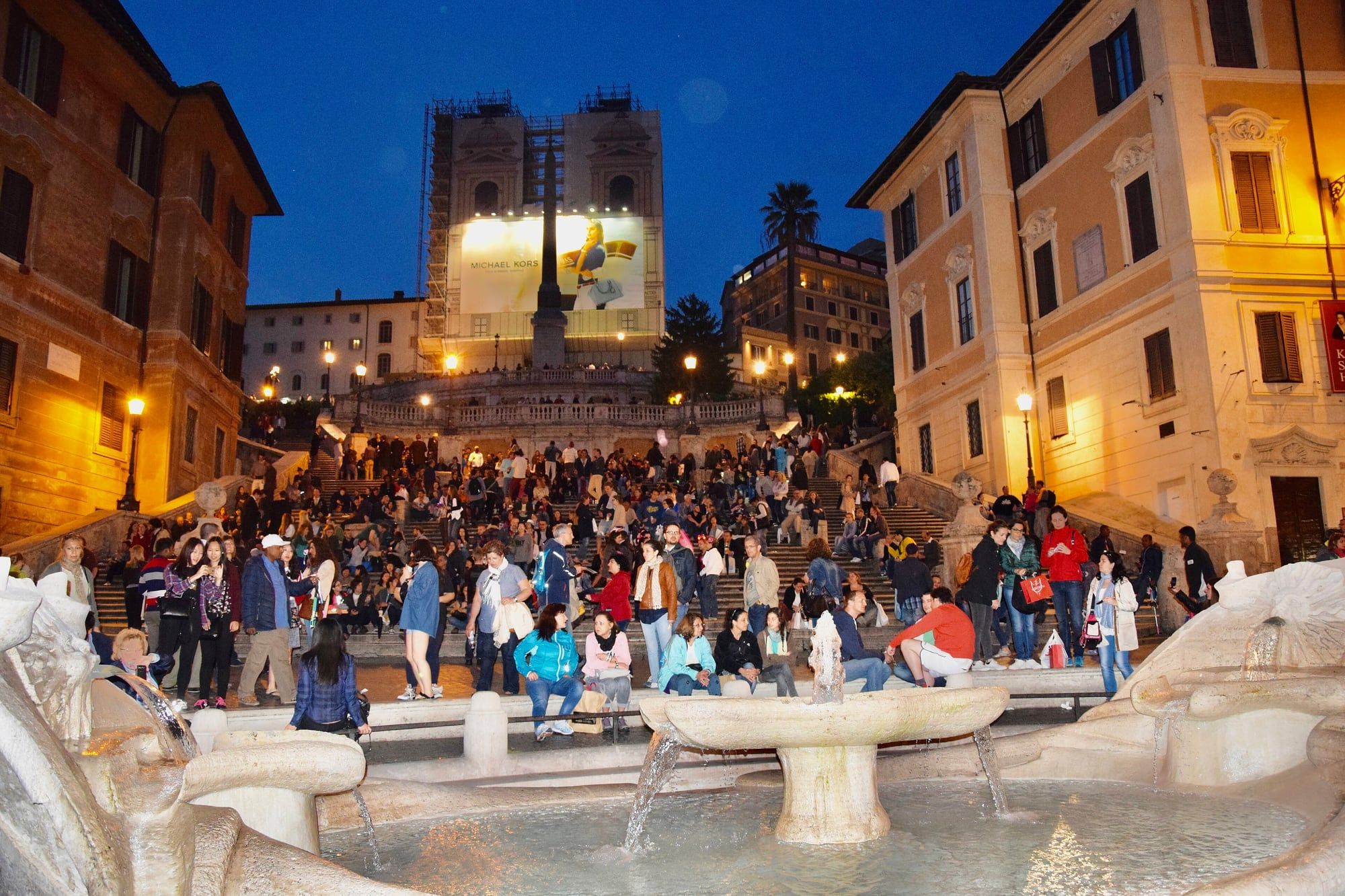
- Spanish Steps – 10 minutes north through the Via Condotti shopping streets.
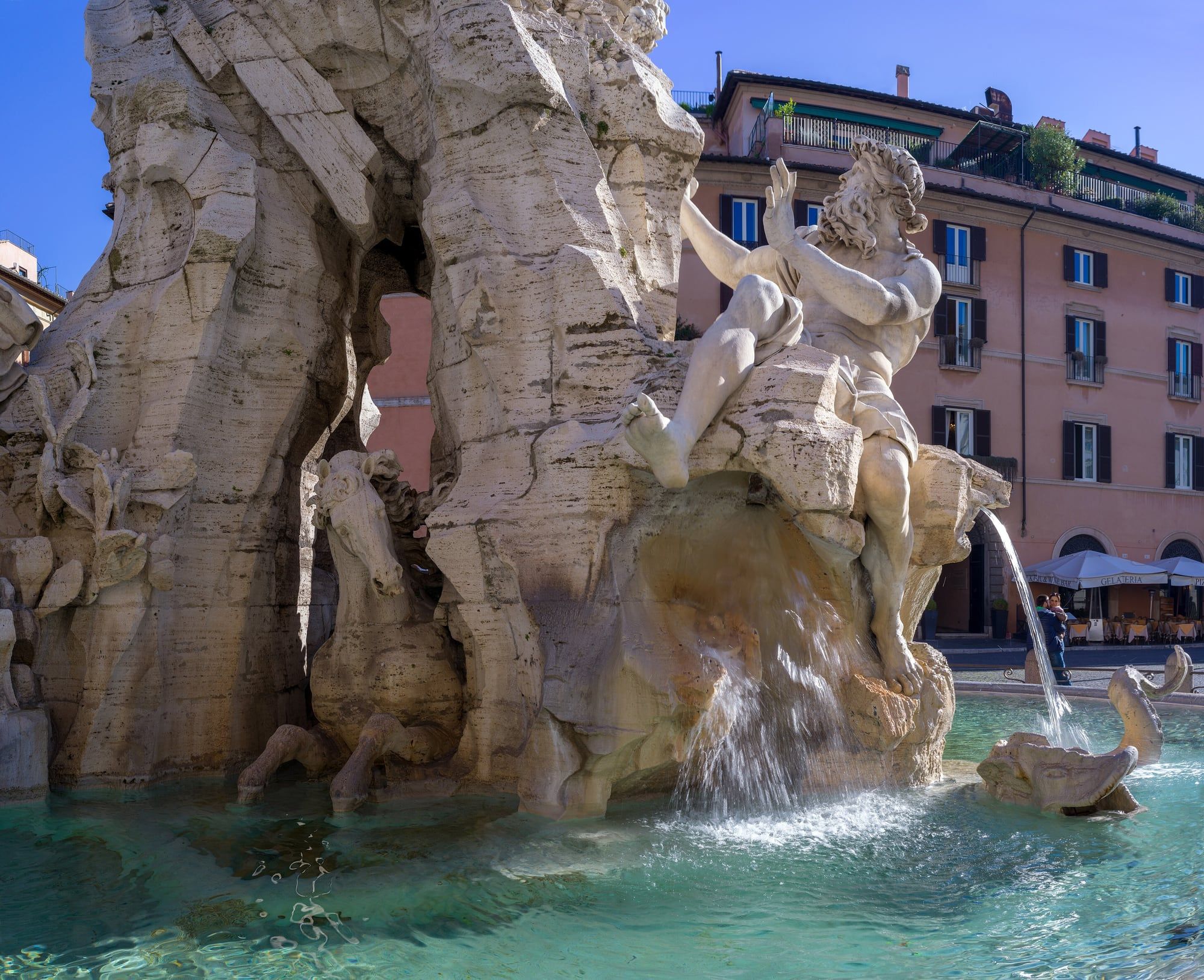
- Piazza Navona – 20 minutes west, past the Pantheon, for Bernini’s Four Rivers fountain and the Stadium of Domitian underground.
- Vittoriano – 12 minutes south for the free terraces and the lift to the roof.
- Galleria Sciarra – 2 minutes away at Via Marco Minghetti, a free Art Nouveau courtyard that almost nobody enters.
What to book
The fountain itself needs no booking. These are the paid experiences that use it well:
- Vicus Caprarius guided tour – from €35 on Tiqets, 40 minutes, six languages. Book a 15:00–16:00 slot, then come back up to the fountain around 17:00 when the light on the façade is best.
- Evening walking tour of the centre – the classic route is Piazza Navona, Pantheon, Trevi and the Spanish Steps after dark, 2–2.5 hours, from about €20 per person on GetYourGuide’s walking tours. Compare formats on our walking tours and night tours pages.
- Trevi-focused tours and combos – the Trevi Fountain page on GetYourGuide lists underground combos, golf-cart routes and small-group walks starting at the fountain. Filter by “small group” and a 4.7+ rating.
- A Rome Tourist Card or walking-tour bundle if you are also doing the Colosseum and Vatican; see city passes for whether it pays off.
Booking checklist
- Bring a €2 coin or a contactless card for the basin terminals; the online ticket works from your phone screen.
- Carry ID if you are a Rome resident claiming free entry.
- Have your wish coin ready before you reach the water; the queue keeps moving.
- No food, drink or sitting inside the basin area; eat your gelato on Via delle Muratte instead.
- For Vicus Caprarius, book weekend slots in advance and arrive 10 minutes early at Vicolo del Puttarello 25; the entrance is easy to miss.
- Watch for pickpockets in the crush on Via delle Muratte and at the top of the steps, the two busiest points around the Trevi Fountain.