What Trastevere is and why everyone ends up here
Trastevere means “across the Tiber” (trans Tiberim). It was the sailors’ and immigrants’ quarter of ancient Rome, a working-class district until the 1970s, and is now the city’s busiest evening neighbourhood, wedged between the river, the Gianicolo hill and Viale di Trastevere. The lanes are medieval, the buildings are ochre and ivy-covered, and there are more restaurants per block than anywhere else in Rome.
For a visitor it does three jobs: a relaxed half-day of churches and gardens, the classic Rome dinner, and the strongest food-tour territory in the city. Its search volume (Trastevere is the most-searched Rome neighbourhood by a wide margin) tracks that reality. The plan below works for a first visit and does not require a single reservation until you sit down to eat.
What to see in Trastevere
Santa Maria in Trastevere
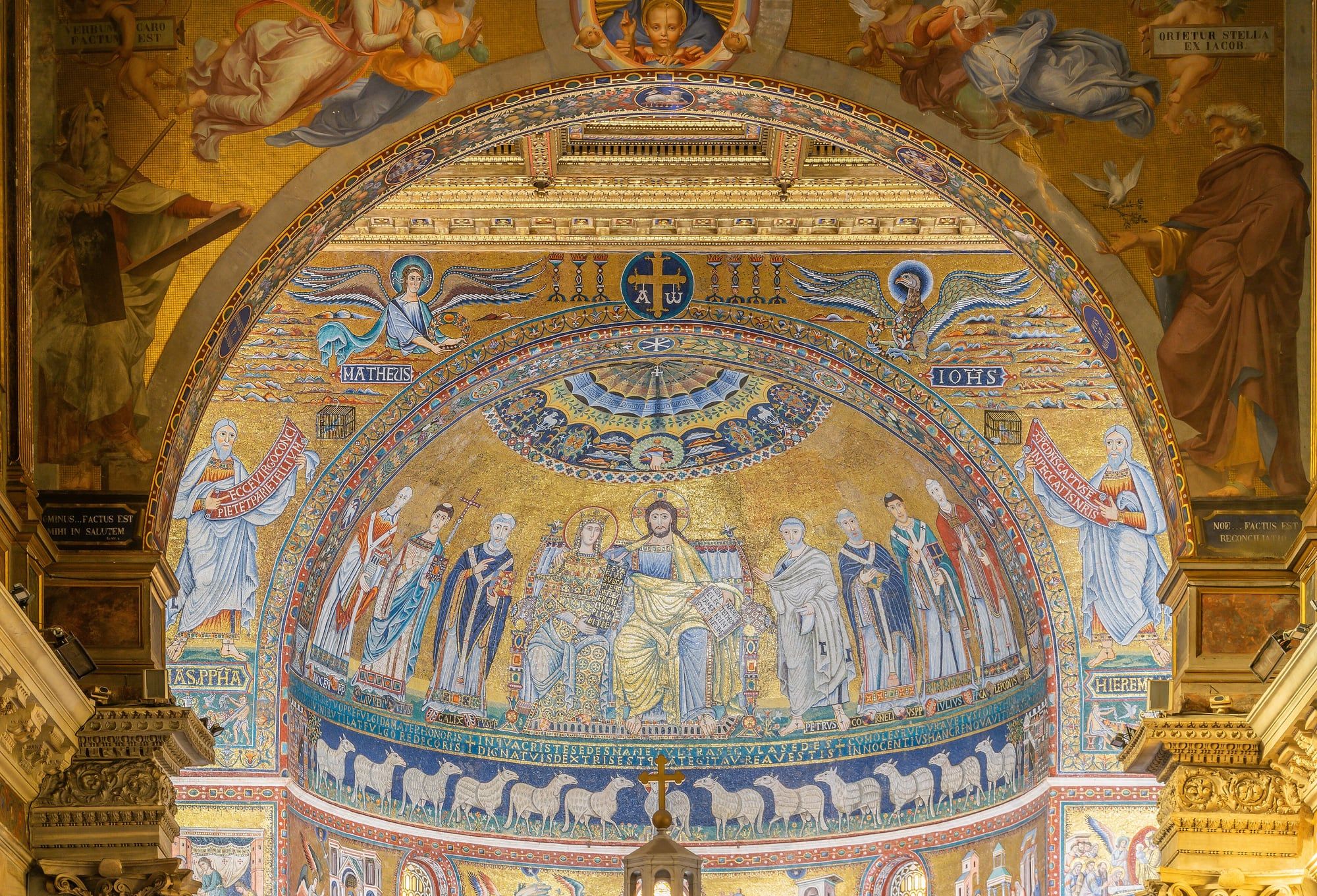
The basilica on the main square is one of the oldest churches in Rome dedicated to Mary, with a 12th-century bell tower and a façade mosaic of Mary and ten women holding lamps. Inside, the apse mosaics by Pietro Cavallini (1290s) are the reason to come; bring a €1 coin for the lights. Entry is free, open roughly 7:30–20:30; avoid Sunday morning masses if you want to walk around. The fountain in the piazza outside is the neighbourhood’s living room and a good place to orient yourself.
Villa Farnesina
Five minutes north on Via della Lungara, Villa Farnesina is the Renaissance villa the banker Agostino Chigi built in 1506–1510 and had decorated by Raphael, Peruzzi and Sebastiano del Piombo. The Loggia of Cupid and Psyche and the Triumph of Galatea are Raphael’s; the upstairs Hall of Perspectives fools the eye with painted colonnades. Entry is €12 adults, €10 reduced (at our last check), open Monday to Saturday 9:00–14:00 plus the second Sunday of the month; it closes early, so go before lunch. It is quiet even in peak season.
Orto Botanico
Across the street from Villa Farnesina, the university botanical garden climbs the lower slope of the Gianicolo: 12 hectares of palms, bamboo, a Japanese garden and a greenhouse, with benches and shade. Entry is €5, €4 reduced, free under 6 (at our last check). Good for a heat break in July and August, and the cherry blossom in late March or early April is the year’s busiest week.
Gianicolo (Janiculum Hill)
Walk up Via Garibaldi from Piazza di Santa Maria in Trastevere, past the Fontana dell’Acqua Paola, to the terrace at Piazzale Garibaldi: 15–20 minutes uphill, free, and the widest panorama of central Rome. A cannon fires at noon every day. Sunset is the obvious time; the terrace faces east, so you get the city lighting up rather than the sun going down. On the way up, the Tempietto by Bramante in the courtyard of San Pietro in Montorio is free and often empty.
Santa Cecilia in Trastevere and the quieter east side
East of Viale di Trastevere the lanes are calmer. Santa Cecilia has Cavallini’s Last Judgement fresco (small fee, mornings only) and Stefano Maderno’s marble of the saint. The streets around Piazza in Piscinula and Via dei Genovesi have the trattorias locals actually use.
Where and what to eat
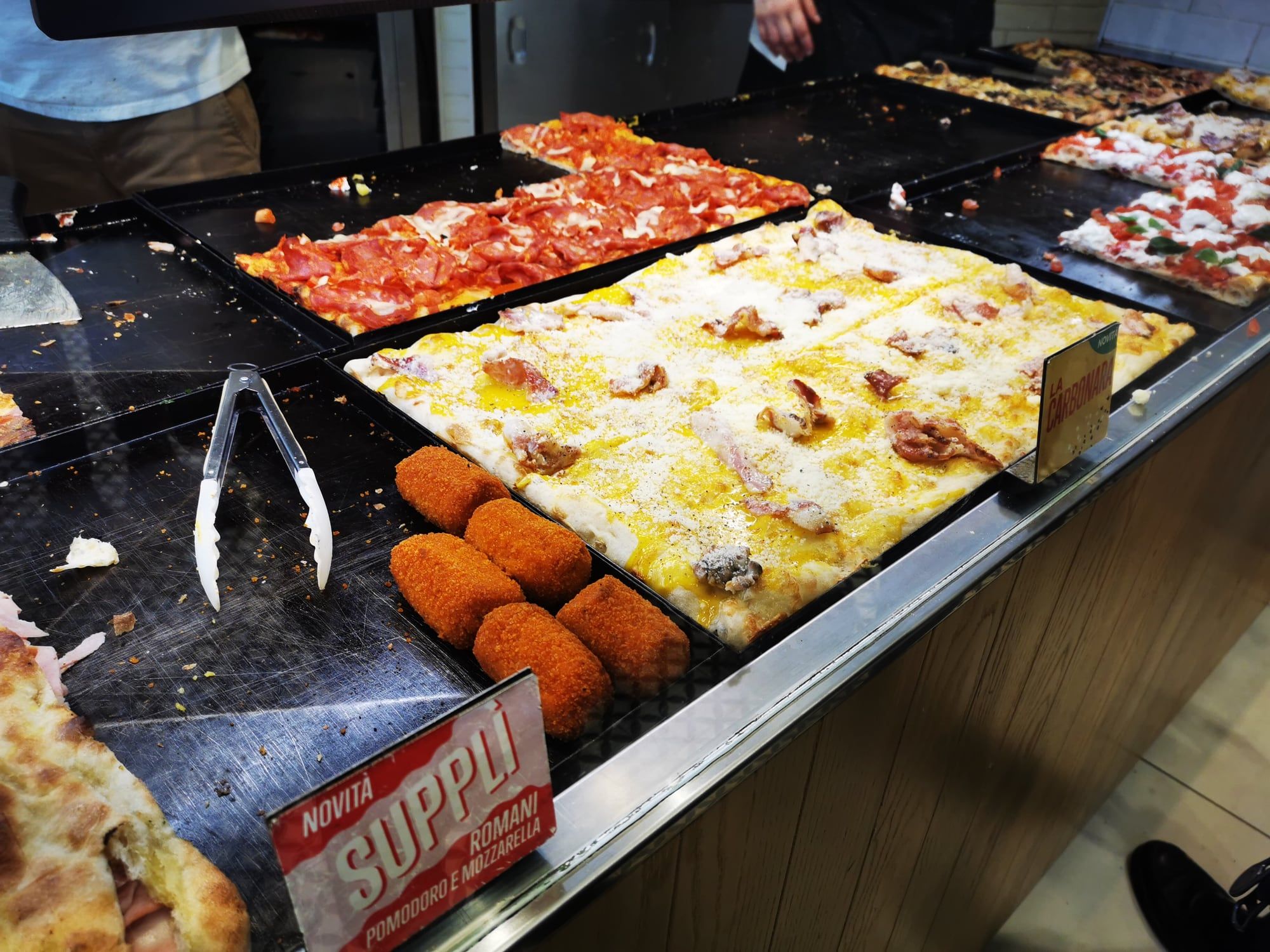
The Roman pastas are the point: cacio e pepe, carbonara, amatriciana and gricia. Add supplì (fried rice balls) and pizza al taglio for lunch, and trippa or coda alla vaccinara if you eat offal.
- Piazza di Santa Maria and Via della Lungaretta – tourist-facing, good views, mixed food. Fine for a drink, less so for the main meal.
- Via della Scala and Vicolo del Cinque – bars and casual pizza; the loudest part of the district after 22:00.
- East of Viale di Trastevere (Via dei Vascellari, Via dei Genovesi, Piazza in Piscinula) – where the better trattorias are. Book a table for 20:30 or arrive at 19:30 without one.
- Piazza San Cosimato – morning food market Monday to Saturday, and the neighbourhood’s best gelato is on its corner.
- Sunday morning – Porta Portese flea market runs along Via Portuense 7:00–14:00; go early and hold your bag in front of you.
Two rules that save money: a menu in six languages with photos means a tourist mark-up, and coffee at the bar costs a third of coffee at a table.
Nightlife in Trastevere
The evening starts at Piazza Trilussa by Ponte Sisto, where people sit on the steps with a drink from the kiosks. From there the crowd spreads along Via del Moro, Via della Scala and Vicolo del Cinque, which have most of the bars and stay busy until 1:00–2:00 on Friday and Saturday. Craft beer, wine bars and cocktail places sit within a few hundred metres of each other; there are no clubs to speak of, which is why the district feels lively rather than rowdy. Full details, including pub crawls and aperitivo hours, are on our Rome nightlife page.
Is Trastevere a good place to stay?
Yes for most visitors, with one caveat. The upside: you walk to Campo de’ Fiori, the Ghetto and the Pantheon in 10–20 minutes, the evening is on your doorstep, and prices for apartments run below the Spanish Steps area. The caveat is noise. Rooms on Via della Scala, Vicolo del Cinque, Piazza Trilussa or Piazza di Santa Maria hear the bars until 2:00 on weekends; rooms east of Viale di Trastevere, around Piazza in Piscinula and Via dei Salumi, are quiet. Check the street on a map before booking, ask for a courtyard-facing room, and remember there is no metro: for the Vatican or Termini you rely on tram 8, bus H and taxis, which adds 20–30 minutes each way compared with a base near Piazza Venezia.
Trastevere food tours: which one to book
Food tours are the reason to be here for many visitors, and the reason this page exists. Two GetYourGuide tours dominate the reviews at our last check:
Small-Group Food Tour with Wine in Trastevere – rated 4.9 from about 3,600 reviews on GetYourGuide. An evening walk of around three hours with 6–8 stops: supplì, pizza, a sit-down pasta course, cured meats and cheese, wine at each stop and gelato to finish. Groups are capped at about 12. It replaces dinner. Price from about €90 per person.
Trastevere & Campo de’ Fiori Street Food Tour – rated 4.9, a lighter daytime format that starts across the river at Campo de’ Fiori market, crosses Ponte Sisto and finishes in Trastevere. Street food only (supplì, pizza al taglio, porchetta, gelato), roughly 2.5 hours, cheaper and better for families or anyone who wants to eat a proper dinner later. Price from about €65.
If neither slot fits, the Rome food and drink category on GetYourGuide lists twilight tours, gluten-free versions and cooking classes; filter for “Trastevere” and a 4.8+ rating. For operator-by-operator comparisons (Eating Europe, Devour, The Roman Guy, Secret Food Tours) see our food tours page.
Food tour or dinner on your own?
A food tour at €65–90 replaces a restaurant dinner that would cost €40–60 for two courses and wine at a mid-range trattoria. What you pay extra for is orientation (you learn the streets on the first night), five or six places instead of one, and a guide who explains why carbonara has no cream and where the supplì came from. On a first visit that is worth it; on a return visit, or if you already know Roman food, book a table instead and put the money into the cooking class or a wine tasting. Groups of four or more with strong opinions about where to eat will also do better on their own.
How to choose
- Evening with wine, replaces dinner: the small-group tour with wine.
- Daytime, kids, budget: the street food tour.
- Vegetarian or gluten-free: message the operator through GetYourGuide before booking; most can adapt 2–3 stops but not all.
- Fully booked: Trastevere evening tours sell out 3–7 days ahead in April–June and September–October. Book as soon as your dates are fixed.
How to get there
- Tram 8 from Piazza Venezia or Largo di Torre Argentina to Trastevere/Mastai or Belli: 10 minutes, runs until about midnight.
- On foot from Campo de’ Fiori across Ponte Sisto (5 minutes) or from the Jewish Ghetto across Ponte Garibaldi and Tiber Island (5 minutes).
- Bus H from Termini along Viale di Trastevere; bus 23 runs along the river from the Vatican side.
- Trastevere railway station is on the FL1 line from Fiumicino airport, but it sits 1.5 km south of the centre of the district; take tram 8 from the station forecourt.
- Taxi ranks: Piazza Sonnino and Piazza Belli on Viale di Trastevere. Cars cannot enter most of the lanes.
What is nearby
- Jewish Ghetto – across the river via Tiber Island; the two districts make one evening.
- Aventine Hill and the keyhole – 20 minutes south-east over Ponte Sublicio; combine with the Orange Garden at sunset.
- Castel Sant’Angelo – 25 minutes north along the river or bus 23.
- Campo de’ Fiori – 5 minutes across Ponte Sisto for the morning market.
What to book
- Small-group food tour with wine – the default choice for a first evening; details on food tours.
- Street food tour Trastevere & Campo de’ Fiori – daytime and budget alternative.
- A pasta-making class in a Trastevere kitchen, 2–3 hours, from about €60; compare on cooking classes.
- An evening walking tour that pairs Trastevere with the Ghetto, on walking tours.
Booking checklist
- Book evening food tours 3–7 days ahead in spring and autumn; GetYourGuide cancellation is free up to 24 hours before.
- Meeting points are usually Piazza Trilussa or Piazza di Santa Maria in Trastevere; arrive 10 minutes early, tram 8 is the reliable way in.
- Eat lightly at lunch on food-tour day; the wine tour serves a full dinner’s worth.
- Villa Farnesina closes at 14:00 on weekdays; do it before the food tour, not after.
- Wear shoes for cobbles, carry a light layer for the Gianicolo terrace, and keep phones and bags in front of you on Piazza Trilussa and at Porta Portese.
- Trastevere restaurants take bookings by phone or WhatsApp; a 20:00–20:30 reservation is enough on weekdays, essential on Friday and Saturday.