What the Spanish Steps are
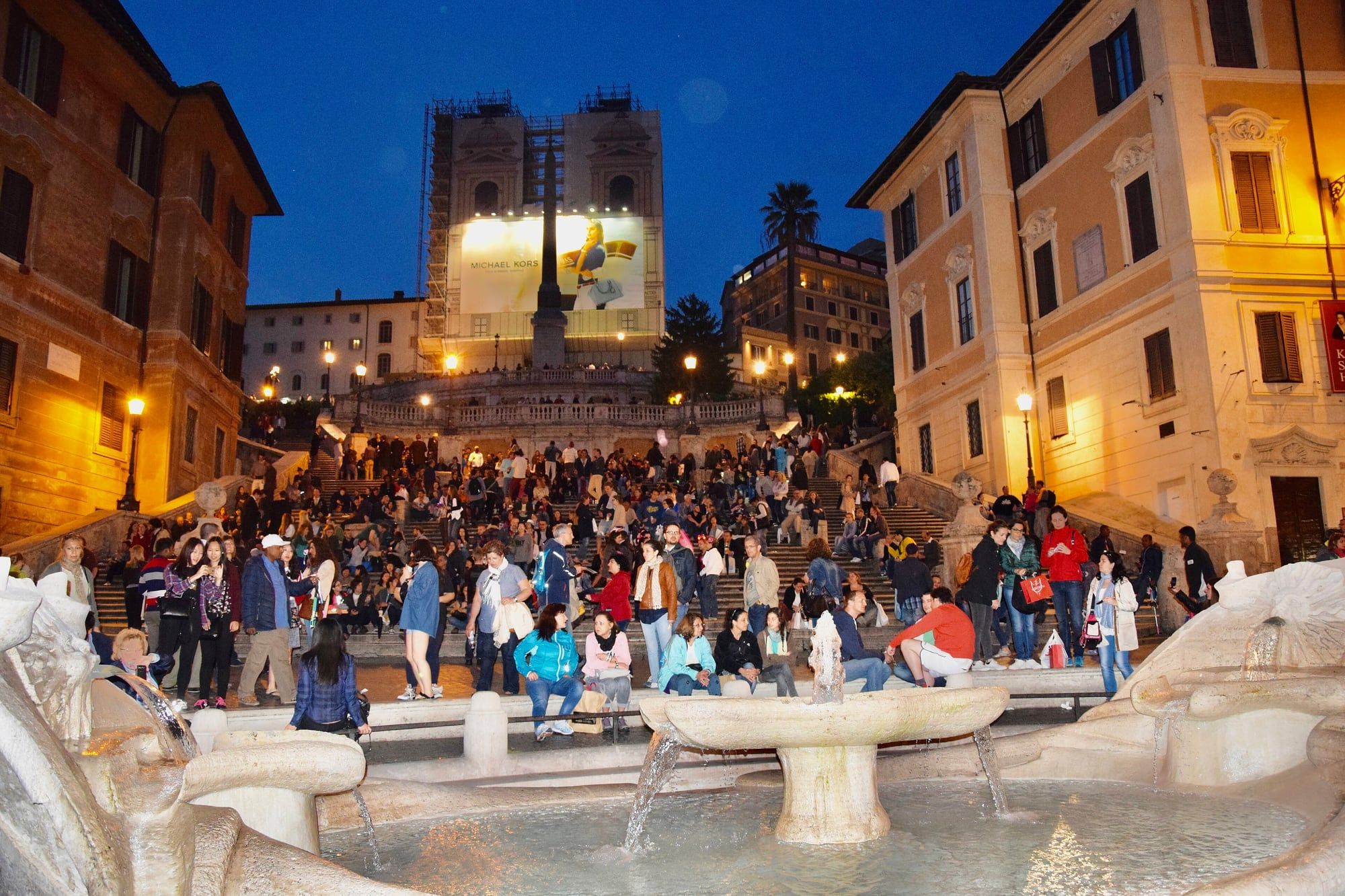
The Scalinata di Trinità dei Monti is a 135-step travertine staircase designed by Francesco de Sanctis and built in 1723–1725 with money left by a French diplomat, to connect the French church of Trinità dei Monti at the top with the Spanish Embassy’s square at the bottom. Hence the confusion: French money, Spanish name. The staircase fans out in three flights with terraces in between, which is why it photographs as a curved sweep rather than a straight climb.
Three facts that help you read the square:
- Trinità dei Monti (1502–1585) is still a French national church. The obelisk in front of it is a Roman copy of an Egyptian one, moved here in 1789.
- The Barcaccia (“ugly boat”) at the foot of the steps is a fountain by Pietro Bernini, father of the more famous Gian Lorenzo, finished in 1629. It sits low because the water pressure from the Aqua Virgo here was too weak for a spouting fountain, so the design is a half-sunk boat.
- The Keats-Shelley House is the pink building to the right of the steps as you face them, at Piazza di Spagna 26. John Keats died there on 23 February 1821, aged 25.
The steps were restored in 2015–2016 at Bulgari’s expense, which is one reason the city now guards them so closely.
The sitting ban and what you can and cannot do
Since 6 August 2019 Rome’s urban police regulation (Regolamento di Polizia Urbana) treats the staircase as a monument. In practice, at our last check:
- Banned: sitting or lying on the steps, eating or drinking on them, placing bags or shopping on the travertine, dragging wheeled luggage or prams up them.
- Fine: €250, rising to €400 if the steps are dirtied or damaged. Enforcement is by the Polizia Locale, who patrol in pairs, whistle and wave people up. Most tourists get a warning first; repeat or messy behaviour gets the fine.
- Allowed: walking up and down, standing for photos, pausing on the terraces, and sitting on the low walls around the Barcaccia (though not on the fountain rim itself).
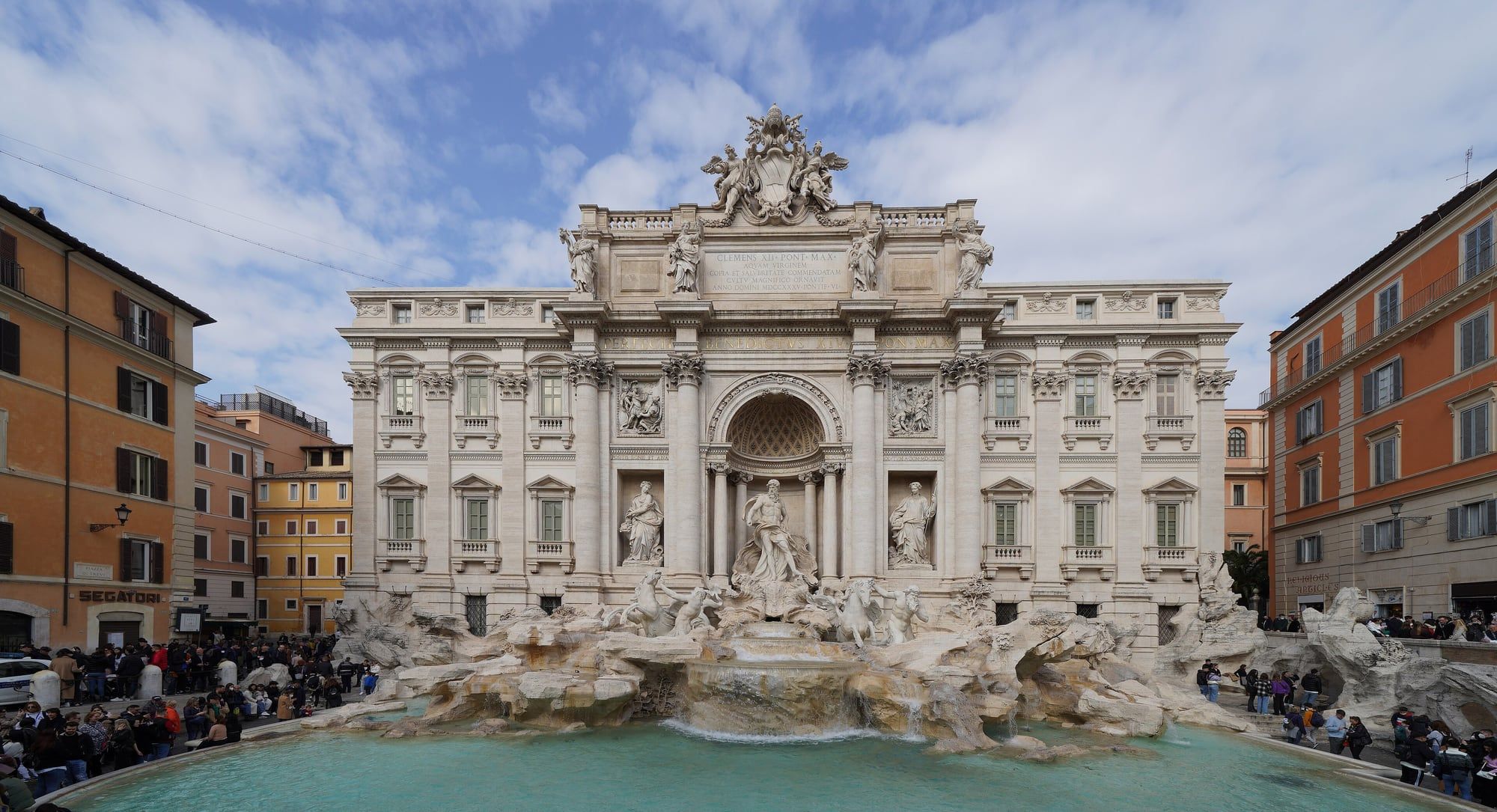
The same regulation bans eating or drinking at the Barcaccia and other monumental fountains, and covers the Trevi Fountain and Piazza Navona too. If you want to sit down with a view of the steps, the benches in front of the Spanish Embassy at the southern end of the square are the legal option, and the terrace at the top has a wall you can lean on.
What to see on and around Piazza di Spagna
Trinità dei Monti and the terrace
Climb the steps for the view down Via dei Condotti to the dome of St Peter’s in the distance. The church is open most days from about 10:00 (free), with two Daniele da Volterra frescoes inside, including a Deposition that Michelangelo’s pupil painted from his master’s drawings. The convent next door runs a few guided visits a week to its cloister and anamorphic frescoes; check the church’s own site for times.
Keats-Shelley House
Up two flights of stairs inside Piazza di Spagna 26 is the small museum in the rooms Keats rented in 1820–1821. The bedroom where he died was stripped and burned by papal health rules after his death; what you see is a reconstruction with his death mask, manuscripts, a lock of Milton’s hair and Shelley relics. Open Monday to Saturday 10:00–13:00 and 14:00–18:00, closed Sunday; admission about €8, with a €1 discount if you show a Casa di Goethe ticket from the previous three days (as of 2026). Allow 45 minutes. It is the calmest room within 200 metres of the steps.
The Barcaccia
Look at the fountain before you look at the steps. The sun and bees on the boat are the Barberini family emblem (Urban VIII was pope when it was built). In summer the low rim is a magnet for people wanting to sit; the municipal police move them on.
Via Condotti, Via Borgognona and Via Frattina
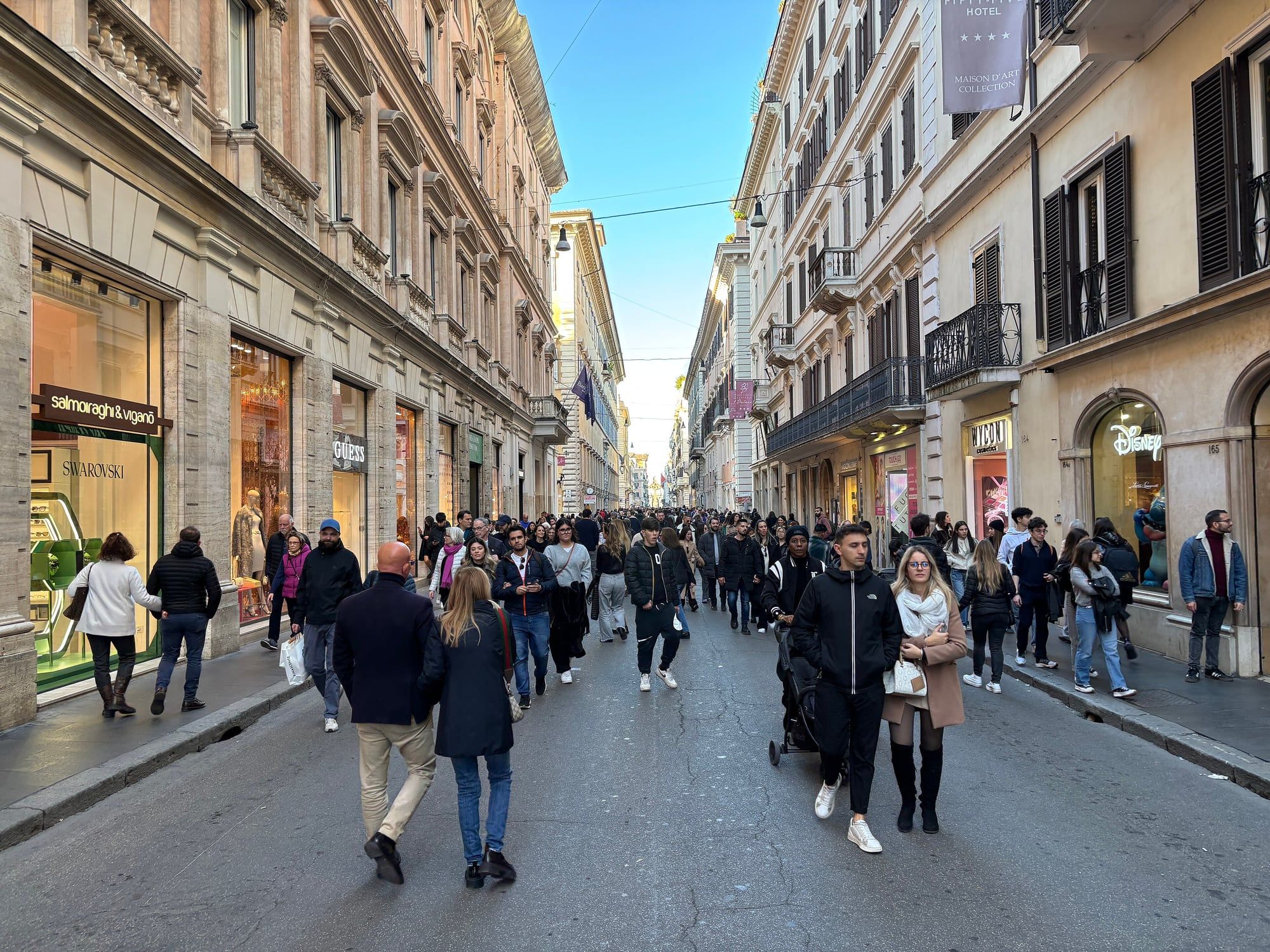
The three streets running west from the piazza are Rome’s luxury shopping district: Bulgari, Gucci, Prada, Valentino and Fendi on Via Condotti, more of the same on Via Borgognona, slightly cheaper brands on Via Frattina and Via del Corso at the far end. Antico Caffè Greco at Via Condotti 86 has been serving coffee since 1760; a cappuccino at the bar costs a fraction of one at a table. Our shopping page lists outlets and tax-free rules.
Via Margutta and Villa Medici
Turn right at the bottom of the steps along Via del Babuino, then right again into Via Margutta: the street of painters’ studios, courtyards and the building from Roman Holiday. From the top of the steps, Viale della Trinità dei Monti leads in five minutes to Villa Medici, the French Academy, which runs guided tours of its gardens and has one of the best terraces in the city.
Timing is everything
- 7:00–8:30 – the staircase is empty apart from street cleaners and a few photographers. The best hour of the day.
- 9:00–11:00 – manageable, the shops open at 10:00.
- 11:00–20:00 – peak. The lower flight is a slow-moving crowd; police are most active.
- After 22:00 – quiet again, the steps and church are floodlit, the shopping streets are empty and safe to walk.
- Late April to mid-May – roughly 600 potted azaleas line the steps for about two weeks (dates vary with the blooms). Beautiful, and the busiest fortnight of the year; come at 7:30.
- December – a nativity scene sits on the first terrace and the shopping streets are lit; weekends are dense from 16:00.
Rain empties the square faster than anywhere else in the centre because there is no shelter; a wet morning is a good time for the Keats-Shelley House.
How to get there
- Metro: Spagna on line A, the exit tunnel opens beside the piazza. From Termini it is three stops.
- Bus: lines 117 and 119 (small electric buses) stop at Piazza di Spagna; lines 52, 53, 62, 63, 83, 85 and 160 stop on Via del Tritone or Via del Corso, a 5-minute walk.
- On foot: 10 minutes from the Trevi Fountain, 10 from Piazza del Popolo along Via del Babuino, 15 from the Pantheon via Via del Corso, 12 from Barberini metro via Via Sistina (arriving at the top).
- Lift: the Spagna metro station has an elevator to the top of the steps, signposted inside the station, useful for wheelchairs and prams. Check the ATAC site for whether it is working; it is often out of service.
What is nearby
- Trevi Fountain – 10 minutes south; the two squares are almost always done together.
- Villa Medici – 5 minutes along the top of the hill for garden tours and the terrace.
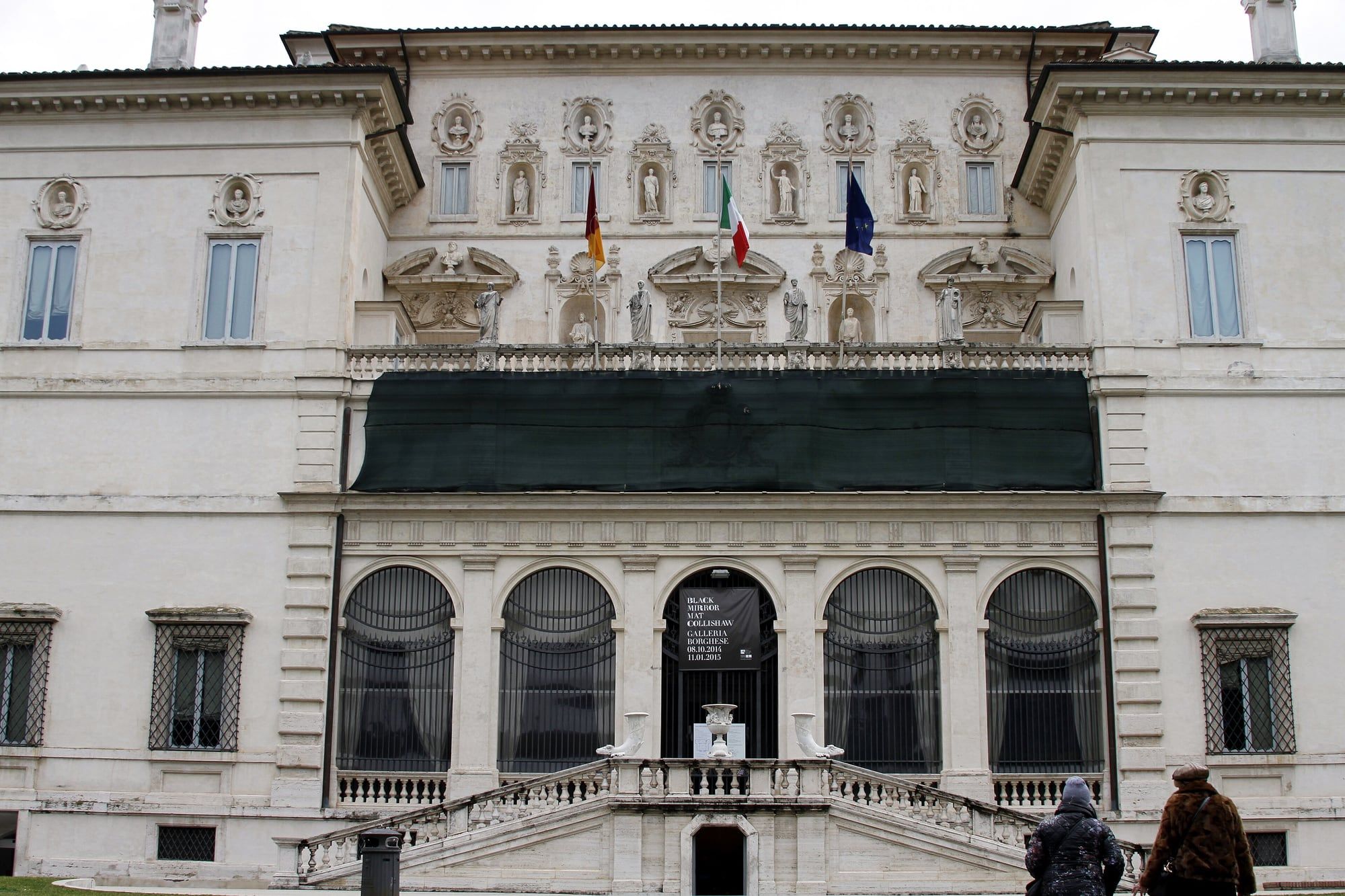
- Borghese Gallery – 20 minutes through the Pincio and Villa Borghese park; book the timed slot weeks ahead.
- Palazzo Barberini – 12 minutes east via Via Sistina, for Caravaggio and Raphael’s La Fornarina.
- Piazza del Popolo and the Pincio terrace – 10 minutes north, the free sunset view over the square and towards St Peter’s.
What to book
The Spanish Steps themselves need no ticket. Paid experiences that use the area well:
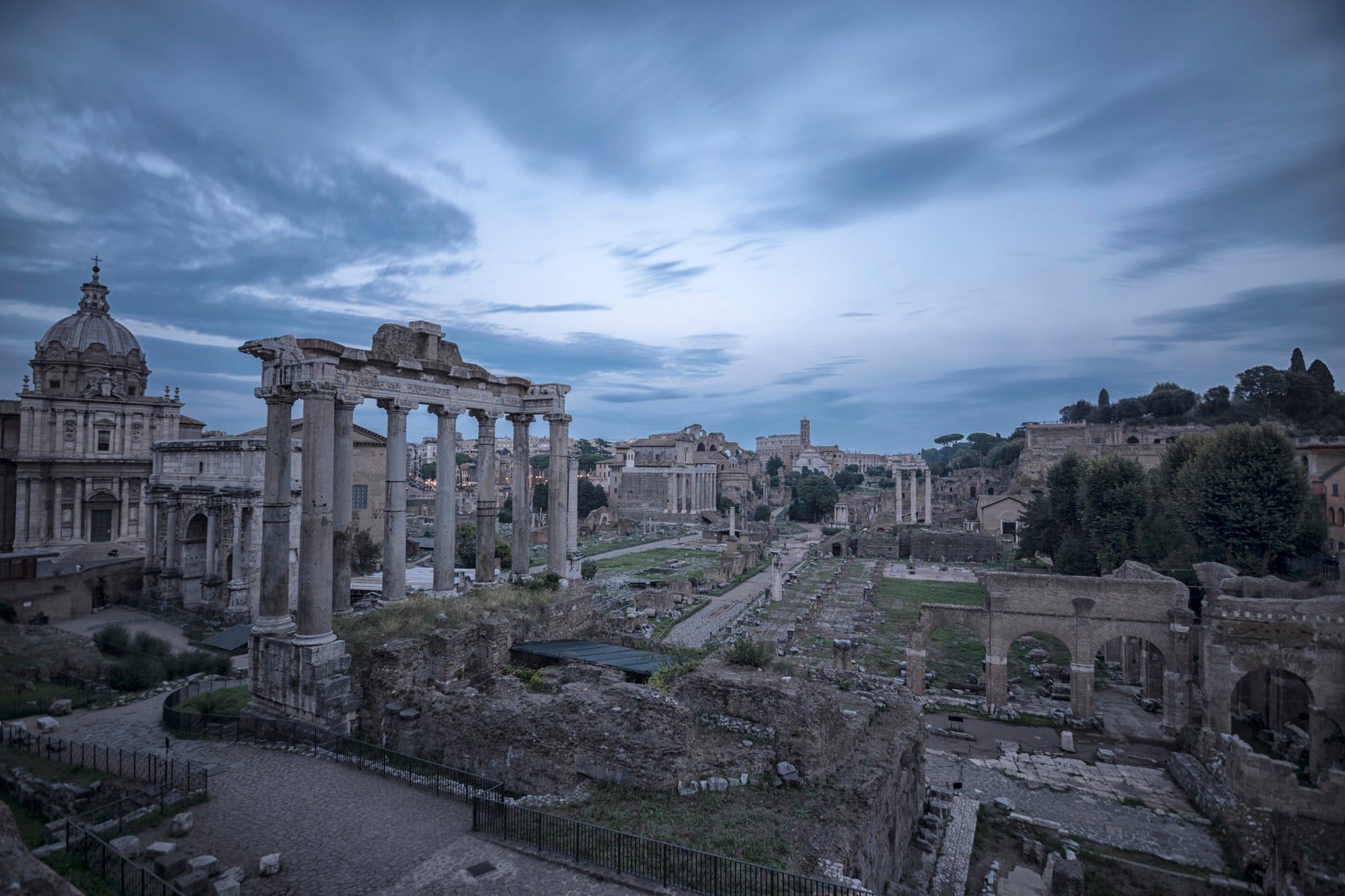
- A centre walking tour – the standard route is Piazza di Spagna, Trevi, Pantheon and Piazza Navona in 2–3 hours, from about €20 per person in a group on GetYourGuide’s walking tours. Evening departures give you the steps lit and the shops closed. Formats and operators are compared on our walking tours page.
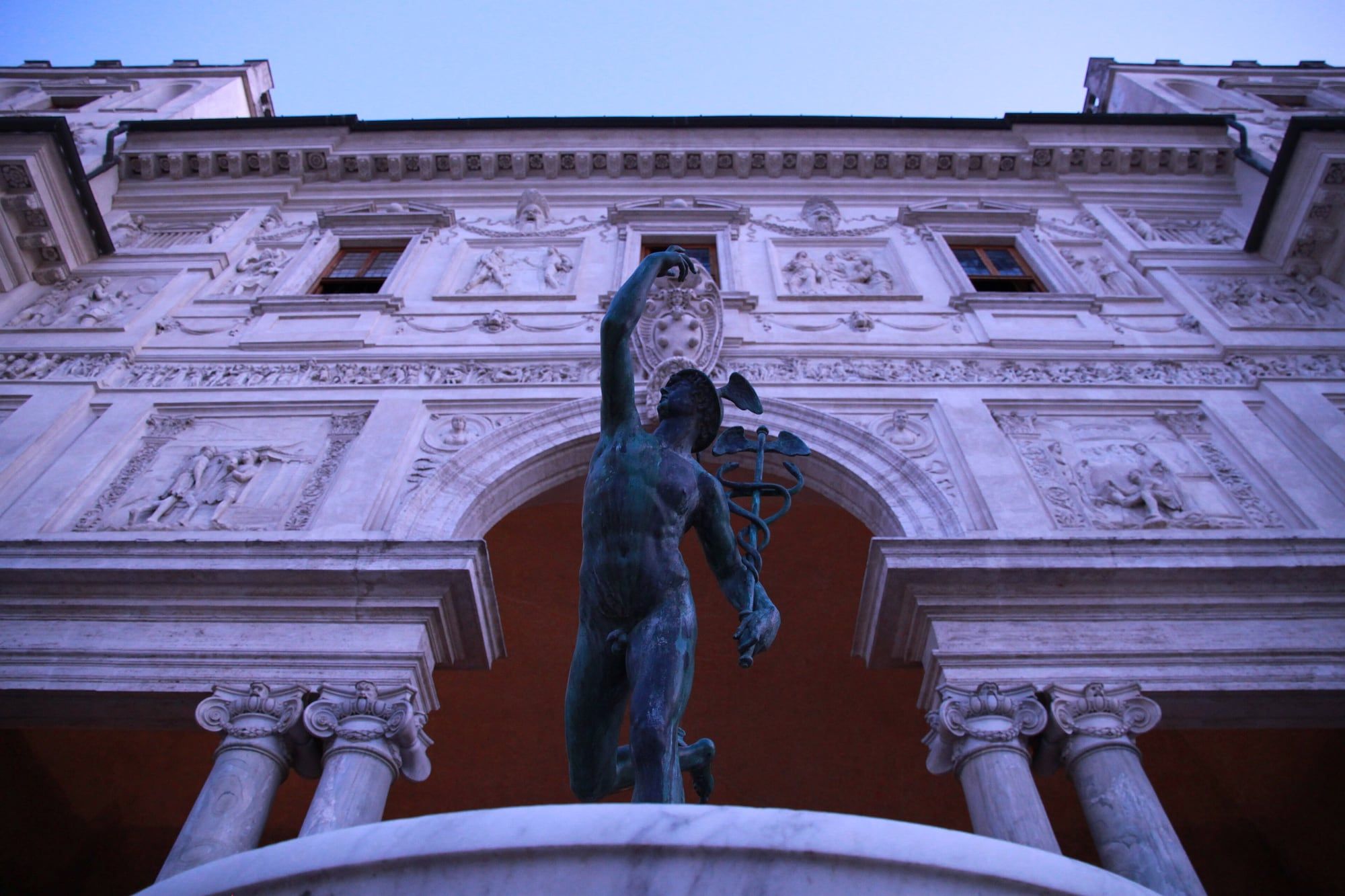
- A hidden-corners walk – for a second visit: Via Margutta, the Pincio, Villa Medici’s gardens, the Sant’Andrea delle Fratte angels by Bernini, from about €25 on the hidden gems category.
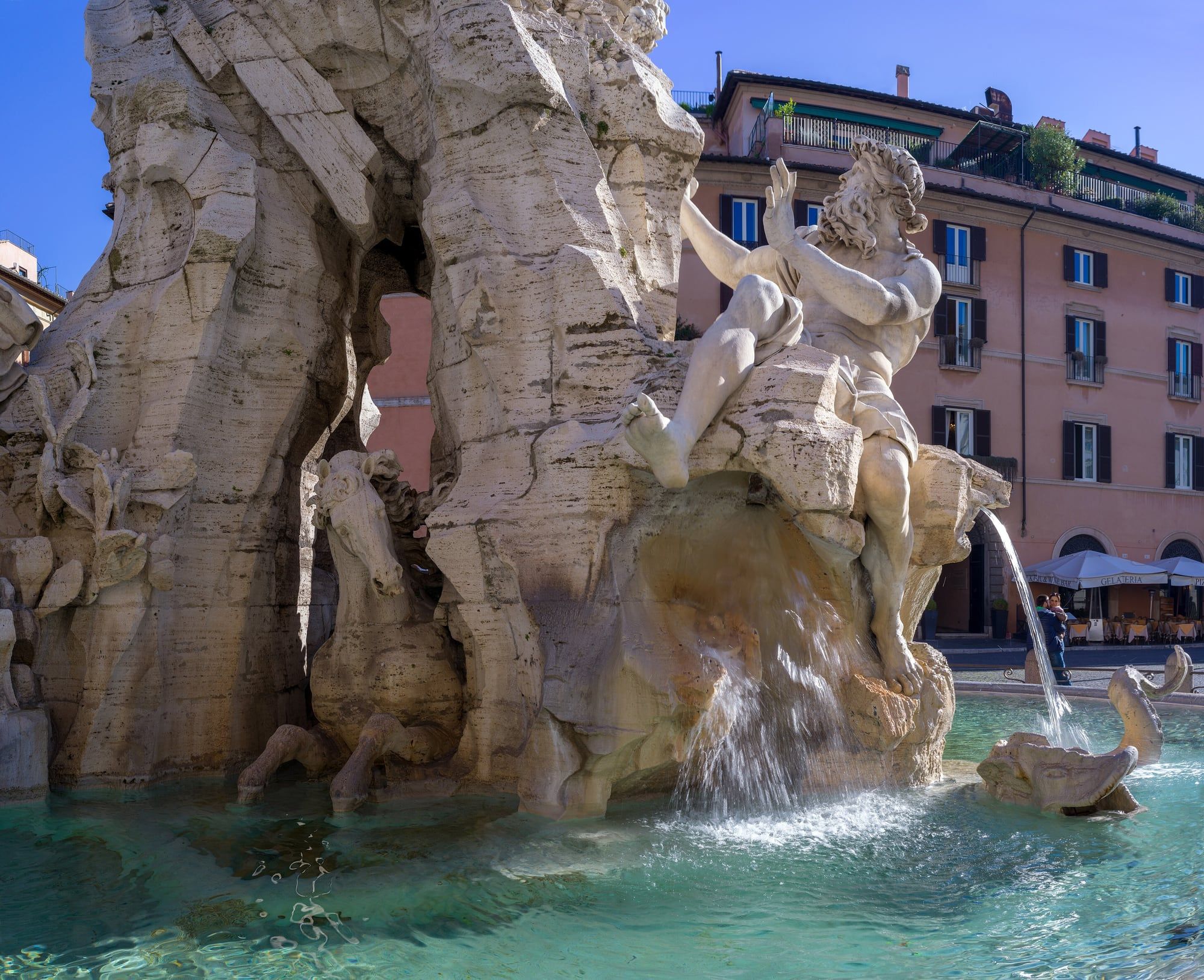
- Squares and fountains group walk – Tiqets lists a guided walk from Piazza di Spagna covering the Barcaccia, Trevi and Navona from €20 (checked on its walking tours page.
- Borghese Gallery timed entry – the most in-demand ticket within walking distance; see Borghese Gallery.
Booking checklist
- No ticket needed for the steps; bring a coin for the Trinità dei Monti lights and cash or card for the Keats-Shelley House (about €8).
- Do not sit, eat or set bags on the steps: €250 fine, at our last check.
- Come before 8:30 for photos, or after 22:00 for the lit staircase without the crowd.
- Walking tours usually meet at the Barcaccia fountain or the metro exit; confirm the exact spot in the GetYourGuide voucher, arrive 10 minutes early.
- Keep phones and wallets in front pockets on the lower flight and in the Spagna metro tunnel, the two pickpocket hotspots around the Spanish Steps.