What the Appian Way is
The Via Appia was begun in 312 BC by the censor Appius Claudius Caecus to move troops to Capua, and later extended to Brindisi on the Adriatic. It was the first great Roman road, the “regina viarum”, and because Roman law banned burials inside the city, its first miles filled with tombs: senators’ mausoleums, columbaria, and from the 2nd century AD the underground Christian cemeteries called catacombs.
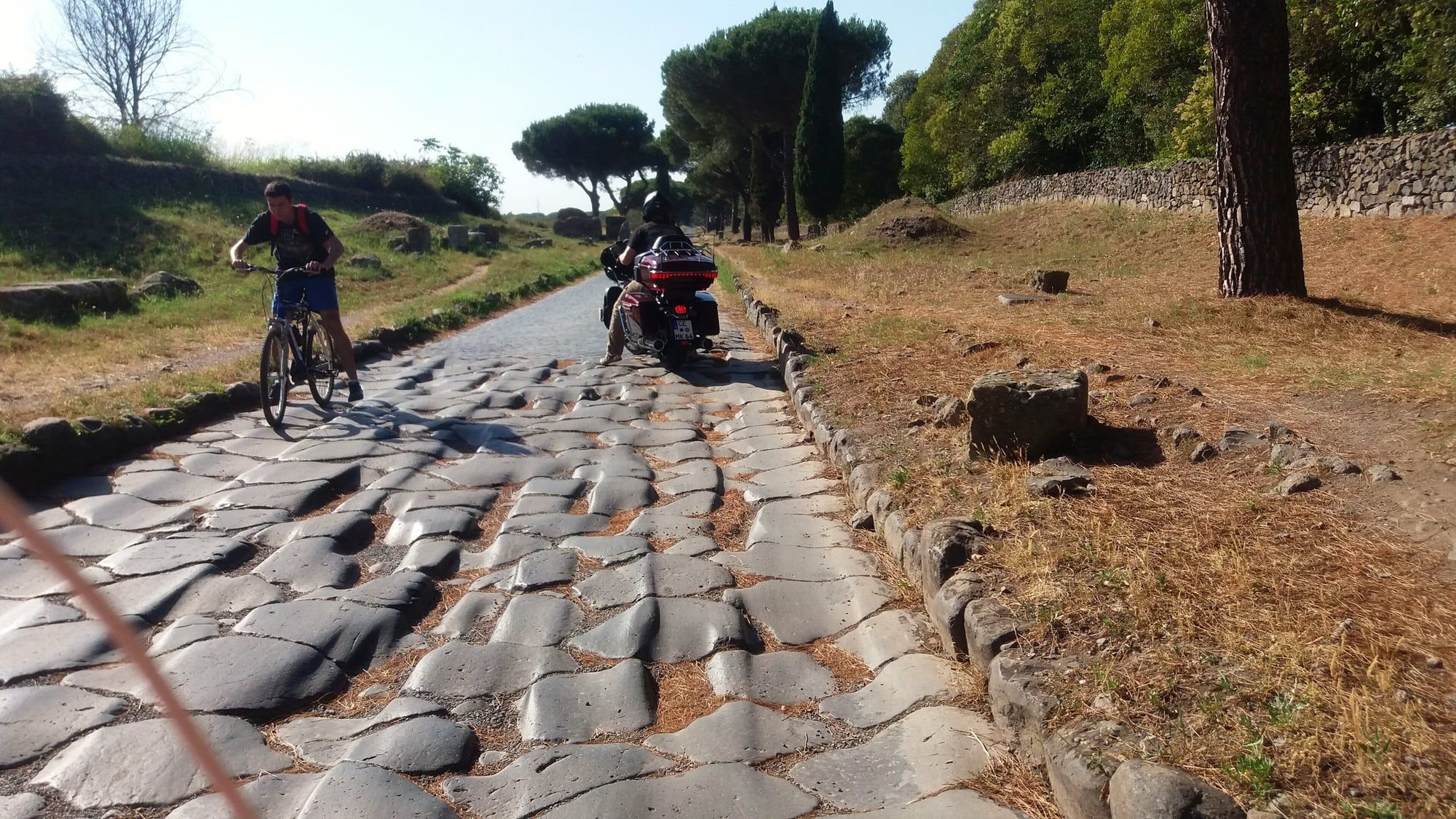
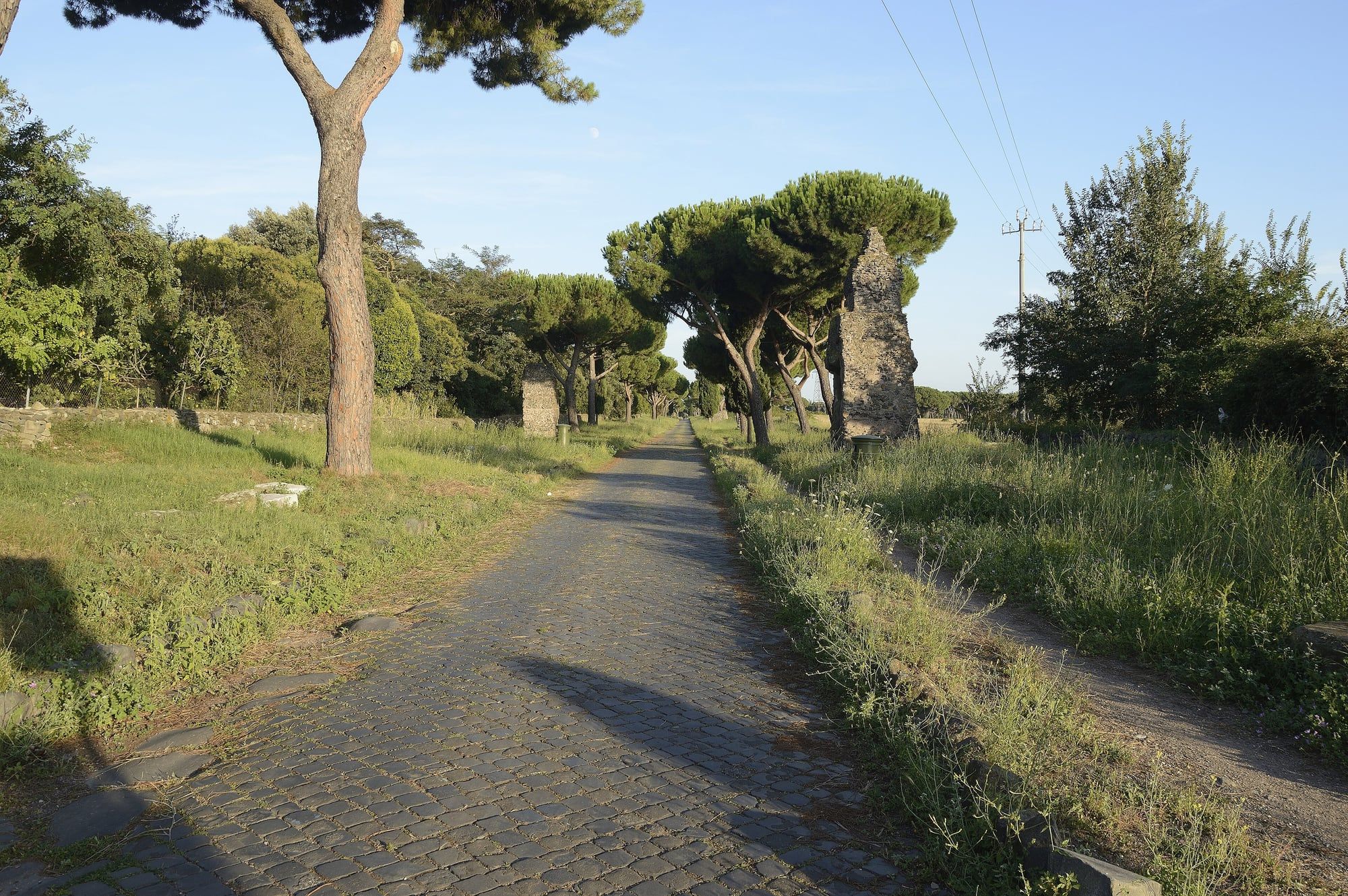
Today the first 11 km from Porta San Sebastiano sit inside the Parco Regionale dell’Appia Antica, and the monuments are managed by the state Parco Archeologico dell’Appia Antica. Since 2024 the road has been a UNESCO World Heritage Site in its own right. It is countryside 3 km from the Colosseum: umbrella pines, sheep, aqueduct arches, and stretches of the original basalt paving with cart ruts still in it.
What to see, in order from the city
Distances are from Porta San Sebastiano, the gate in the Aurelian Walls where the road begins.
- Porta San Sebastiano and the Museo delle Mura (0 km). The best-preserved gate in the walls, with a free museum inside and a walk along the ramparts. Open mornings, closed Monday.
- Domine Quo Vadis church (0.8 km). Where Peter, fleeing Rome, is said to have met Christ. A copy of the footprints stone is inside (the original is at San Sebastiano).
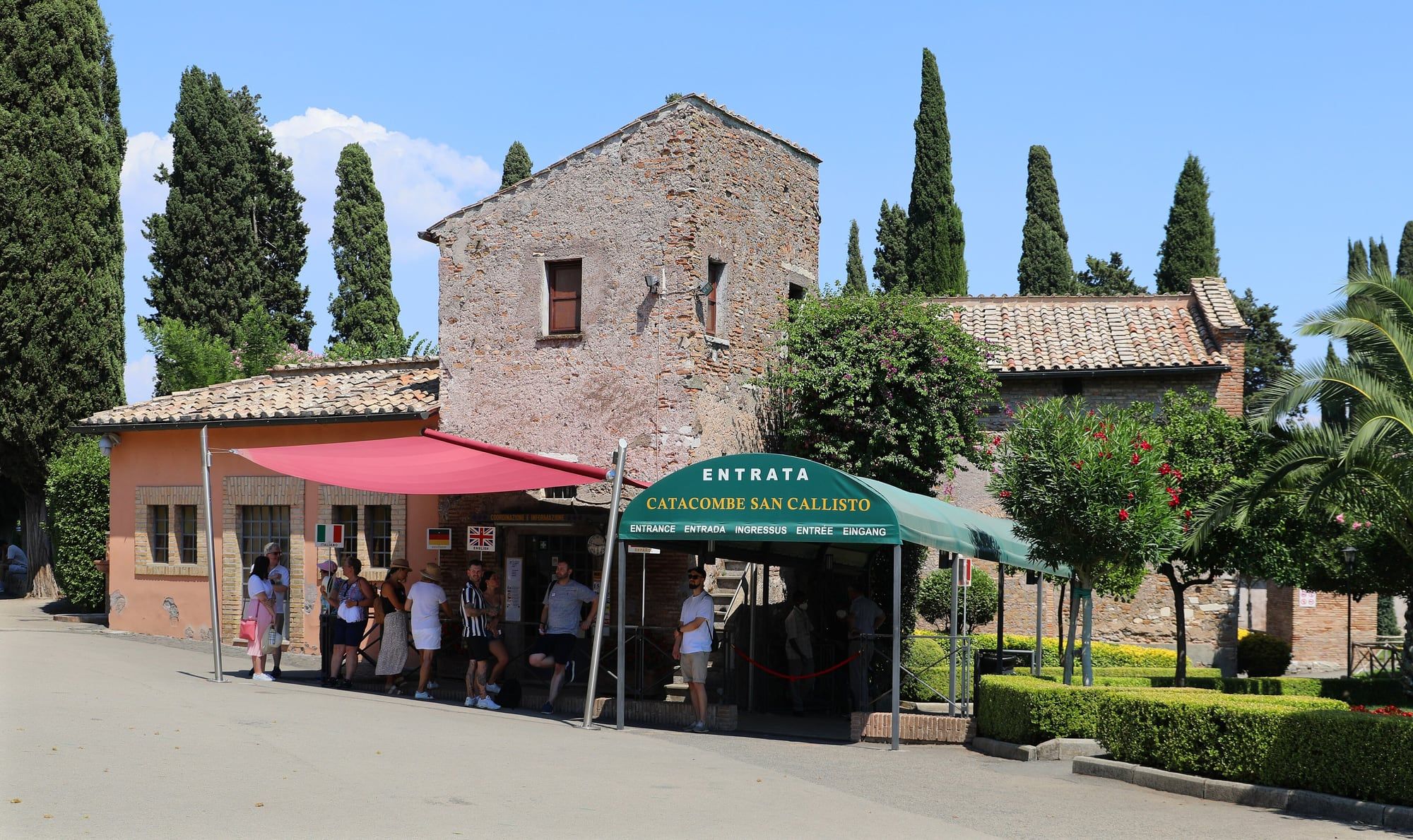
- Catacombs of San Callisto (1.8 km). The biggest Christian cemetery in Rome, 20 km of galleries, with the Crypt of the Popes. Entrance is off the road through a long avenue. Guided visits only.
- Catacombs of San Sebastiano and the basilica (2.4 km). Smaller galleries, three well-preserved pagan mausoleums, and Bernini’s last work in the basilica above.
- Catacombs of Domitilla (off the road, 15 minutes west). The quietest of the three, with an underground 4th-century basilica.
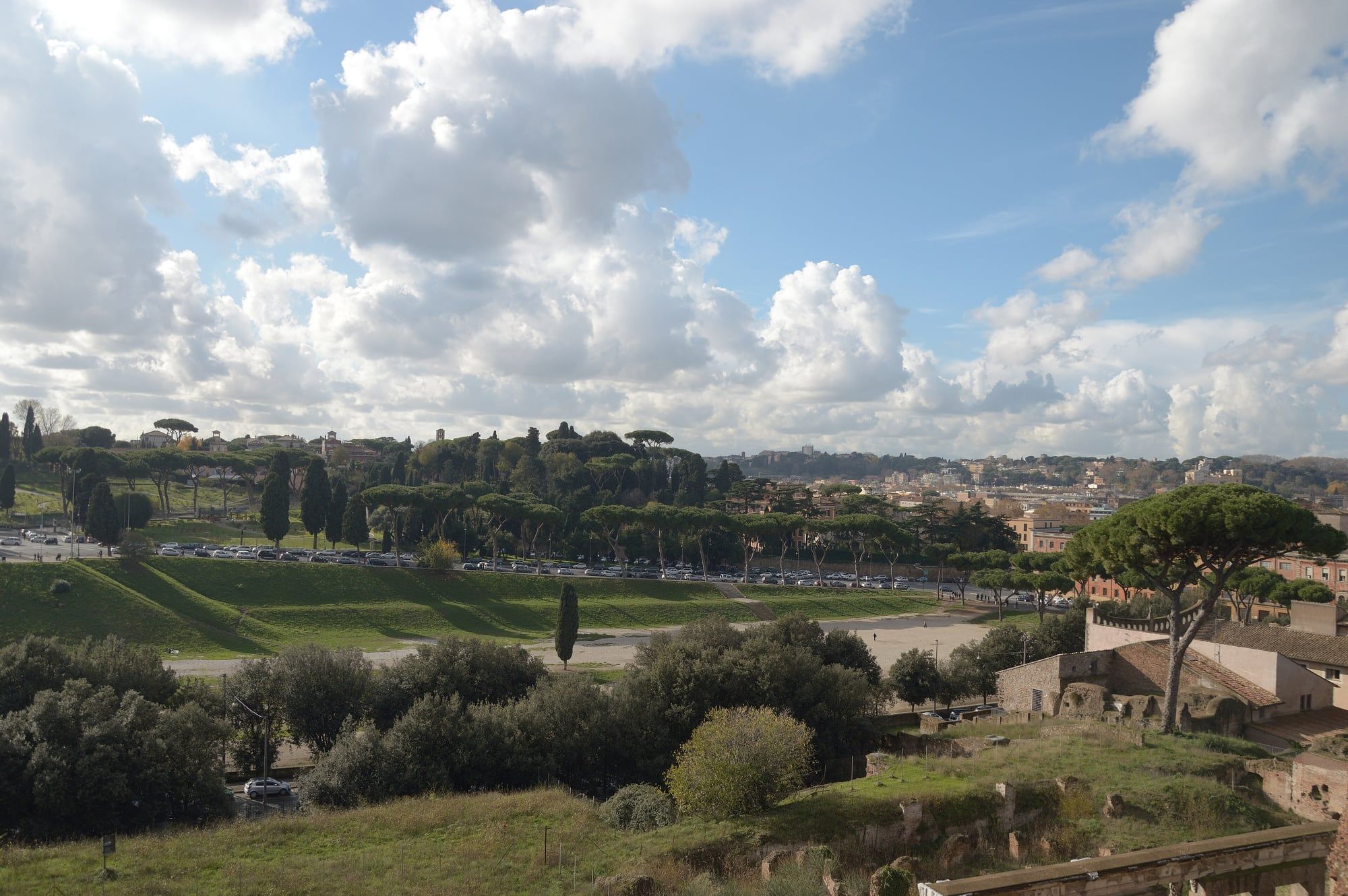
- Villa and Circus of Maxentius (2.8 km). A 10,000-seat chariot circus of AD 306–312, better preserved than the Circus Maximus, plus the mausoleum of Maxentius’s son. Free at our last check; check the park site for hours.
- Mausoleum of Cecilia Metella (3 km). The round tomb of a general’s daughter, 1st century BC, turned into a fortress by the Caetani in 1302. The junction here is where the traffic ends and the ancient road begins.
- Capo di Bove (3.3 km). A small archaeological area with a bath complex; closed for restoration at our last check.
- The long straight (km 4–8). Original paving, the tombs of the Rabirii and of Hilarus Fuscus, the Tumuli of the Horatii, and the Villa dei Quintili on the left.
- Villa dei Quintili (7 km, entrance from Via Appia Nuova or from the ancient road). A huge 2nd-century villa that Emperor Commodus liked so much he executed its owners to get it. Baths, a nymphaeum, a small museum. The best paid site on the road.
- Casal Rotondo (8 km). The largest tomb on the Appia, with a farmhouse built on top. Turn back here on a half-day.
Free and paid: official prices as of September
The park changed its ticketing on 1 July 2026. Current prices from the Parco Archeologico:
| Site | Full | Reduced (EU 18–25) | Roma Pass | Under 18 |
|---|---|---|---|---|
| Mausoleum of Cecilia Metella + Castrum Caetani | €8 | €2 | €4 | Free |
| Villa dei Quintili + Santa Maria Nova | €8 | €2 | €4 | Free |
| Antiquarium di Lucrezia Romana | €6 | €2 | – | Free |
| Villa di Sette Bassi, Tombe di via Latina | €6 each, guided visits only, booking required | |||
| Biglietto del Parco (all sites, 7 days) | €12 | €2 | – | Free |
| La Mia Appia annual card | €25 |
Single-site tickets need no reservation; the €12 park ticket is booked through the park’s app or the Musei Italiani site, and on-site kiosks take cards only. The catacombs are run separately by the Pontifical Commission for Sacred Archaeology, guided-only, about €10 per person, and each closes one day a week (San Callisto on Wednesday, San Sebastiano on Sunday, Domitilla on Tuesday, as of 2026; confirm on the catacombs page).
The road itself, the Circus of Maxentius, the churches and the park paths cost nothing.
Timing is everything
- Sunday and public holidays – the road is closed to private cars from Porta San Sebastiano, so the busy first 3 km become safe for bikes and walkers. It is also the busiest day for Romans; go at 9:00–10:00 and you will have the long straight almost to yourself before the family picnics arrive at noon.
- Weekdays – the first 2.5 km carry cars and bus 118 with no pavement in places; take the bus to Cecilia Metella and start there. Beyond the junction the road is closed to through traffic every day.
- Season – March to May and mid-September to November are ideal. July and August afternoons are 35°C with no shade on the straight; ride at 8:00 or after 17:00.
- Light – late afternoon from the west makes the basalt and the pines glow; the classic photos are taken between km 4 and 6 an hour before sunset.
- Catacombs – morning slots are cooler underground and less crowded; the last tours leave around 16:30.
How to get there
- Bus 118 – from Piazza Venezia, Via dei Fori Imperiali, Colosseo or Circo Massimo (metro B), along the Appia to the catacombs, Cecilia Metella and on to Villa dei Quintili. About 25 minutes to the catacombs; every 20–30 minutes; runs on Sundays.
- Bus 660 – from Colli Albani (metro A) straight to Cecilia Metella in 10 minutes. The fastest option from Termini: metro A to Colli Albani, then 660.
- Bus 218 – from San Giovanni (metro A) to Domine Quo Vadis and the Ardeatina entrance to San Callisto and Domitilla.
- Bike from the centre – 3 km from the Circus Maximus via Viale delle Terme di Caracalla and Porta San Sebastiano; the Caracalla stretch has a cycle lane, the first kilometre of the Appia does not.
- Taxi – €20–25 from the centre to Cecilia Metella; ask the driver for “Via Appia Antica, Cecilia Metella”.
- Bike hire – the park visitor centre at Via Appia Antica 58–60 (near Domine Quo Vadis) and a hire point at Cecilia Metella. Tiqets sells a one-hour rental from €5 and a day rental from about €20, rated 4.4–4.6 (checked . E-bikes cost roughly double.
E-bike and guided tours
Cycling is the answer to the Appia’s main problem: the good part starts 3 km out and runs for 5 km more. Guided e-bike tours solve the traffic on the first stretch (some shuttle you past it) and add the aqueducts of the Parco degli Acquedotti, which is a 20-minute ride east of Villa dei Quintili and otherwise hard to combine.
Tiqets options under the Parco Archeologico Appia Antica venue, checked our last check:
- Appia Antica & Catacombs e-bike tour with private transfer – from €89, rated 4.9 from about 70 reviews. Shuttle from the Circus Maximus to the park, then e-bikes along the ancient road with a catacomb visit included. The most-booked format.
- Appia Antica, Aqueducts & Catacombs e-bike tour – from €79, rated 4.8, without the catacomb entry (you can add it on site).
- Guided e-bike tour of the Appian Way – from €55, the budget half-day: tombs, paving and the aqueduct park.
- Off-road e-mountain-bike tour with catacombs and food – from €91, small group, on the paths as well as the road.
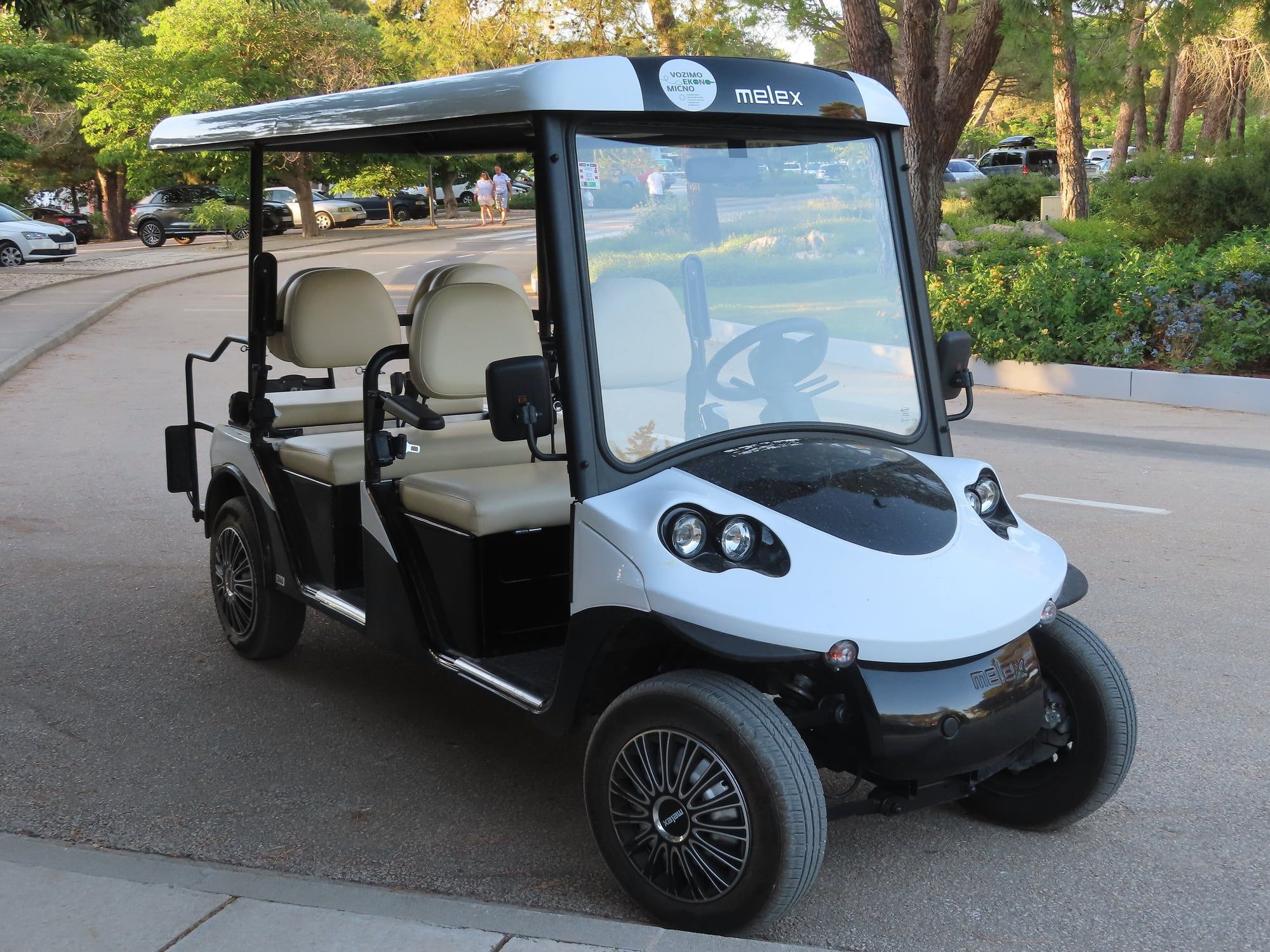
- Shared golf cart tour – from €95 for those who do not want to pedal; see also golf cart tours.
On GetYourGuide, the bike tours category lists the same operators plus city rides that pass the Appia, and the Catacombs of Rome page has guided catacomb visits with transfers from €49 if the underground is your priority. Format comparisons (e-bike vs Segway vs city bike) are on bike and Segway tours.
For anyone travelling with children, the gladiator school on Via Appia Antica 18 is at the very start of the road and fits neatly before a Sunday ride.
What is nearby
- Catacombs – the three on the road plus Priscilla and Sant’Agnese elsewhere; prices, closing days and which to choose.
- Circus Maximus – the usual start point for e-bike shuttles and 3 km from Porta San Sebastiano.
- Baths of Caracalla – 10 minutes on foot from Porta San Sebastiano, €8, one of the least crowded major ruins in Rome.
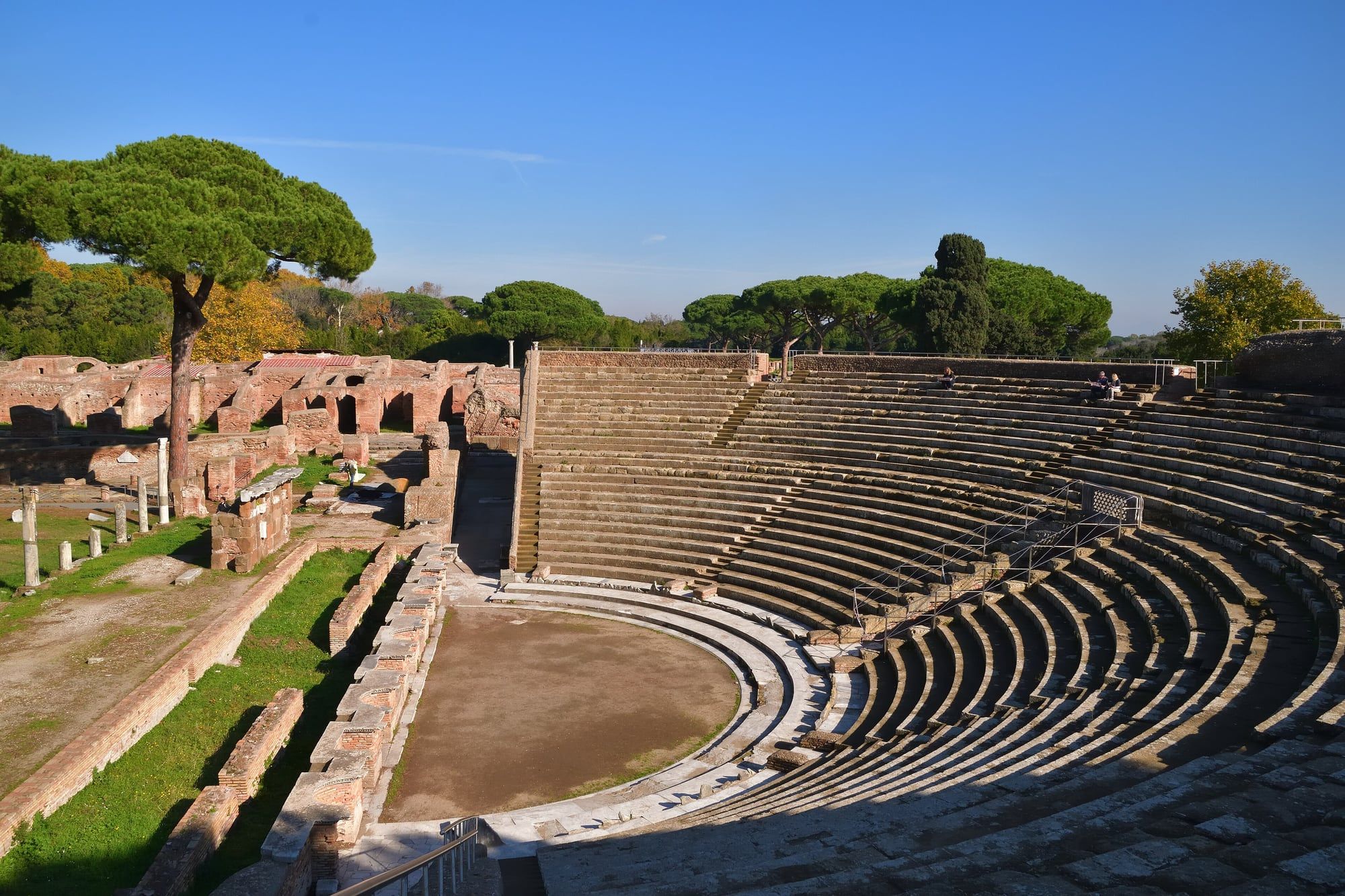
- Ostia Antica – a separate half-day by train; do not combine both in one day.
- Parco degli Acquedotti – 3 km east of Villa dei Quintili, free, the best-preserved aqueduct arches in Rome, reachable from Giulio Agricola metro (line A).
What to book
- Appia Antica & Catacombs e-bike tour – from €89 on Tiqets, the complete half-day with shuttle and underground included.
- Guided e-bike tour – from €55 on Tiqets if you want the road and aqueducts without a catacomb.
- Catacombs guided visit or transfer tour – from €15 on GetYourGuide, for a catacomb-first visit; then walk the road independently.
- Bike rental only – from €5 an hour at the park gate for a self-guided Sunday; details on bike and Segway tours.
Booking checklist
- Choose Sunday if you can; otherwise start at Cecilia Metella (bus 660) and skip the first 2.5 km of traffic.
- Buy site tickets at the kiosks by card, or the €12 park ticket via the park app; bring an EU ID for the 18–25 reduction and the Roma Pass if you have one.
- Catacombs: check the weekly closing day and arrive before 16:00; no photos underground; 16°C inside, bring a layer.
- Water and sun: no shops after Cecilia Metella and no shade on the straight; fill bottles at the fountains by the visitor centre.
- Wear shoes with grip and choose an e-bike with wide tyres; the basalt paving is uneven and slippery when wet.
- Tours meet at the Circus Maximus or at Via Appia Antica 60; check the voucher, arrive 15 minutes early, helmets are provided.
- Allow 4 hours minimum, 6 with catacombs and Villa dei Quintili; the Appian Way rewards a slow day.