Is Ostia Antica doable in a day from Rome?
It is doable in a half day, which is the whole point. Ostia Antica was Rome’s port at the mouth of the Tiber, a city of 50,000 people that traded grain, oil and wine for the capital, then silted up and was abandoned as the coastline moved west. What survives is 35 hectares of streets, apartment blocks, warehouses, baths and bars, in brick rather than the lava-sealed plaster of Pompeii, under a canopy of umbrella pines that makes it walkable in July.
An Ostia Antica day trip from Rome starts at Piramide on Metro B and ends 30 minutes later at a suburban railway station. There is no coach, no motorway, no ticket queue of note. Arrive at 9:00, walk the Decumanus until 12:30, eat at the café or in the medieval borgo outside the gate, and be back in the centre by 14:30 — or carry on down the same line to the beach.
Metromare train vs organised tour
The train: 30 minutes on a metro ticket
Take Metro B to Piramide (four stops from Termini). Follow the signs for “Roma–Lido / Metromare”; the Porta San Paolo terminus is inside the same complex, a two-minute walk. Trains run every 10–15 minutes from about 5:30 to 23:30 towards Cristoforo Colombo. Ostia Antica is the sixth stop, about 30 minutes. A standard BIT ticket (€1.50, valid 100 minutes across metro, bus, tram and Metromare) covers the journey; so do the Roma 24/48/72-hour passes and the Roma Pass. Validate the paper ticket at the turnstile.
At Ostia Antica station, take the footbridge over Via Ostiense, walk straight ahead along Via del Castello di Giulio II past the medieval borgo, and the ticket office is on your left after five minutes. On the way back, buy a fresh €1.50 ticket if the 100 minutes have expired; the machines are in the station.
The line has been branded Metromare since 2022 and gained new trains; it is still a suburban railway, so expect occasional gaps in service on weekends. Check ATAC’s site for engineering work before you travel.
Tickets: official office or Tiqets
The ticket office sells adult entry at €18, cards accepted, usually with no queue. If you prefer a mobile ticket, the Ostia Antica entry ticket on Tiqets is the same €18, rated 4.4 from 128 reviews (checked our last check). The €34 skip-the-line and audio-guide bundle is rated only 3.4 from 20 reviews; there is rarely a line to skip, so pay for it only if you want the commentary and have no other guide.
Guided tours: for the story behind the bricks
Ostia’s problem is legibility. Without explanation, much of it is brick walls at knee height. The semi-private half-day tour on Tiqets (€59, up to 12 people) meets in Rome, travels with you on the train, gives you two hours with a guide and leaves you an open return ticket; entry is paid separately. Guided options and combos with the Appian Way or the beach appear in the day trips from Rome category on GetYourGuide, typically €60–90. For families and first-timers, a guide roughly doubles what you get from the site.
By car or taxi
Driving takes 30–40 minutes from the centre via Via del Mare or Via Ostiense, with a paid car park at the entrance. A taxi is about €50 each way. Neither beats the train.
Suggested timetable
| Time | Step |
|---|---|
| 8:30 | Metro B from Termini to Piramide; through to Porta San Paolo |
| 8:45 | Metromare towards Cristoforo Colombo |
| 9:15 | Ostia Antica station; footbridge and walk |
| 9:25 | Ticket office; pick up the free map |
| 9:30–10:15 | Decumanus from Porta Romana: the necropolis, the Baths of Neptune mosaics, the firemen’s barracks |
| 10:15–11:00 | Theatre and the Square of the Guilds (Piazzale delle Corporazioni) with its mosaic shop signs |
| 11:00–11:45 | Via di Diana: the thermopolium bar with its painted menu, the Casa di Diana apartment block, the mill on Via dei Molini |
| 11:45–12:30 | Capitolium, Forum, Forum Baths and the Forica (public latrines) |
| 12:30–13:15 | Museum (Museo Ostiense) by the café: the portraits and the Mithras sculpture |
| 13:15 | Lunch at the site café or at the borgo outside the gate |
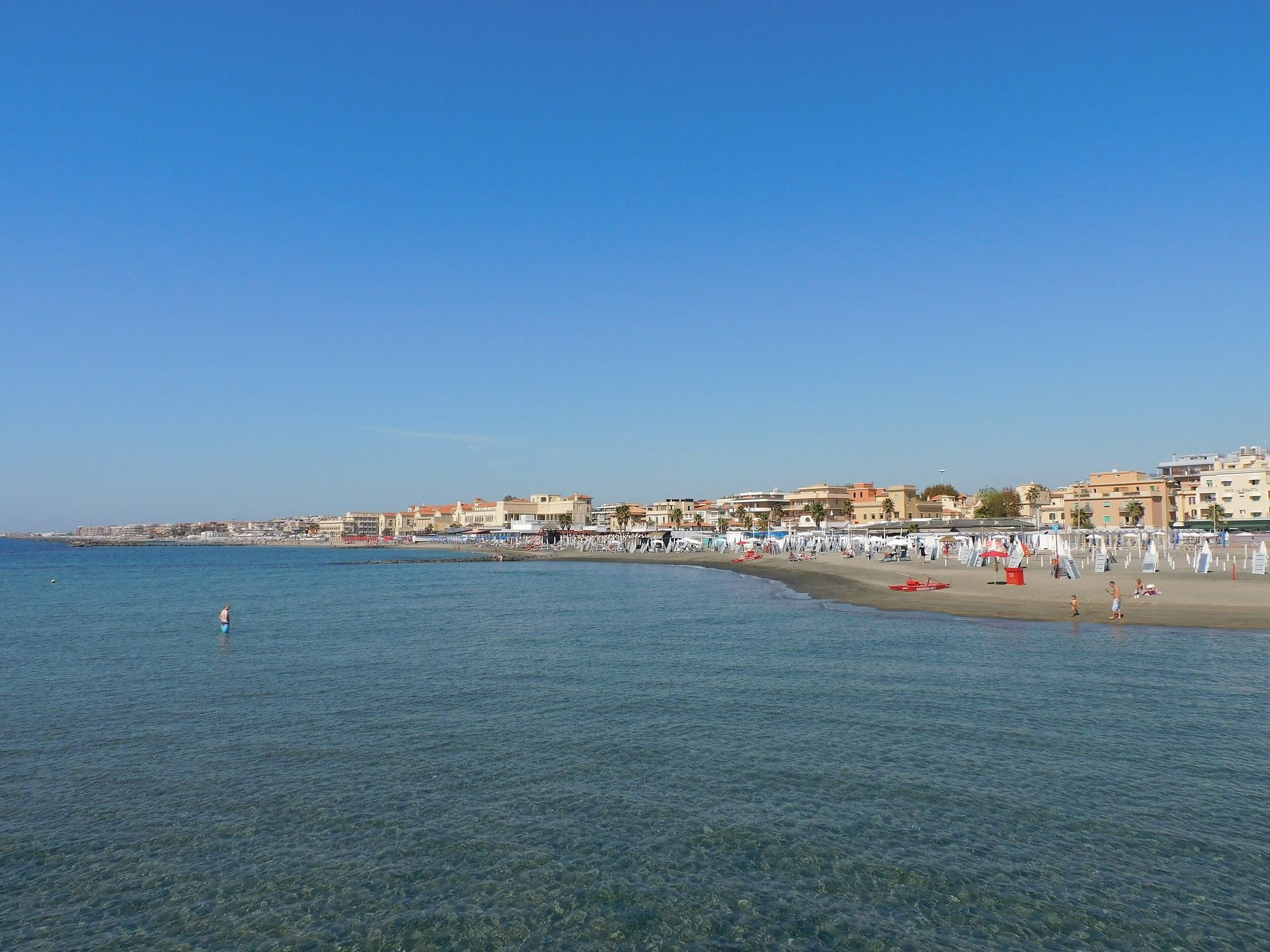
| 14:00 | Train back to Rome, or on to Lido Centro for the beach |
Turn it into a full day by adding the western residential quarter (Garden Houses, the Baths of the Seven Sages with the mosaic dome) between the Forum and the museum, or by finishing at Lido di Ostia; see the beaches guide.
What to see at Ostia Antica
The Decumanus Maximus. The main street runs 1.5 km from Porta Romana through the Forum to Porta Marina, once the sea gate. Everything worth seeing is on or within 100 m of it.
Baths of Neptune. Look down from the raised walkway on the black-and-white mosaic of Neptune driving a team of sea horses, the finest floor on site and the first thing you reach.
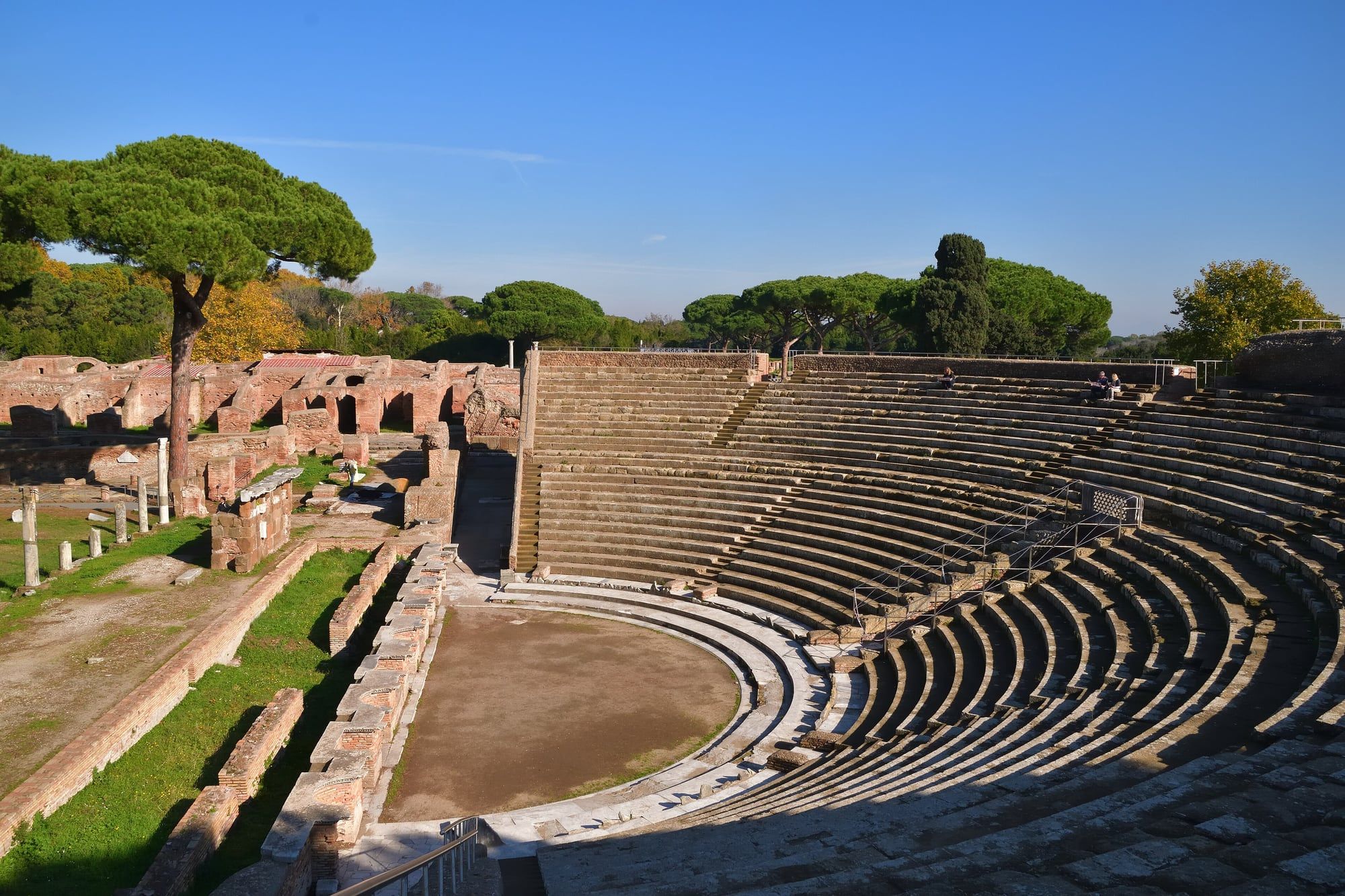
The Theatre and the Square of the Guilds. A 4,000-seat theatre, restored for summer performances, backing onto a colonnaded square where sixty shipping and trading offices had mosaic floors advertising their business: elephants for the ivory trade, ships for the grain fleets from Africa, dolphins for the fish merchants. This is the heart of Ostia and the best illustration of what the port was for.
The Thermopolium on Via di Diana. A Roman bar with its marble counter, shelves, painted menu of foods and a courtyard for outdoor tables, so complete you can see where the barman stood. Around it, the Casa di Diana is a four-storey apartment block, the kind most Romans lived in and Pompeii barely shows.
Capitolium and Forum. The temple to Jupiter, Juno and Minerva on its high podium, with the Forum baths and the 20-seater communal latrine beside it.
Mithraea and the Synagogue. Ostia has more shrines to Mithras than anywhere outside Rome, most of them locked but visible; the 1st-century synagogue near Porta Marina is the oldest known in Europe.
Museo Ostiense. Small, free with the ticket, air-conditioned, with the portrait busts and sculpture that give the ruins faces. Ten minutes from the café.
Ostia Antica vs Pompeii
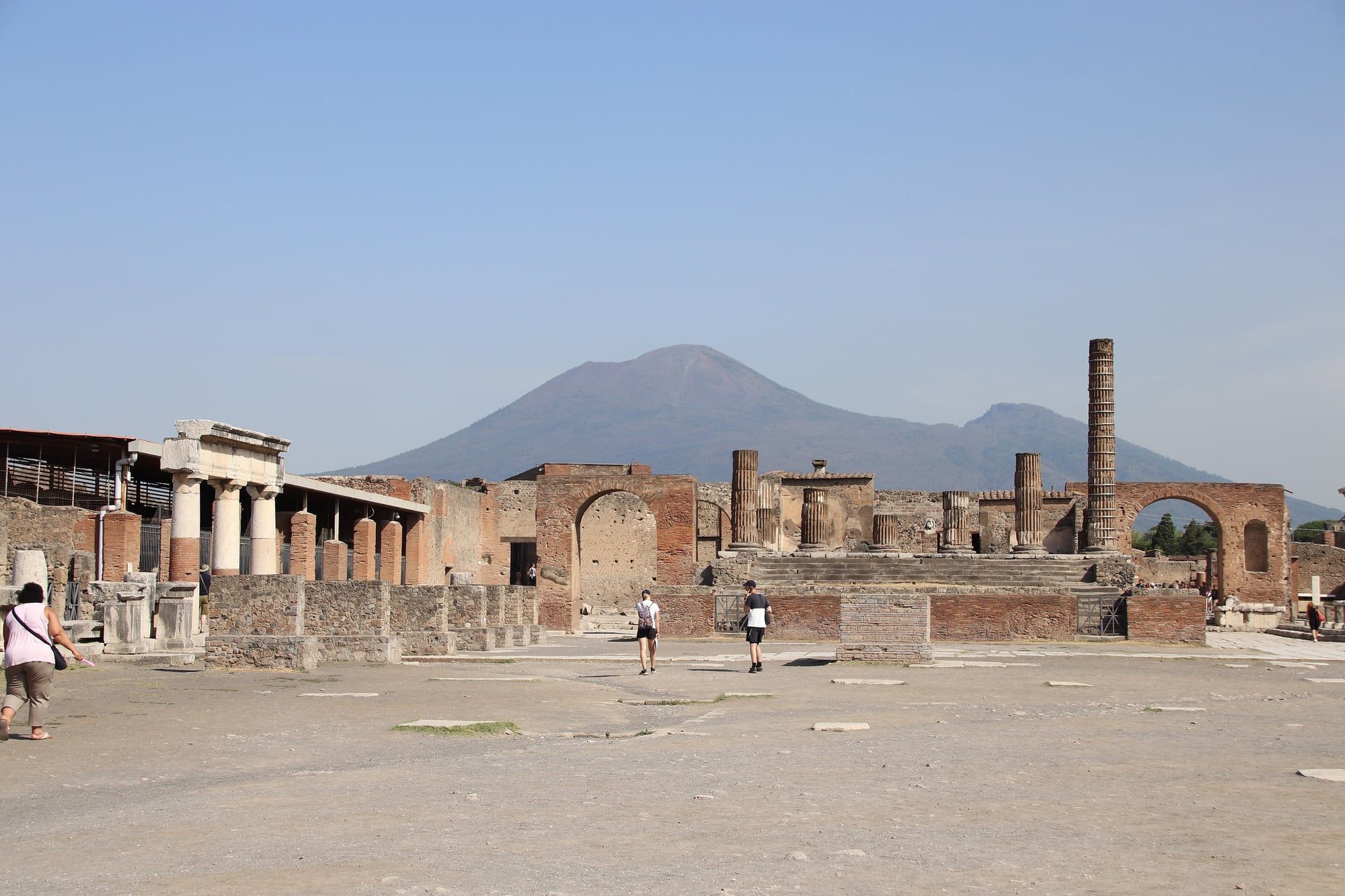
Choose Ostia if you have a half day, are travelling with children or anyone who tires easily, are visiting in August, or are interested in how ordinary Romans lived: apartment blocks, bars, warehouses, offices. Choose Pompeii if frescoes, villas and the story of the eruption are the draw and you have a full day and the budget for the train. Many visitors do both and prefer Ostia; nobody regrets it at €19.50 all-in.
How to save
- Use your existing transport pass. Roma Pass, Roma 24/48/72h and the BIT all cover the Metromare; there is no supplement.
- First Sunday of the month: free entry, and unlike Pompeii the crowd is manageable.
- Under-18s free, EU 18–25s reduced; bring ID.
- Skip the audio-guide bundle unless you will use it; download a free guide or read the map instead.
- Pack lunch. The site allows picnics in the shade; the café is fine but limited.
- Combine with the beach on the same ticket if you keep within 100 minutes, or for €1.50 more.
Who it suits and who should skip it
Ostia suits everyone who found Pompeii too far, too hot or too crowded: families, older visitors, anyone with a spare morning, and repeat visitors to Rome who have done the big sites. It is one of the few ancient sites where children can climb, run and explore without a guard whistling.
Skip it if you have only one day for ruins and a strong wish to see Pompeii; the two are not the same and Ostia does not replace Vesuvius. Wheelchair users can follow the Decumanus on a mostly level route but not enter most buildings.
Booking checklist
- Check the day: closed Mondays.
- Buy or activate a BIT ticket before boarding at Piramide; validate it at the Metromare turnstile.
- Check ATAC for weekend engineering work on the Metromare.
- Wear closed shoes: the basalt paving is uneven and the mosaics are roped off but the paths are rough.
- Bring water and a hat; shade is good but the Forum is open.
- Carry ID for reduced tickets.
- Pick up the free paper map; digital signal is poor at the western end.
- Note closing time for your month; last entry is one hour before.
Combine with
- Beaches near Rome — Lido di Ostia is ten minutes further along the same line; ruins in the morning, sea in the afternoon.
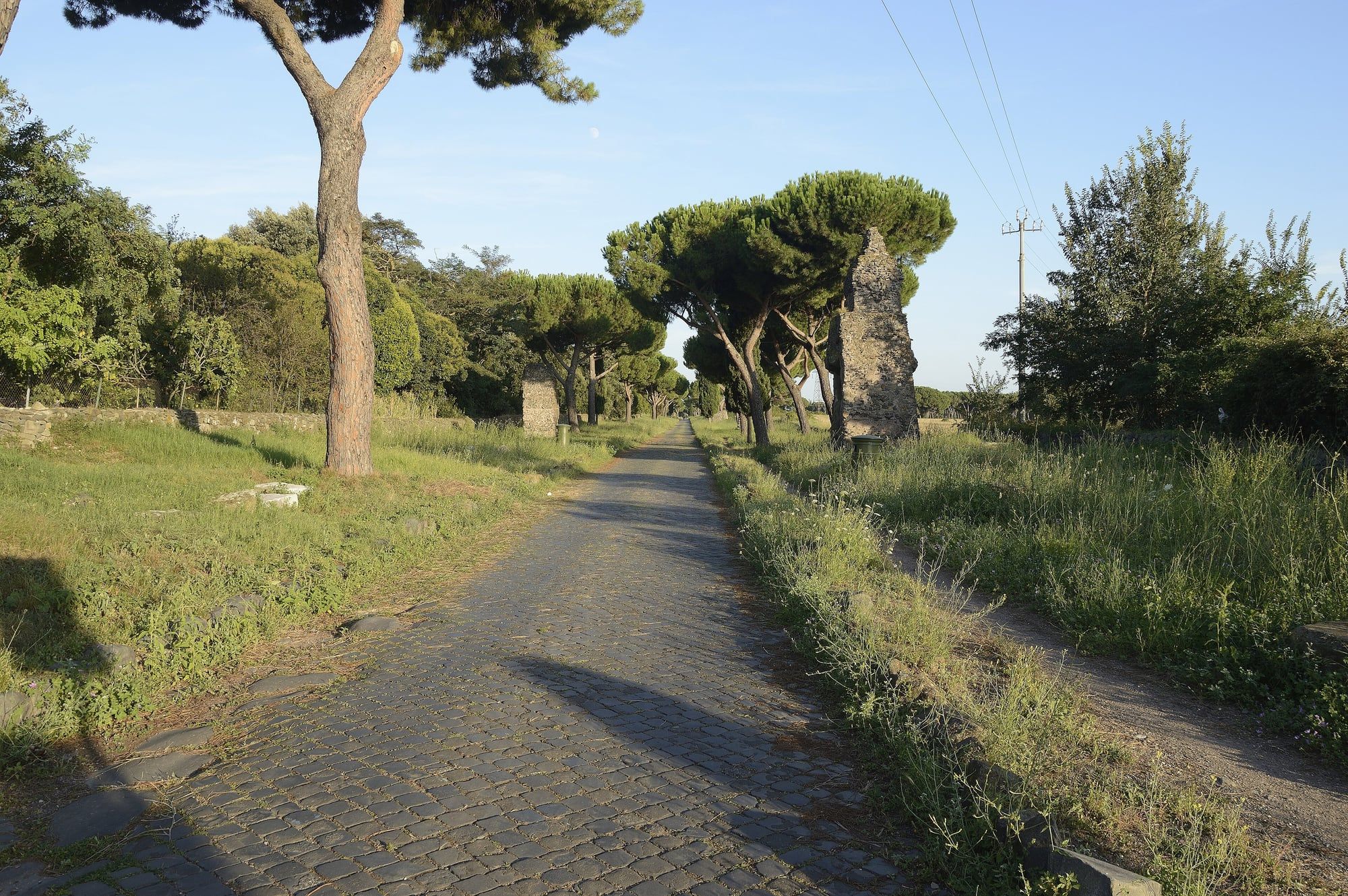
- Appian Way — the other half-day of ancient Rome outside the walls; a different day, but the same kind of day.
- Tivoli — Hadrian’s Villa and Villa d’Este, in the opposite direction, for the second short excursion.
- Transport in Rome — tickets, passes and the Metro B connection at Piramide.
An Ostia Antica day trip from Rome costs less than a Colosseum ticket, takes half a day and shows a Roman city as it worked rather than as it died. Take the 8:45 Metromare, walk the Decumanus before the heat, and decide over lunch whether the beach or the museum finishes the day. See the other day trips from Rome for the full-day options.