Which beach near Rome is right for you
The Lazio coast is 300 km of mostly sandy shoreline, but only a handful of places combine decent sand with a realistic way to get there in a day. Use this table to choose, then read the entry for the practical details.
| Beach | Distance | Without a car | Time from Termini | Best for |
|---|---|---|---|---|
| Ostia Lido | 30 km SW | Metromare train, €1.50 | 50 min | Speed, budget, late decision |
| Fregene | 35 km W | Cotral bus from Cornelia (Metro A) | 60–75 min | Beach clubs, sunset aperitivo |
| Santa Marinella | 60 km NW | FL5 train, about €5 | 55–70 min | Easiest train beach, families |
| Anzio and Nettuno | 60 km S | FL8 train, about €4 | 60 min | Clear water, old harbours, seafood |
| Sabaudia | 95 km S | Cotral bus from Laurentina (Metro B) | 1 h 45 min | Dunes, wide free beach, Circeo views |
| Sperlonga | 120 km S | Train to Fondi-Sperlonga + bus | 1 h 45 min | The prettiest: white village, coves |
Ostia Lido: Rome’s own beach
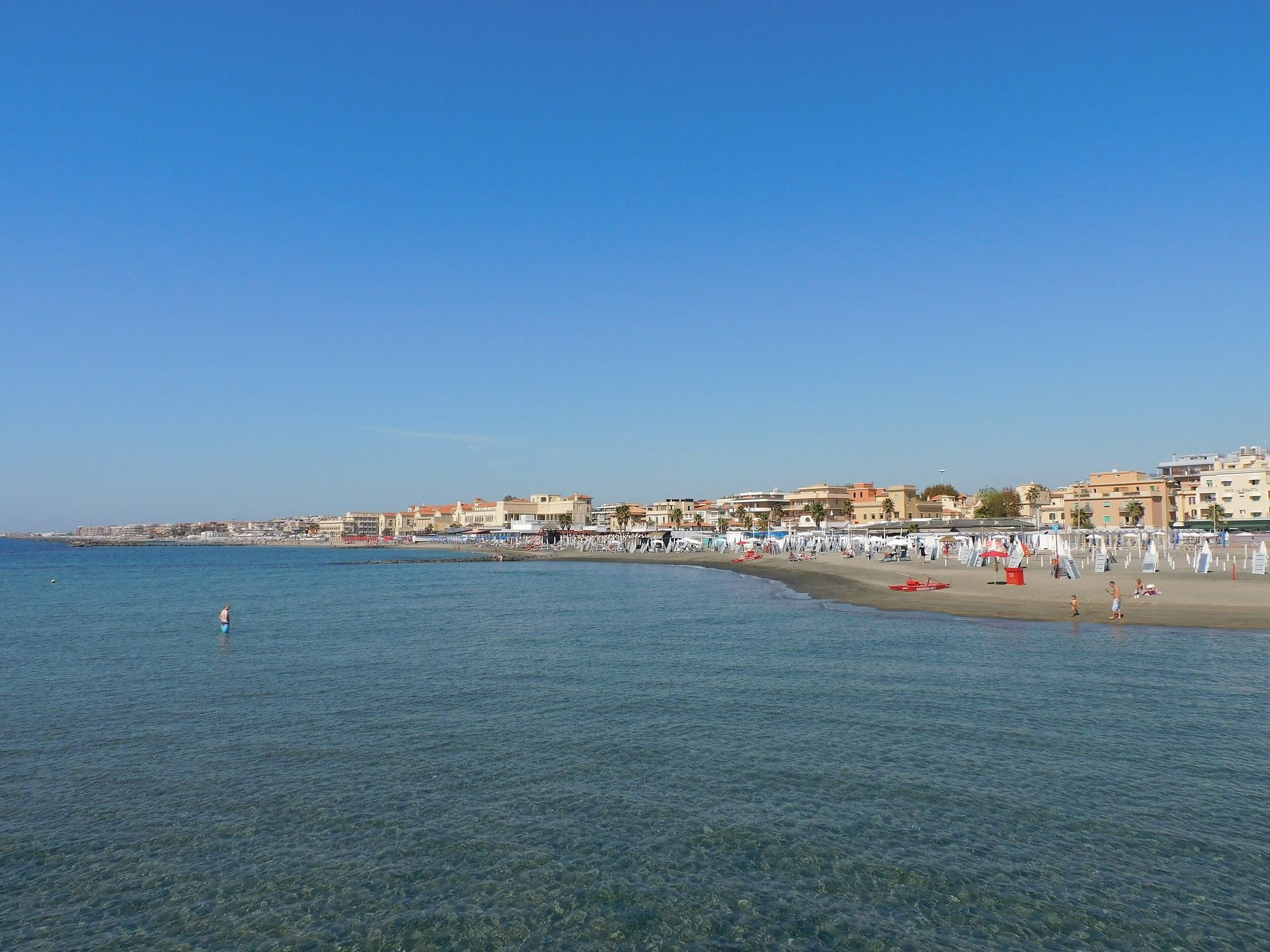
Ostia is a district of Rome, not a separate town, which is why the trip costs the same as a metro ride. The beach is long, the sand is dark grey volcanic and fine, and the water is clean enough to swim in most days, though it will not win prizes for clarity. It is the right choice when you want four hours of sea, not a day trip.
Getting there. Metro B to Piramide, walk 100 metres to the Porta San Paolo station, and take the Metromare (the line was called Roma–Lido until 2022 and is now run by Cotral and ASTRAL). Trains run every 10–15 minutes at peak, 20–30 minutes at other times, and take about 35 minutes to Lido Centro. Any ATAC/Metrebus ticket works: the €1.50 BIT, the 24-hour ticket at €8.50 or a 72-hour pass at €22 (at our last check). Get off at:
- Lido Centro for the town, the pier and the northern clubs;
- Stella Polare for the middle stretch of stabilimenti;
- Cristoforo Colombo, the terminus, for the southern clubs and bus 07 to the free beaches.
Free beach or club. The clubs (stabilimenti) along the Lungomare charge €20–35 for two sunbeds and an umbrella on a weekday, more at weekends, and include showers and a bar. South of the terminus, bus 07 or a 20-minute walk reaches the Cancelli (“gates”), numbered entrances to a free, dune-backed beach at Capocotta with kiosks; it is calmer and cleaner than the town beach, and the further you walk the emptier it gets.
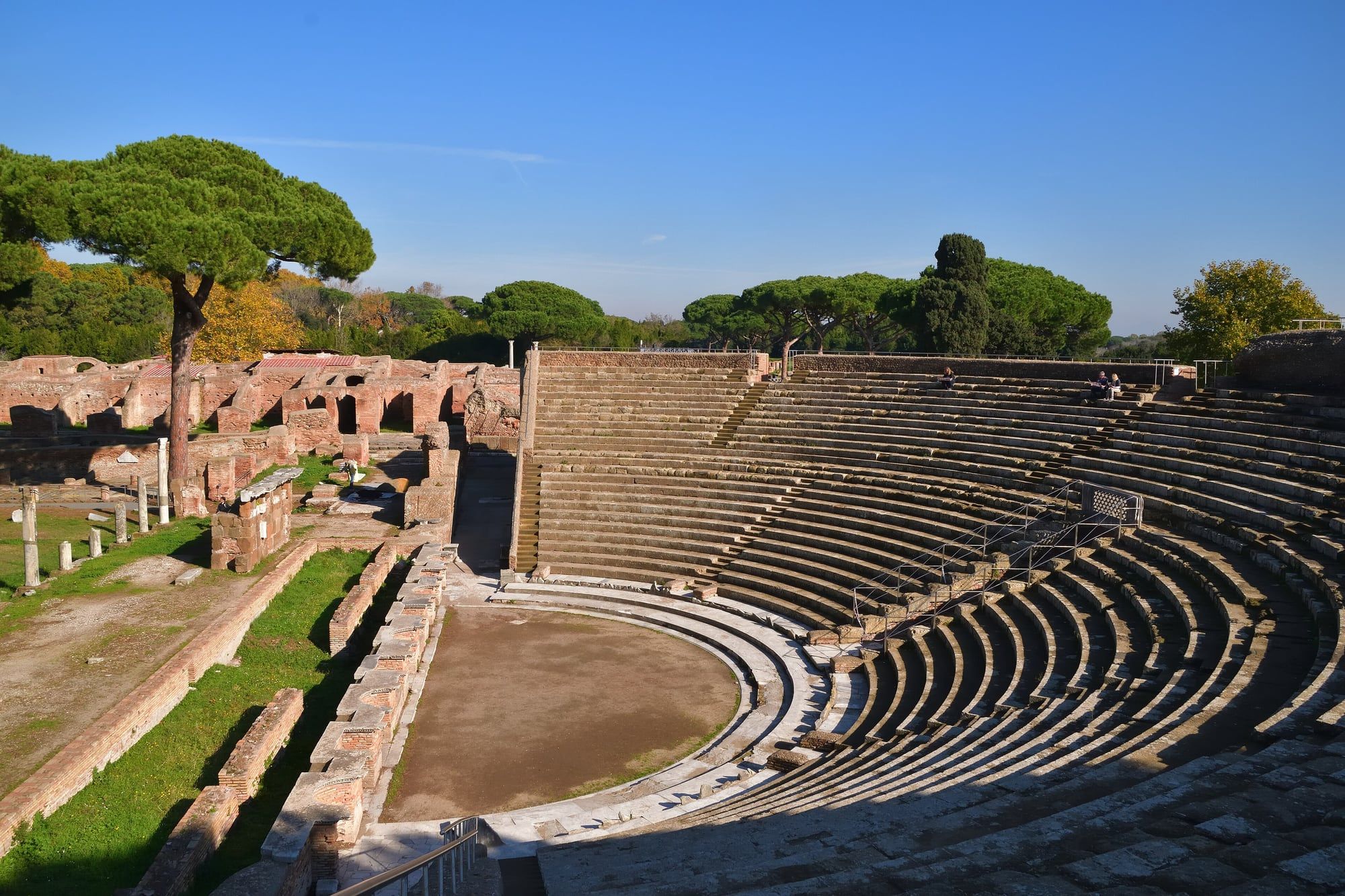
Add the ruins. The Metromare also stops at Ostia Antica, one stop before the beach, where the ancient port city is one of Italy’s best archaeological parks and takes 2–3 hours. Do the ruins at 9:00 when it is cool, then the beach after lunch. Tickets, hours and route: Ostia Antica guide.
Santa Marinella: the easy train beach
Sixty kilometres north, on the FL5 line towards Civitavecchia, Santa Marinella has the best ratio of effort to reward. Trains leave Termini, Ostiense, Trastevere and San Pietro roughly every 30 minutes, take 55–70 minutes, and cost about €5 each way (at our last check, check Trenitalia). The station is 200 metres from the sea.
The main beach is a sandy bay in front of the town with a row of clubs, calm water and a small marina; free stretches are at either end. One stop before, Santa Severa has a beach in front of a 14th-century castle, which makes for a better photo and a quieter afternoon, though the sand is coarser. Families like Santa Marinella because the water stays shallow for a long way out.
Fregene: the beach clubs
Fregene is the beach Romans go to when they want to be seen. Thirty-five kilometres west, just north of Fiumicino airport, its wide sandy beach is almost entirely covered by stabilimenti, many with restaurants that turn into sunset bars and, at weekends, clubs. Prices are the highest on this list: €30–50 for a sunbed set in high season. The pine forest behind the beach and the villas give it a 1960s film-set feel.
Getting there without a car is possible but slow: a Cotral bus from Cornelia (Metro A) takes 45–60 minutes, roughly hourly. With a car it is 40 minutes on the Roma–Fiumicino motorway, then parking at €5–10. If you are flying out of Fiumicino in the evening, Fregene is a sensible last-day beach: a taxi to the airport takes 15 minutes.
Anzio and Nettuno: clear water and history
Sixty kilometres south, the twin towns of Anzio and Nettuno sit on the FL8 line from Termini (about an hour, around €4). Anzio’s town beach is small; the better sand is at the Grotte di Nerone beach north of the harbour, below the ruins of Nero’s seaside villa, with free areas and a few clubs. The water is clearer than Ostia’s, and the harbour has a row of fish restaurants.
Nettuno, one stop further, has a walled medieval quarter (the Borgo) and long beaches to the south. Both towns matter to history: the Allied landing of January 1944 came ashore here, and the American cemetery at Nettuno and the Beachhead museum in Anzio are worth an hour if the weather turns. Ferries to Ponza leave from Anzio in summer.
Sabaudia: dunes and the Circeo
Ninety-five kilometres south, Sabaudia has the most beautiful beach on the Lazio mainland: 15 km of wide golden sand backed by dunes, with the coastal lake behind and the 540-metre Monte Circeo rising at the southern end. Much of it is free, the clubs are low-key, and even in August you can find space by walking.
The catch is transport. Cotral buses leave from Laurentina (Metro B) and take about 1 hour 45 minutes to Sabaudia town, then it is 3 km to the beach by local bus, bike or taxi. With a car it is 1 hour 30 minutes on the Pontina road. Sabaudia is also the base for the Circeo National Park, and the town itself is a rare intact example of 1930s rationalist architecture.
Sperlonga: the prettiest
Sperlonga is the beach people picture when they search “best beaches near Rome”: a whitewashed village on a headland between two long sandy bays, with the ruins of Tiberius’s villa and its grotto at the southern end. Water is clear, sand is pale, and the clubs charge €25–40. It is 120 km from Rome, so it is a full day, not an afternoon.
By train and bus: regional train from Termini to Fondi-Sperlonga (about 1 hour 10 minutes, €8–9), then a bus of 20 minutes to the village or beach; in summer buses run roughly hourly and are timed to trains, but check the last return before you swim. By coach tour: day trips to Sperlonga and neighbouring Gaeta from about €50 on GetYourGuide’s day trips category remove the connection problem and usually add a stop in Gaeta’s old town.
Stabilimenti versus free beach
Italian beaches work differently from northern European ones, and knowing the system saves money.
- Stabilimento balneare: a licensed club renting umbrellas and sunbeds on a stretch of beach. You pay for the day (€20–40 near Rome for two beds and an umbrella, rising in August and at Fregene), get showers, cabins, a bar and often a decent restaurant. You do not need a reservation on weekdays; on August weekends the good ones sell out by 10:00.
- Spiaggia libera: free public beach, by law at least a portion of every coastline, marked with signs and usually between clubs. No facilities except sometimes a lifeguard and a kiosk. Bring an umbrella (€10–15 at any beach-town shop), water and shade for children.
- The shoreline is public everywhere. The five metres of sand at the water’s edge in front of any club are open to everyone for walking and swimming, even if the club looks private.
- Sunday and August. Romans leave the city en masse; the Metromare, the FL5 and the Pontina road are at their worst 9:00–11:00 and 17:00–19:00. Go early or go midweek.
Seasons and water
The sea off Lazio is warm enough for most people from mid-June (22 °C) to early October (23 °C), peaking around 26 °C in August. May and early June are fine for sunbathing and a brave swim. Clubs open around 1 May and shut in late September, after which the free beaches are yours. Fregene and Ostia clubs stay open as restaurants into October.
Water quality: ARPA Lazio tests the coast every fortnight in summer and publishes results by beach; Ostia’s town beach is occasionally closed for a day after heavy rain, the other beaches on this list rarely are. Avoid swimming 24 hours after a storm anywhere near a river mouth. For the month-by-month picture, see when to visit Rome.
What to book
Most beach trips near Rome need nothing more than a train ticket, but three bookings help.
- A coastal day trip for Sperlonga or Gaeta if you do not want to manage the train-and-bus connection: from about €50 on GetYourGuide, with the full list of options on the day trips page.
- Ostia Antica entry if you are pairing ruins and beach: from €18 on Tiqets (checked via the Ostia Antica guide, which also covers the Metromare route.
- A 72-hour transport pass if you are doing Ostia as part of three days in the city: €22 covers the Metromare and every bus and metro ride; see the transport guide. Passes are also sold with a hop-on hop-off option through public transport tickets on GetYourGuide.
For families the Rome with kids guide covers the water parks near the coast; for something inland on a hot day, Tivoli and its fountains are 40 minutes by train. And if the question is simply “does Rome have a beach”, the answer is yes: get on the Metromare by 9:00 and you will be in the sea before 10:00.