How Rome food tours work
A food tour in Rome is a walking tour where the stops are counters, bakeries, delis and trattorie instead of monuments. A guide — usually a local who cooks, writes or has worked in restaurants — leads a group of eight to fourteen people through one neighbourhood for three to four hours, ordering at each stop so that you taste six to fifteen things without queueing or deciphering menus. The guide explains where each dish came from, who is making it and why the Roman version differs from what you eat at home.
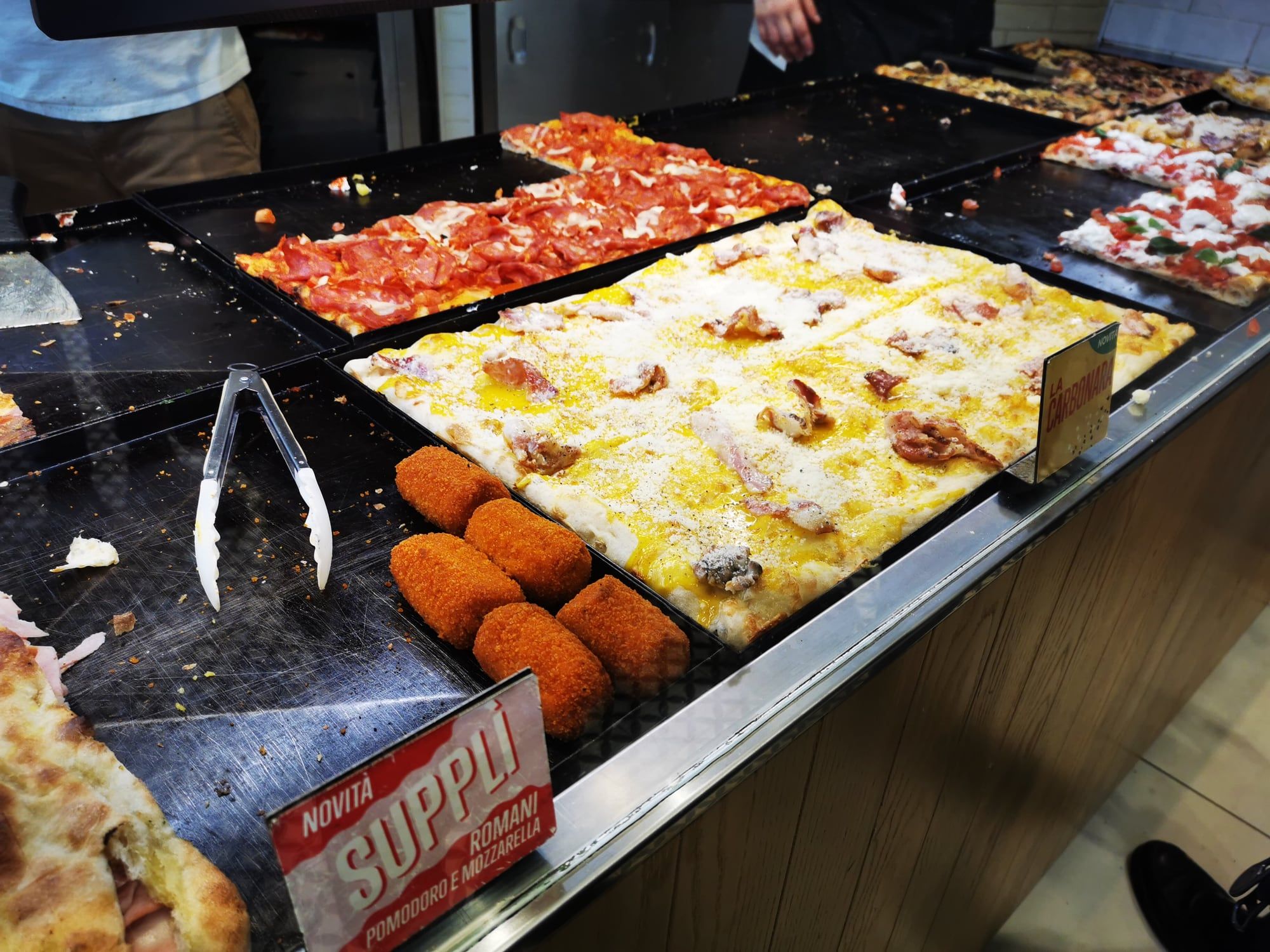
The food is the point, so a good tour replaces a meal. Do not eat lunch before a 12:00 tour. The best tours build like a menu: fried starters (supplì, fiori di zucca), bread and pork (pizza bianca with mortadella, porchetta), a pasta course that is eaten sitting down, a cheese-and-cured-meats board with wine, then something sweet and an espresso or gelato. Cheaper street-food tours skip the sit-down course and pack in more bites.
Rome’s food is regional and specific, and the tours lean into it. The four pastas — carbonara, cacio e pepe, amatriciana, gricia — share guanciale, pecorino romano and black pepper in varying combinations. The fried things come from Jewish and popular traditions: carciofi alla giudia in the Ghetto, supplì al telefono everywhere. Offal (the quinto quarto) is Testaccio’s inheritance from the old slaughterhouse. Knowing this before you go helps you pick a route.
Formats compared
The Ticket Comparison table shows the five tours worth shortlisting. Here is the practical difference between the formats, with prices at our last check.
Street food walk (2.5–3 hours, €45–65). Eight to ten quick tastings standing or at counters: supplì, pizza al taglio, porchetta, a trapizzino, gelato, espresso. No table, little or no wine. Best value and the most children-friendly. The GetYourGuide Trastevere and Campo de’ Fiori street food tour is the benchmark — rated 4.9 from about 4,100 reviews — and crosses the Tiber so you see both the market and the medieval lanes. Check dates for the street food tour. On Tiqets, a guided street food tour of the centre starts at €45 (checked , 2.5 hours, English only.
Small-group tour with wine (3–3.5 hours, €80–95). Capped at twelve, with at least one seated pasta course, two or three glasses of wine and a proper gelato at the end. The Trastevere small-group tour on GetYourGuide is rated 4.9 from about 3,600 reviews and is the one to book for a couple or a first evening. See the Trastevere small-group tour.
Gourmet tour with unlimited wine (3.5–4 hours, €95–110). Fewer, longer stops; unlimited food at each; Barolo and other northern reds alongside Lazio whites. The GetYourGuide gourmet tour with Barolo wine — rated 4.9 from about 2,700 reviews — runs in the evening and ends with most guests declining dinner. Choose it if wine matters and you would otherwise spend €60 a head in a trattoria anyway. Check the gourmet tour price. Tiqets’ sunset food and wine tour (from €93, 10+ foods, six drinks, five eateries, rated 5.0 from a handful of reviews) is the closest equivalent on Tiqets’ food tour page.
Market-to-table and home dining (3.5 hours, €150–190). A host takes you through a market, then cooks for you at home or in a studio. Tiqets lists a Cesarine home-dining version at €189. It is halfway to a cooking class and worth it for a special evening rather than as your one food tour.
Private food tour (3 hours, €300–500 per group). Any of the routes above with your own guide and pace; the sensible choice for four or more, for dietary restrictions, or with young children. Operators listed below quote directly.
The neighbourhoods, route by route
Trastevere. The default route and the prettiest. Typical stops: a fried-food counter for supplì, a forno for pizza bianca, a salumeria for pecorino and guanciale, a trattoria for carbonara or cacio e pepe, a gelateria near Piazza Santa Maria. Busy after 18:00, especially on weekends. Read the Trastevere guide for what to do afterwards.
Testaccio. Where Roman cooking was invented, around the former slaughterhouse. Tours start in the covered Mercato di Testaccio (Monday–Saturday, mornings), where a box called Mordi e Vai sells sandwiches of braised beef and chicory, and Trapizzino serves the folded pizza pocket it invented. Then pizza tonda at a legendary pizzeria, tripe or oxtail for the brave, and a bakery. Fewer tourists than Trastevere; more Romans eating lunch. Morning tours only, because the market closes mid-afternoon.
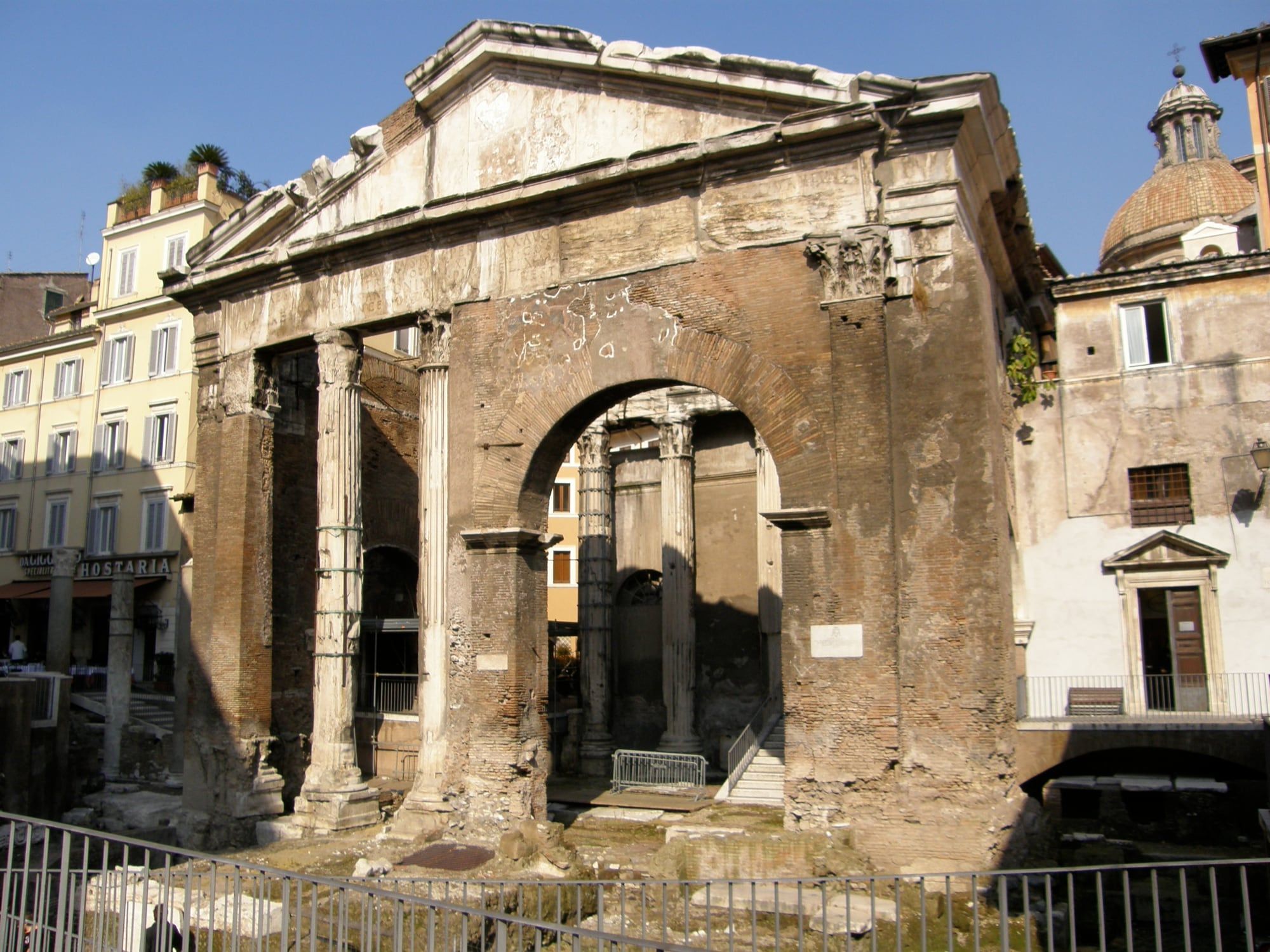
Jewish Ghetto. Compact, walkable and the home of Roman-Jewish cooking: carciofi alla giudia (flattened, twice-fried artichokes, roughly October to April), fried salt cod, aliciotti with endive, and the burnt-crust ricotta-and-cherry cake from the Boccione bakery on Via del Portico d’Ottavia. Many tours combine the Ghetto with Trastevere across Ponte Fabricio. See the Jewish Ghetto guide.
Campo de’ Fiori and centro storico. The morning market on the square (produce, spices, tourist-priced pasta), the Forno Campo de’ Fiori for pizza bianca eaten warm from the paper, Roscioli’s bakery around the corner, and supplì in Via dei Banchi Vecchi. Easy to combine with sightseeing because the Pantheon and Piazza Navona are five minutes away.
Prati. Occasionally offered for the Vatican side: the Mercato Trionfale, Pizzarium for Bonci’s slices, and pastry shops. Useful on a Vatican day; less atmospheric.
Operators worth booking direct
Most tours on the platforms are run by a handful of specialists who also sell directly:
- Eating Europe — the original Trastevere and Testaccio tours, small groups, strong on the stories behind each shop.
- Devour Tours — Spanish-founded, now with several Rome routes including a Trastevere twilight tour with a seated pasta course.
- Secret Food Tours — a “secret dish” gimmick, but reliably good value on the Trastevere route.
Booking through GetYourGuide or Tiqets gives the same guides with free cancellation to 24 hours; booking direct sometimes gets a private slot or a route the platforms do not list.
Who it suits and who should skip it
A food tour is the right spend for:
- First-time visitors who want to eat well from day one without trial and error; the tour teaches you what to order for the rest of the trip.
- Couples and small groups who like eating as an activity, not a pause between sights.
- Solo travellers. Food tours are the easiest way to share a table in Rome.
- Families with children over about eight: supplì, pizza and gelato are child-proof, and the walking is gentle.
Think twice if:
- You have serious allergies or eat gluten-free. Pasta, pizza and fried things dominate; a dedicated gluten-free tour (Tiqets, €110) or a private tour is safer than hoping a group tour adapts.
- You are on a tight budget. A self-guided version — pizza bianca at Forno Campo de’ Fiori, supplì at Supplizio, a plate of cacio e pepe, gelato at Otaleg — costs under €30. You lose the guide, the queue-jumping and the context.
- You dislike standing to eat. Street-food tours involve a lot of it; choose a tour with a seated course.
- It is your only evening and you want a long dinner. A 4-hour tour ending at 21:00 leaves no room for a trattoria; book the tour at lunchtime instead.
Timing is everything
- Lunchtime tours (11:00–12:30 start) catch Testaccio and Campo de’ Fiori markets open and the bakeries still warm. The best daytime slot is 11:00 so you finish before the shops close for the afternoon.
- Evening tours (17:00–18:30 start) suit Trastevere, which is dead at 14:00 and alive at 20:00, and any tour with wine.
- Season: artichokes October–April (Ghetto route), fresh fava and pecorino in May, puntarelle in winter. Summer tours are hotter and gelato-heavier; July and August tours should be evening only.
- Sunday closes most markets and many bakeries; Sunday tours run in Trastevere and the Ghetto but skip the market stops. Monday closes many trattorie. Tuesday to Saturday is safest.
- Book 1–2 weeks ahead for the three 4.9-rated tours from April to October and for any Saturday evening; last-minute spots exist on weekdays in winter.
How to save
- Skip the meal you are replacing from your budget. A €60 street food tour that stands in for lunch costs you €40 net.
- Daytime beats evening by €15–30 on the same route with the same operator.
- Street food, not gourmet unless you drink. The wine is where the price goes.
- Children are usually discounted by a third to a half; under-fives are often free on street-food tours. Ask.
- Free cancellation on GetYourGuide and Tiqets lets you hold two dates and drop one when the forecast is clear.
- Do the self-guided version on other days: the guide will point out where to return, and the same supplì costs €2.50 without the tour.
Booking checklist
- Arrive hungry. Skip breakfast for an 11:00 tour; skip lunch for an evening one.
- Flag dietary needs at booking in the notes field, not at the meeting point. Vegetarian is easy; vegan, gluten-free and pork-free need notice.
- Wear shoes for cobbles and 2–3 km of walking; Trastevere lanes are uneven.
- Bring a bottle of water and a small bag; some stops have no seating or shade.
- Check the meeting point on a map; Trastevere tours often meet by Piazza Trilussa or the Tiber bridge, not in the main square.
- Carry €10–20 in cash for anything extra you want to buy at the stops, and a tip for the guide if it was good — €5–10 per person is normal, not expected.
- Do not book a restaurant the same evening after a tour with wine. You will not want it.
Best pizza and best carbonara in Rome
Two searches bring most readers to a food-tour page, so here is the short answer a guide would give you at the last stop.
Pizza. Roman pizza tonda is thin, crisp and blistered, nothing like Naples. Ai Marmi on Viale Trastevere (cash, queue, open from 19:00), Da Remo in Piazza Santa Maria Liberatrice in Testaccio, and Emma near Campo de’ Fiori are the classic names. For pizza al taglio by weight, Pizzarium (Gabriele Bonci, near the Vatican Museums) and Antico Forno Roscioli set the standard; for pizza bianca eaten plain and warm, Forno Campo de’ Fiori. Newer wood-oven places such as Seu Pizza Illuminati in Portuense show the modern, puffier style.
Carbonara. Guanciale rendered slowly, eggs and pecorino whisked into a cream off the heat, coarse black pepper, no cream, no onion, no bacon. Roscioli Salumeria (Via dei Giubbonari, book weeks ahead), Da Enzo al 29 (Via dei Vascellari, Trastevere, queue before noon), Flavio al Velavevodetto (Testaccio) and Armando al Pantheon are the safe list. Any trattoria that lists “carbonara with cream” is for tourists; move on.
What to combine
A lunch food tour in Trastevere or the Ghetto pairs with an afternoon at the Pantheon and Piazza Navona, both ten minutes’ walk. A Testaccio morning tour leads naturally to the Aventine keyhole and Circus Maximus. An evening tour in Trastevere ends where the nightlife starts; stay for a drink on Piazza Trilussa.
If you liked eating more than walking, a cooking class — pasta from scratch, usually three hours — is the natural next step. If you preferred the walking, the walking tours guide covers the licensed guides who do the monuments. And for the best pizza and carbonara in Rome outside a tour, use the FAQ above as a starting list: a food tour teaches you what the real thing tastes like, and after that, the rest of Rome’s menus make sense. Check current dates on GetYourGuide or compare Tiqets food tours.