What Pantheon Rome tickets get you
Every Pantheon ticket, official or through a reseller, buys the same thing: entry to the rotunda for as long as you want to stay, within opening hours. There is no upper level, no crypt and no separate “dome ticket”. What you pay extra for is time saved at the door and, if you choose, an audio guide or a live guide.
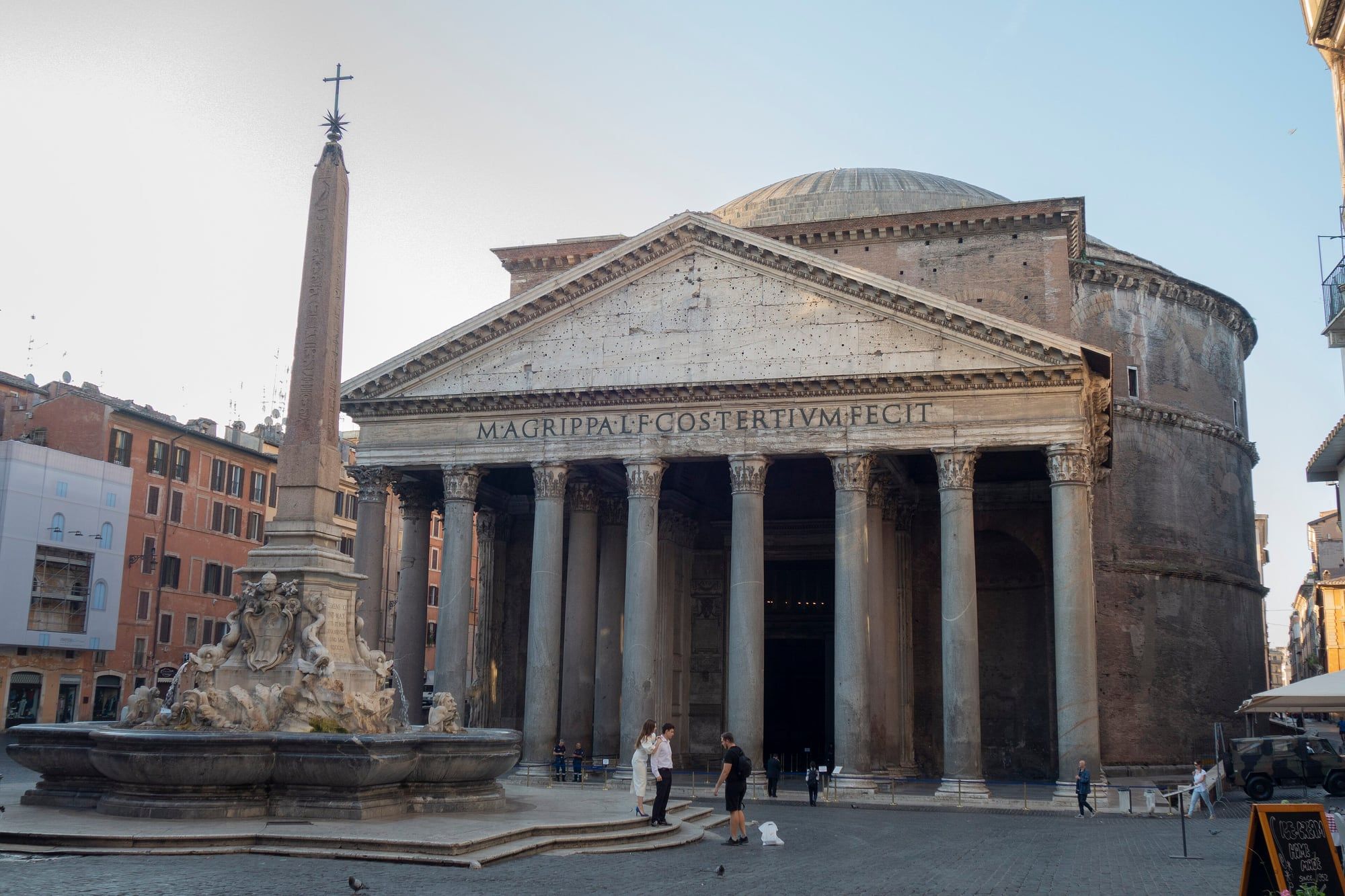
Three facts to have in mind as you walk in. The building you see was completed under Emperor Hadrian around 125 AD on the site of Marcus Agrippa’s earlier temple, which is why Agrippa’s name is on the pediment. The concrete dome is 43.3 metres across, still the largest unreinforced concrete dome ever built, and the oculus at the top is nine metres wide and open to the sky. The Pantheon became the church of Santa Maria ad Martyres in 609 AD, which is what saved it from being stripped for building stone.
What to look for inside
- The oculus and the shaft of light it throws across the coffered ceiling; the floor below has drainage holes for rain.
- Raphael’s tomb, on the left side as you face the altar, with the Latin epitaph by Pietro Bembo.
- The tombs of King Vittorio Emanuele II and King Umberto I of Italy, with Queen Margherita.
- The original Roman marble floor, laid in a pattern of circles and squares, mostly restored but with original stone at the edges.
- The bronze doors, ancient in structure though reworked in the 16th century.
Audio guide, guided tour or nothing?
The rotunda is one room, so a guide is not needed to find your way. What a guide adds is the engineering story: how the concrete lightens towards the top, why the walls are six metres thick, and how the building was reused. If that interests you, the official audio guide (bundled with fast-track entry from €17.50 on Tiqets, checked our last check) covers it in about 40 minutes.
The GetYourGuide hidden spaces tour, rated 4.6, goes beyond the standard visitor area and suits people who have already seen the Pantheon once. It is a small-group product and sells out on weekends; entry is charged separately, so read the listing before you book.
Timing is everything
The Pantheon opens at 9:00 and closes at 19:00, last entry 18:30, every day of the year except 1 January, 15 August and 25 December (at our last check). Within those hours, three things decide how crowded it is.
Mass closures. The building is a parish church. It closes to visitors for the Saturday vigil mass at 17:00 and the Sunday mass at 10:30, and for services on holy days of obligation. Closures start around 30 minutes before mass and end when the congregation leaves. If you want to attend rather than sightsee, entry for the service is free; go to the side of the queue and tell staff you are there for mass.
Daily rhythm. The desk queue builds from about 10:30 and peaks between 12:00 and 16:00. The first hour after opening is the quietest of the day and the light through the oculus falls on the north wall, which photographs best. The last hour before closing is second-best, with the piazza cafés lit and the interior half-empty by 18:30.
Rain. Water falls through the oculus and staff cordon off the centre of the floor. Visits carry on, and the effect of rain inside is something many people come specifically to see. Numbers drop on wet days, so it is a good time to go.
Pentecost. At the end of the Pentecost Sunday mass, firefighters drop thousands of red rose petals through the oculus onto the congregation. It is the one day a year when going to mass rather than sightseeing is the better plan; arrive by 9:30 for a place inside, because the doors close when the basilica is full.
Seasonal notes. From Easter to October the fast-track lane earns its money. In January, February and November you can usually walk to the desk in under ten minutes at any time except Sunday afternoon. On 21 April (Rome’s birthday) at midday, sunlight through the oculus lines up with the entrance doorway and the piazza fills early.
The insider entry
There is a single visitor entrance under the portico, but it splits into two lines: the desk queue for people buying on the spot and a reservation lane for anyone with a timed ticket, whether bought on the official platform or through a partner. Fast-track products from Tiqets and GetYourGuide use that reservation lane; you show a QR code and go through in a few minutes. The lane is only as fast as the security check, so do not expect it to be instant when a cruise group arrives.
Two practical points. First, the official online ticket also puts you in the reservation lane, so if you only want to save time and not add an audio guide, book on museiitaliani.it for €5 and skip the resellers. Second, tour groups enter with their guide through the same doorway but with a group voucher, so they do not slow down the individual reservation lane. The busiest moment at the door is 10:00–11:00 when several groups arrive together; a 9:00 or 12:30 slot is smoother.
Security is a bag check by sight. Tripods, large suitcases and drones are refused, and there is no left-luggage. If you are heading to a train afterwards, use a luggage storage point around Largo Argentina.
How to save
- Under 18: free, with ID for anyone who looks close to the limit.
- EU citizens aged 18–25: reduced ticket €3 at the desk or online; bring a passport or EU ID card.
- Rome residents: free with proof of residence; ask at the desk rather than booking online.
- Visitors with disabilities: free, plus one companion.
- Teachers and ICOM members: free with a valid card, as at other Italian state sites.
- First Sunday of the month: free entry as at all state museums, no booking possible, queue of an hour or more from 10:00. Only worth it if you go at 9:00.
The Pantheon is not included in the Roma Pass or the Omnia Card, and the €5 official price is low enough that no city pass makes sense for this site alone. Where a bundle can pay off is combining the Pantheon with Castel Sant’Angelo or a Piazza Navona walking tour on the same day; compare the price of the combo against buying separately before you commit.
The official ticket is also sold through the Musei Italiani app, which stores the QR code offline and is the fastest way to buy on the day if the desk queue has formed by the time you arrive. Have your card ready; the app asks for a named ticket per person.
Children on a fast-track or audio-guide product are usually priced from about €7–9 on Tiqets because the audio guide is charged even though entry is free. If you have a family, the official €5 ticket plus a free child ticket from museiitaliani.it is cheaper than any reseller.
How to get there
The Pantheon sits in the pedestrian heart of the centro storico, so no metro stops nearby. Walk or take a bus.
- From Termini: bus 40 or 64 to Largo di Torre Argentina (15–20 minutes), then a 5-minute walk north along Via di Torre Argentina.
- From the Colosseum: bus 87 or 30 to Largo di Torre Argentina, or walk in 20 minutes via Piazza Venezia and Via del Gesù.
- From the Vatican: bus 64 from Piazza San Pietro or bus 62 from Borgo Sant’Angelo to Largo Argentina.
- Metro: the closest stations are Barberini (line A) and Colosseo (line B), each a 15–20 minute walk. Spagna (line A) is 15 minutes via Via Condotti and Via delle Coppelle.
- Taxi: the rank is on Piazza della Rotonda itself; ask for “Pantheon”.
Bus tickets cost €1.50 for 100 minutes on ATAC and can be tapped in with a contactless card. See the Rome transport guide for the network and the tourist passes.
What is nearby
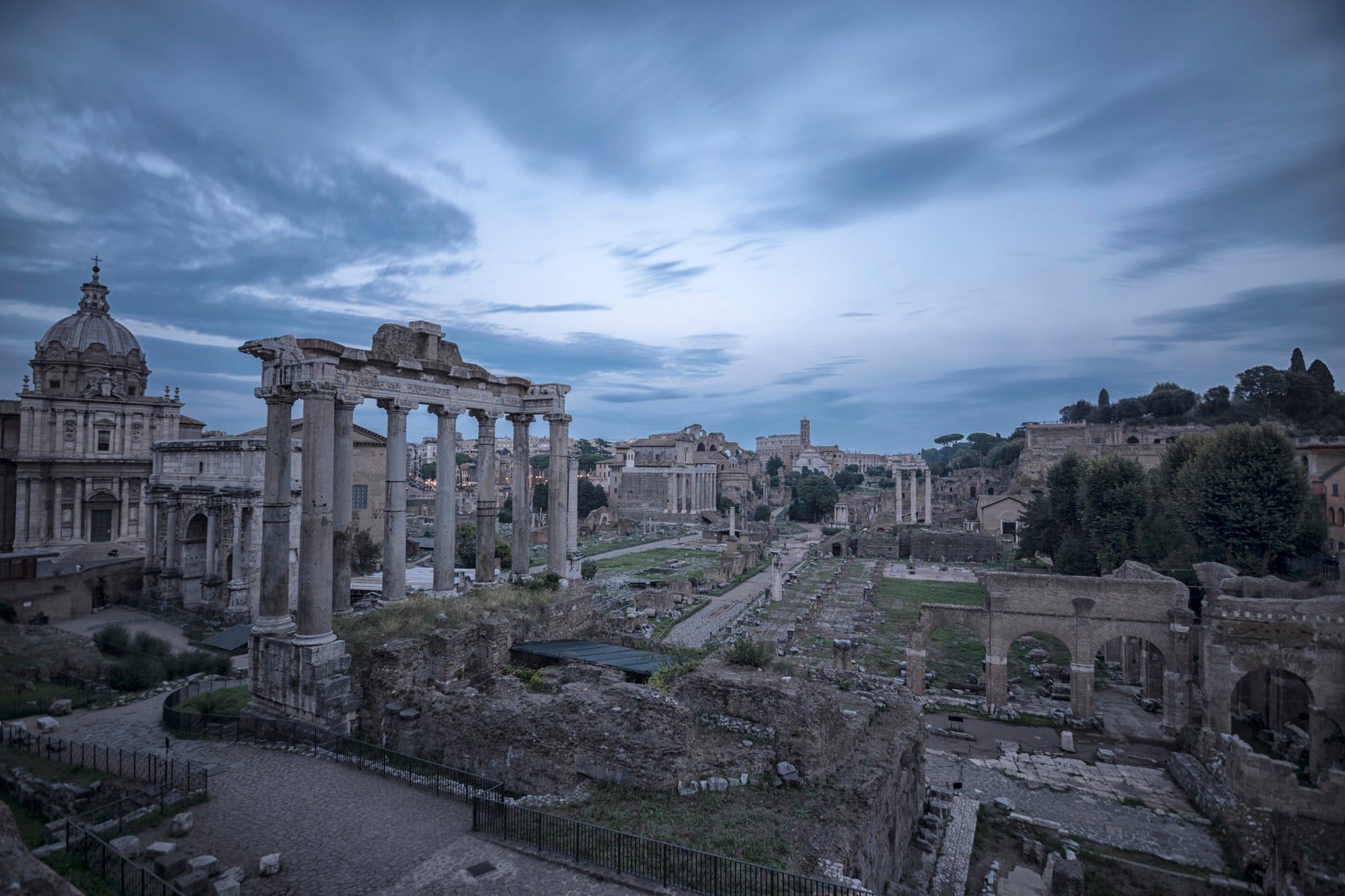
Everything in this part of Rome is within ten minutes on foot, which is why the Pantheon is the usual anchor for a centro storico walk.
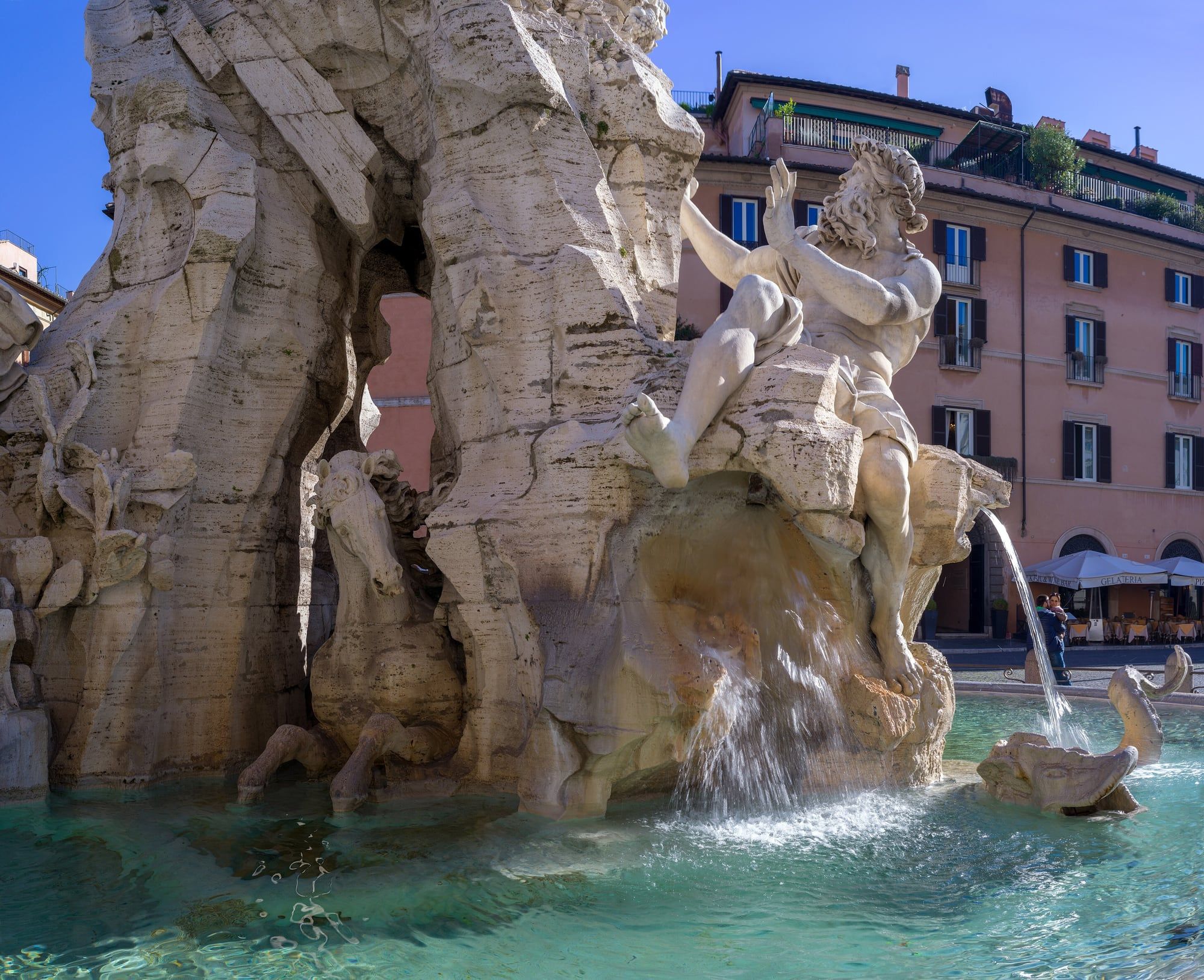
- Piazza Navona (4 minutes): Bernini’s Fountain of the Four Rivers, Borromini’s Sant’Agnese and the underground Stadium of Domitian. See the Piazza Navona guide.
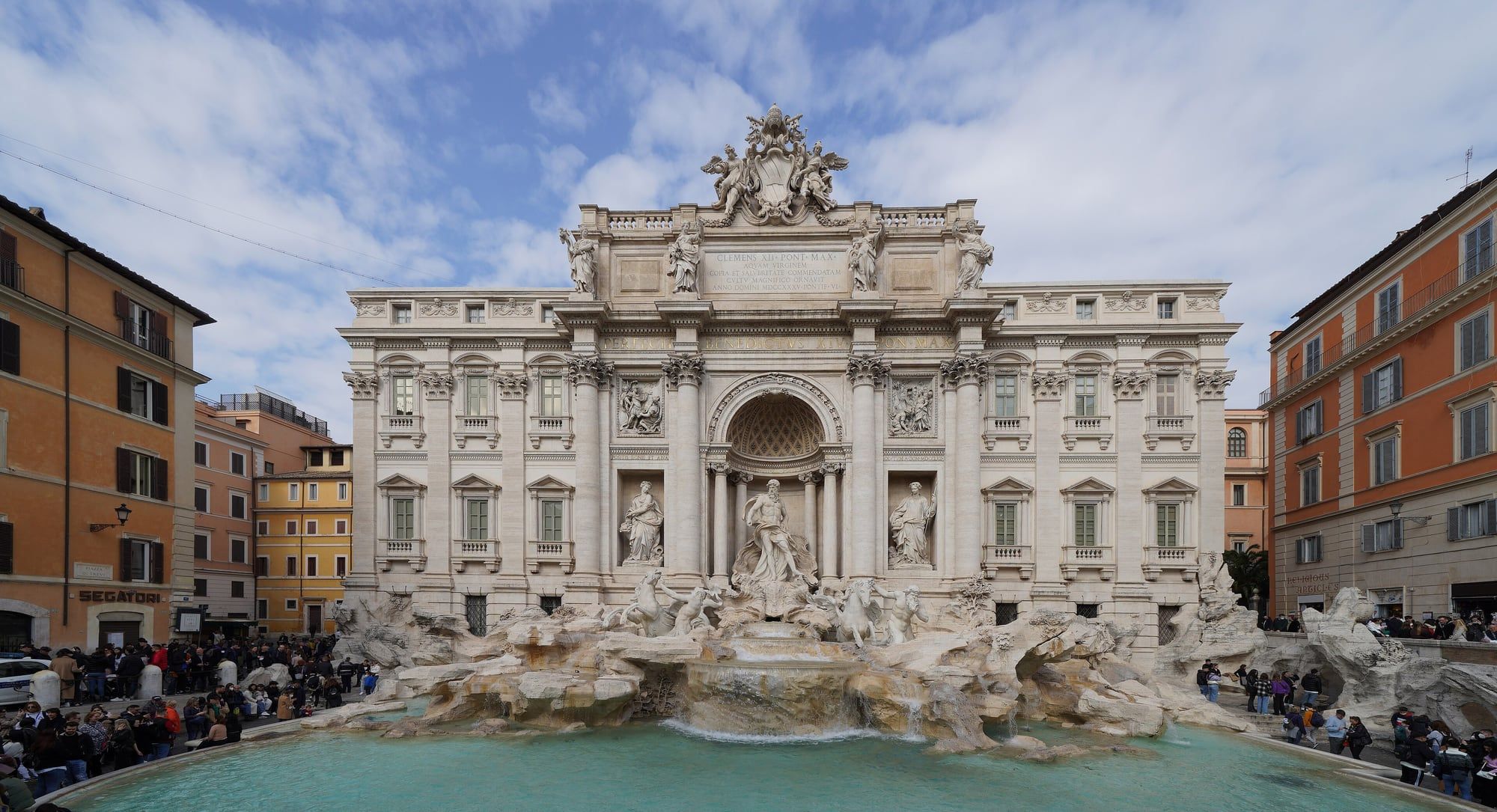
- Trevi Fountain (8 minutes): busy at all hours; the Trevi Fountain guide has the timing and the underground option.
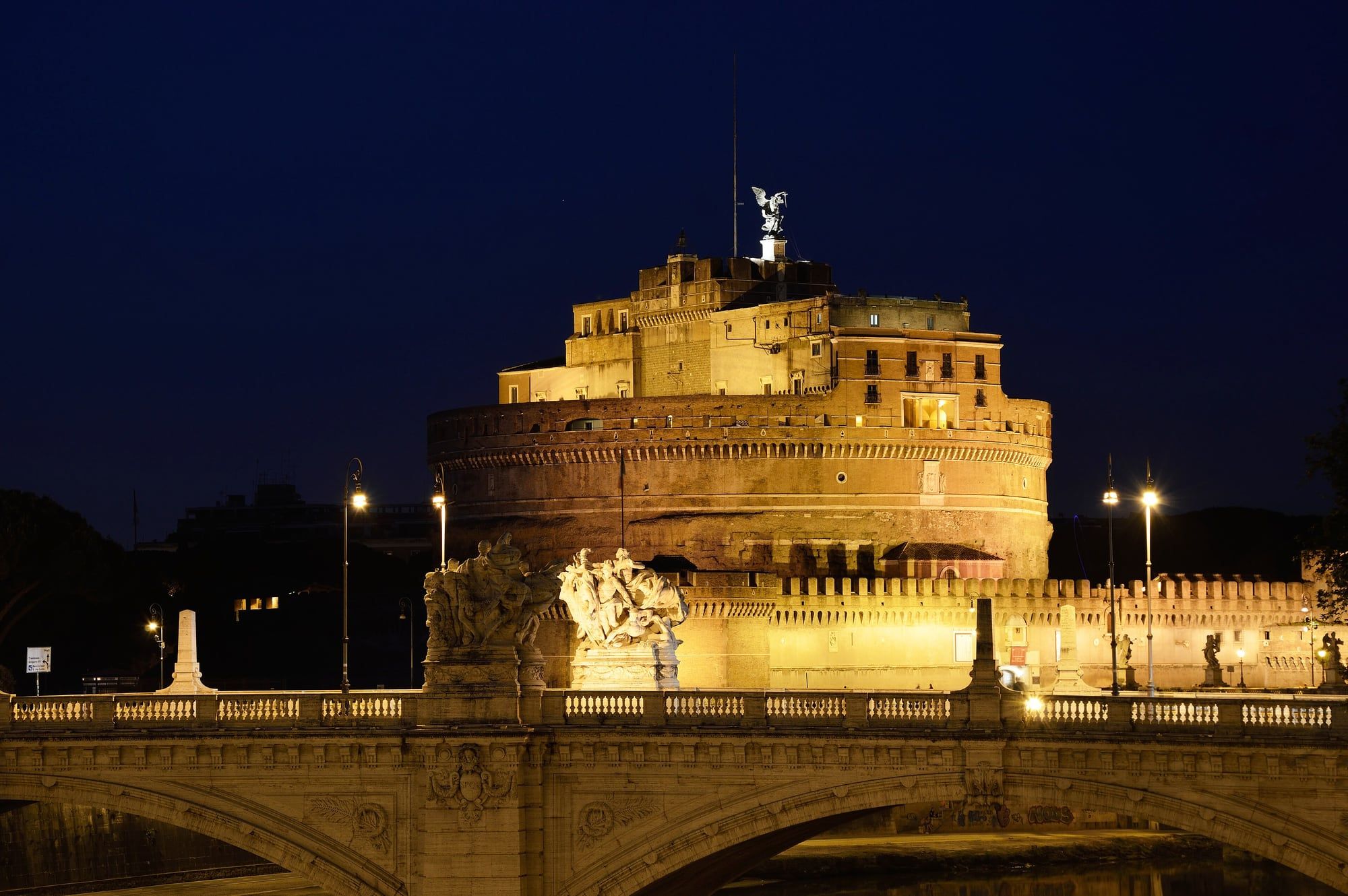
- Castel Sant’Angelo (15 minutes across Ponte Sant’Angelo): the papal fortress with a terrace over the river. Details in the Castel Sant’Angelo guide.
- Santa Maria sopra Minerva (2 minutes): Bernini’s elephant obelisk outside and Michelangelo’s Risen Christ inside, free to enter.
- Sant’Ignazio and its painted fake dome (5 minutes): free, and a good comparison to the real dome you have just seen.
Most walking tours of the centro storico include the Pantheon, and the better ones now build in the timed entry rather than looking at it from outside.
Booking checklist
- Decide whether you are paying for time or for content. Time only: book the €5 official ticket at museiitaliani.it. Content too: pick a fast-track product with the official audio guide or a live guide.
- Check your date against the mass schedule. Avoid Saturday from 16:30 and Sunday from 10:00 to 11:30, and check the official site for holy days.
- Bring ID for any free or reduced ticket; under-18 and 18–25 fares are checked at the door.
- Cover shoulders and knees. Bring a light scarf in summer.
- Leave large bags at the hotel or a luggage point. There is no cloakroom and staff refuse suitcases.
- Keep the QR code on your phone; printing is not required. Screenshots work when the signal is poor under the portico.
- Arrive within 15 minutes of a timed slot. Late arrivals on partner products are usually admitted, but the fast-track lane is not guaranteed.
- Read the cancellation line before paying: some Tiqets Pantheon products are non-refundable, while the official audio-guide bundle can be cancelled up to 24 hours ahead.
Pantheon Rome tickets are the cheapest of any major site in the city, so spend the saving where it counts: on a slot at 9:00, a good audio guide, and a coffee on the piazza afterwards while the queue you skipped is still standing under the portico.