How Rome walking tours work
Rome walking tours are the default product of the city’s tourism industry: a guide, a group, a route of 3–4 km and two to three hours of stopping and talking. What varies is who the guide is, how many people share them, whether the tour goes inside anything, and what you pay. Those four variables explain a price spread from “free” to €130 for what looks, from the outside, like the same walk past the Pantheon.
Group size is the first thing to check. Budget walks on Tiqets and GetYourGuide run up to 25 people with a radio headset; small-group operators cap at 12–15; Context Travel caps at six and calls them seminars. Above about 15, you will not hear questions or ask your own, and the group stops being able to enter a church together.
Who is guiding is the second. Italian law reserves paid guiding inside museums, archaeological sites and churches to holders of the national tour-guide qualification, a licence obtained by exam that a 2023 reform moved to a national register. Outside, on the street, the rules are looser and enforcement is patchy, which is where “free” tours and unlicensed student guides live. A licensed guide has studied art history and archaeology for the exam and carries a badge; ask to see it if the commentary sounds thin. Every operator recommended on this page uses licensed guides.
Inside or outside is the third. A centro storico walk enters the Pantheon (free for the tour if the guide has booked the group slot) and one or two churches; ancient Rome walks include Colosseum and Forum tickets in the price; Vatican walks include the Museums. A walk that stays outside everything is cheaper for a reason.
Formats compared
The Ticket Comparison table gives five concrete options. Here is the wider menu, with prices at our last check.
Budget group walk (€14–25, 90 minutes to 2.5 hours, up to 20–25 people). The Tiqets walk through Piazza Navona, the Pantheon, Trevi Fountain and Spanish Steps costs €20 (checked , lasts 90 minutes with a live guide and adds a 30-minute 3D video on ancient Rome; a “hidden corners” 2.5-hour walk from the same platform is also €20 and rated 5.0 from a handful of reviews. Evening ghost walks at €14 are the entry point for families. Compare Tiqets walking tours. Good value; do not expect intimacy.
Small-group walk with a specialist operator (€50–70, 3 hours, 8–15 people). This is where the difference is felt. Walks of Italy runs the best-known small-group programme with tickets included on ancient Rome and Vatican walks; Through Eternity is the storytelling choice, with guides who are often art historians and an evening “Rome at twilight” walk that is its signature; Context Travel sells three-hour seminars led by PhDs and archaeologists to groups of six or fewer at €90–130. All three list on GetYourGuide’s walking tours category alongside dozens of local operators with 4.8–4.9 ratings.
Free walking tour (tip-based, 2–2.5 hours, 20–30 people). Several companies run daily “free” walks from Piazza di Spagna, Campo de’ Fiori and Termini, booked online for a small fee that goes to the company. The guide’s income is your tip: €10–15 a head is the expected norm, and a couple that tips €30 has paid the same as for a Tiqets walk with half the crowd. Guides are often licensed, energetic and good; the format is honest as long as you go in knowing it is a pay-what-you-decide tour with a strong social expectation. They never go inside. The free Rome guide covers what is actually free.
Self-guided audio app (€7, unlimited). Tiqets sells a Rome audio guide app with 100+ points of interest in six languages, rated 3.3 from about 1,150 reviews; a Vatican Museums audio app at €2.50 scores 3.1. The low scores are for the software, not the content; the app works for wandering the centre, and fails for anything that needs a booked slot. The GetYourGuide audio guides category has alternatives, some with offline maps. For Rome’s squares and fountains a good app beats a bad 25-person group; for the Colosseum interior, it does not.
Private walking tour (€180–300 for 3 hours per group). Your own licensed guide, your pace, your questions. Covered in the private tours guide, where the maths turns in its favour at four people.
The classic routes
- Centro storico — Piazza Navona, the Pantheon, Sant’Ignazio, the Trevi Fountain, Piazza di Spagna. 2 hours, flat, the ideal first evening. The Piazza Navona and Trevi Fountain guides cover what a guide adds.
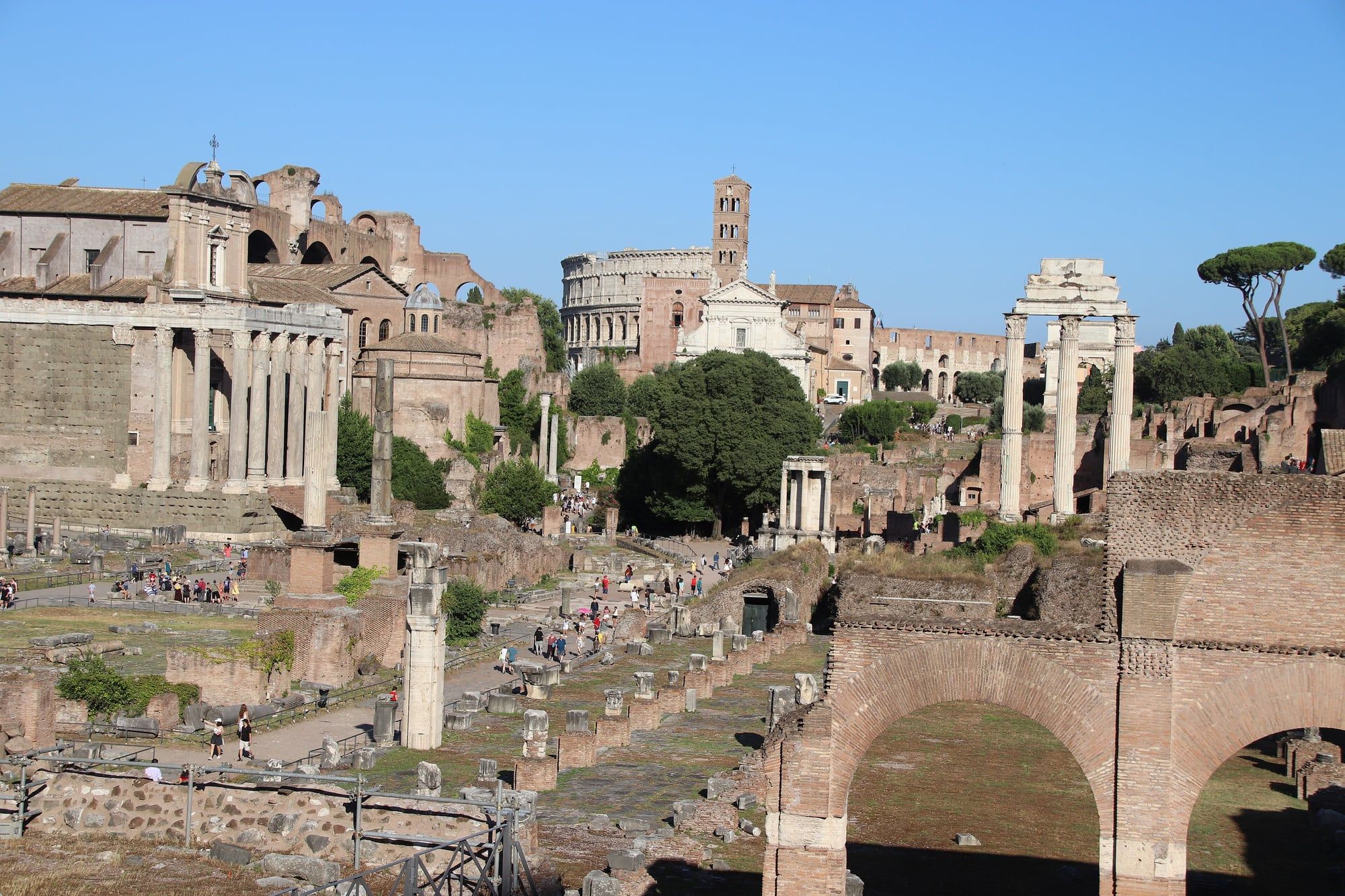
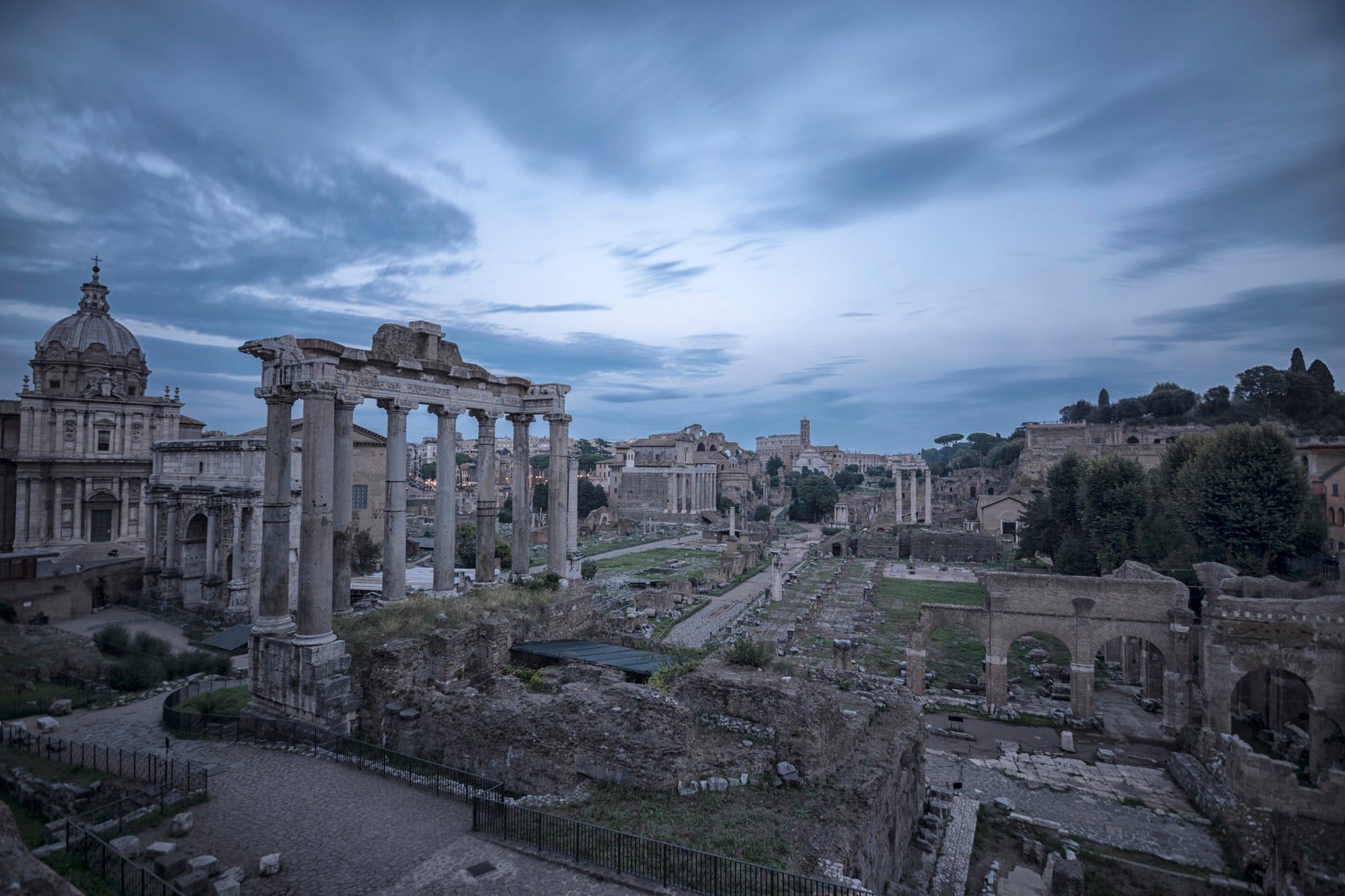
- Ancient Rome — Colosseum, Forum, Palatine, with tickets. 3 hours, some climbing, do it on the first full day. Compare with the Colosseum tickets guide if you would rather go alone.
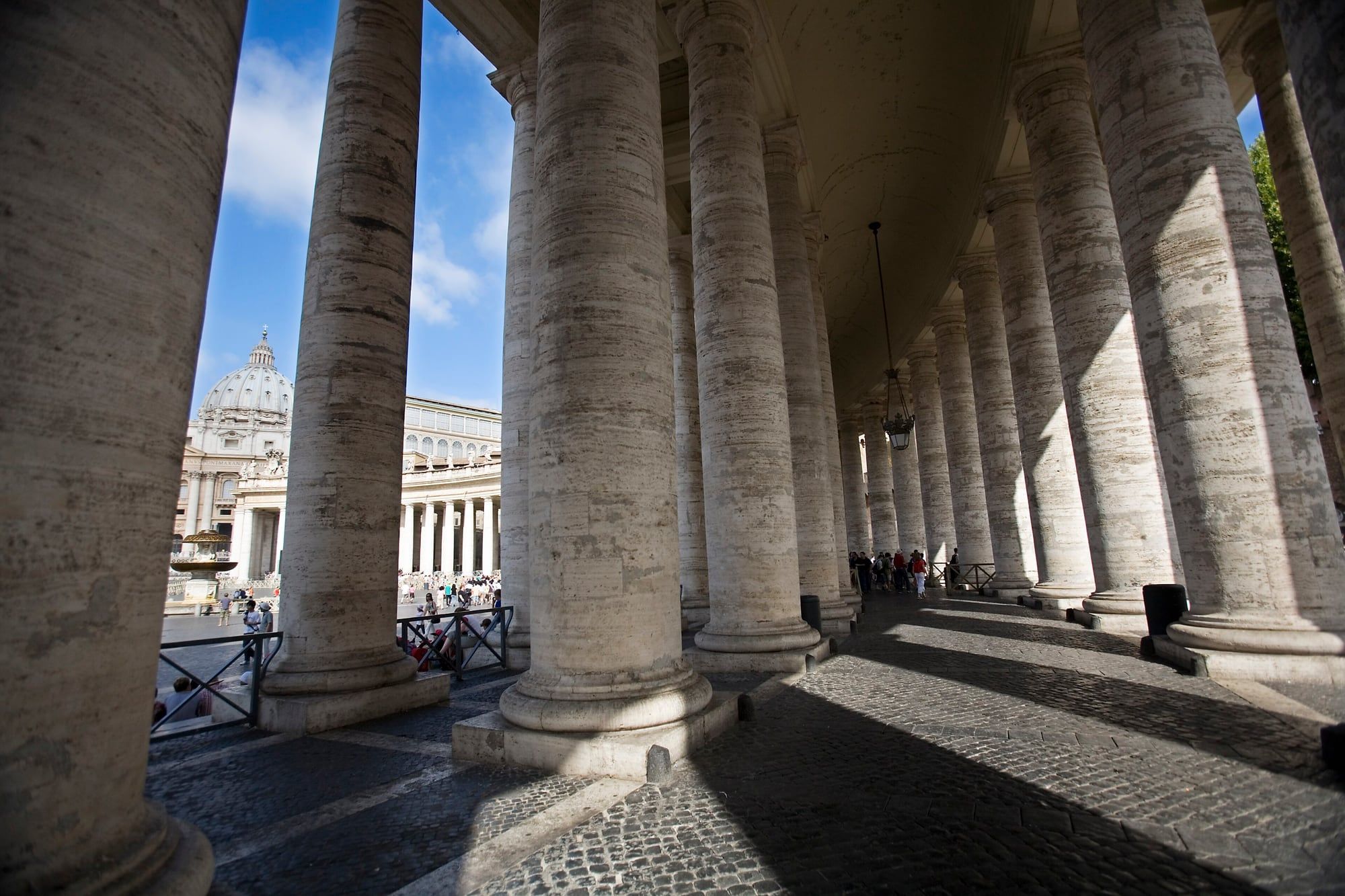
- Vatican — Museums, Sistine Chapel, St Peter’s. 3–4 hours, with tickets, always crowded; the Vatican Museums guide explains the entry options.
- Trastevere and the Jewish Ghetto — medieval lanes, Santa Maria in Trastevere, the Portico d’Ottavia. 2 hours, best at 17:00; often combined with food (food tours).
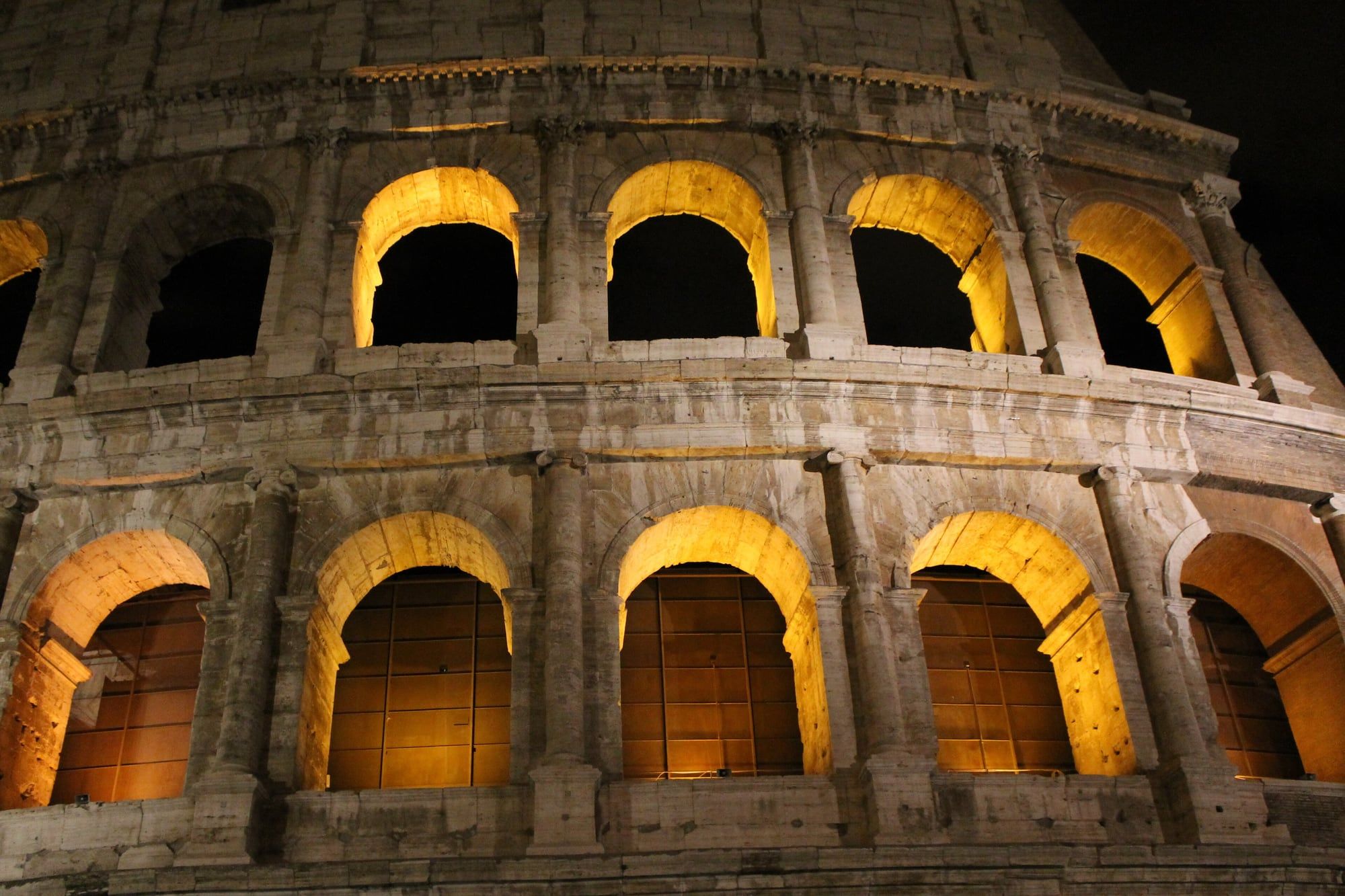
- Rome by night — the centro storico route after dark, 1.5–2 hours; see the night tours guide.
- Themed walks — Caravaggio churches, baroque Bernini vs Borromini, Angels and Demons, ghost stories, street art in Ostiense. Tiqets and GetYourGuide list all of these at €20–80.
Who it suits and who should skip it
A walking tour is right for:
- First-time visitors who want context. Two walks on the first two days set up the rest of the trip.
- Anyone who would otherwise queue. Ancient Rome and Vatican walks with tickets included are the simplest skip-the-line mechanism there is.
- Solo travellers, for whom a small-group walk is company and safety after dark.
- Curious teenagers, on themed walks (gladiators, ghosts, Angels and Demons) rather than churches.
Think again if:
- Walking 4 km on cobbles is hard. A golf cart tour covers the same route seated, and the hop-on hop-off bus gets close to most of it.
- You dislike groups. Go private, or take the audio app and a good guidebook.
- It is July or August at 13:00. Book the 8:30 or the 18:00 walk; the afternoon ones are for the guides who need the money.
- You are on a very tight budget. The audio app and the itineraries on this site cover the centre for €7.
Timing is everything
- Early morning (8:00–8:30 start) for ancient Rome — the Forum is empty and cool, and the tour enters the Colosseum before the coach groups.
- Evening (18:00–19:00 start) for the centro storico — lit fountains, cooler air, the Pantheon still open until 19:00.
- Sunday ancient Rome walks benefit from the car-free Via dei Fori Imperiali; Sunday Vatican walks do not exist because the Museums are closed (except the last Sunday, free and mobbed).
- Wednesday mornings the Vatican area is closed for the papal audience; guides route around it.
- Winter walks run daily with smaller groups and the same prices; a 15:00 start catches the low sun on the Forum before it closes at 16:30.
How to save
- Buy the walk that includes the ticket you would have bought anyway; the guide’s group slot costs the operator less than your online booking.
- Evening centro storico walks cost €14–25 and are the best value hour in Rome. Skip the paid version of a route you could do with the app.
- Compare the same operator on both platforms: many list on GetYourGuide and Tiqets at slightly different prices, and both cancel free to 24 hours.
- Children are usually free under 6 and reduced to about 12–15; ancient Rome walks include the child’s free Colosseum ticket.
- Tip on free tours what you would have paid: €10–15. Tipping €5 for two hours of a licensed guide’s time is the reason those guides leave the format.
- EU citizens aged 18–25 pay €2 for the Colosseum and reduced Vatican entry; ask the operator to price the walk without the full ticket.
Booking checklist
- Check the group maximum on the listing, not the marketing copy; “small group” means anything up to 25 on some listings.
- Confirm the guide is licensed for any walk that enters a site; reputable operators say so.
- Check what tickets are included and whether “skip the line” means a reserved slot (fine) or just a pre-bought ticket (still queues at security).
- Dress for churches on any centro storico or Vatican walk: shoulders and knees covered, or carry a scarf.
- Shoes for cobbles, water, and a hat in summer; there is little shade on the Forum route.
- Find the meeting point on a map the day before — “the Spanish Steps” is 130 steps long, and groups leave on time.
- Bring the voucher on your phone and a photo ID if tickets are included; the Colosseum checks names.
- Cash for the tip on free tours and for a good guide on paid ones (€5 a head is normal, not required).
What to combine
Pair the first evening’s centro storico walk with a food tour the next day in Trastevere, and the ancient Rome walk with an afternoon at the Capitoline Museums, a five-minute walk uphill from the Forum exit with the best view back over it. A Vatican walk ends at St Peter’s; Castel Sant’Angelo is ten minutes away and takes an hour.
Anyone who prefers the guide to the group should read the private tours guide next; anyone who prefers the route to the walking should look at the golf cart. For everyone else, a licensed-guide Rome walking tour on the first two days is the single best-value booking in the city; compare current dates on GetYourGuide or on Tiqets.